
}})
Low sperm count is one of the most common reasons couples struggle to conceive. Many men do not realize this until they try for pregnancy and face delays. The topic often feels sensitive, so people avoid discussing it. That silence creates confusion and anxiety.
The important truth is simple. Low sperm count is common. And in many cases, it is treatable.
Male fertility depends on sperm number, movement, and quality. When sperm count drops, chances of pregnancy reduce. But this does not mean fatherhood is impossible.
Think of it like planting seeds. If the soil is healthy and the number of seeds is enough, growth happens easily. When the seed count drops, growth becomes harder but not impossible. Treatment and lifestyle changes improve the chances.
This guide explains everything in a clear way. What low sperm count means. Why it happens. How it is tested. And what treatments actually help.
What is Low Sperm Count?
Low sperm count is medically called oligospermia. It means the number of sperm present in semen is lower than normal.
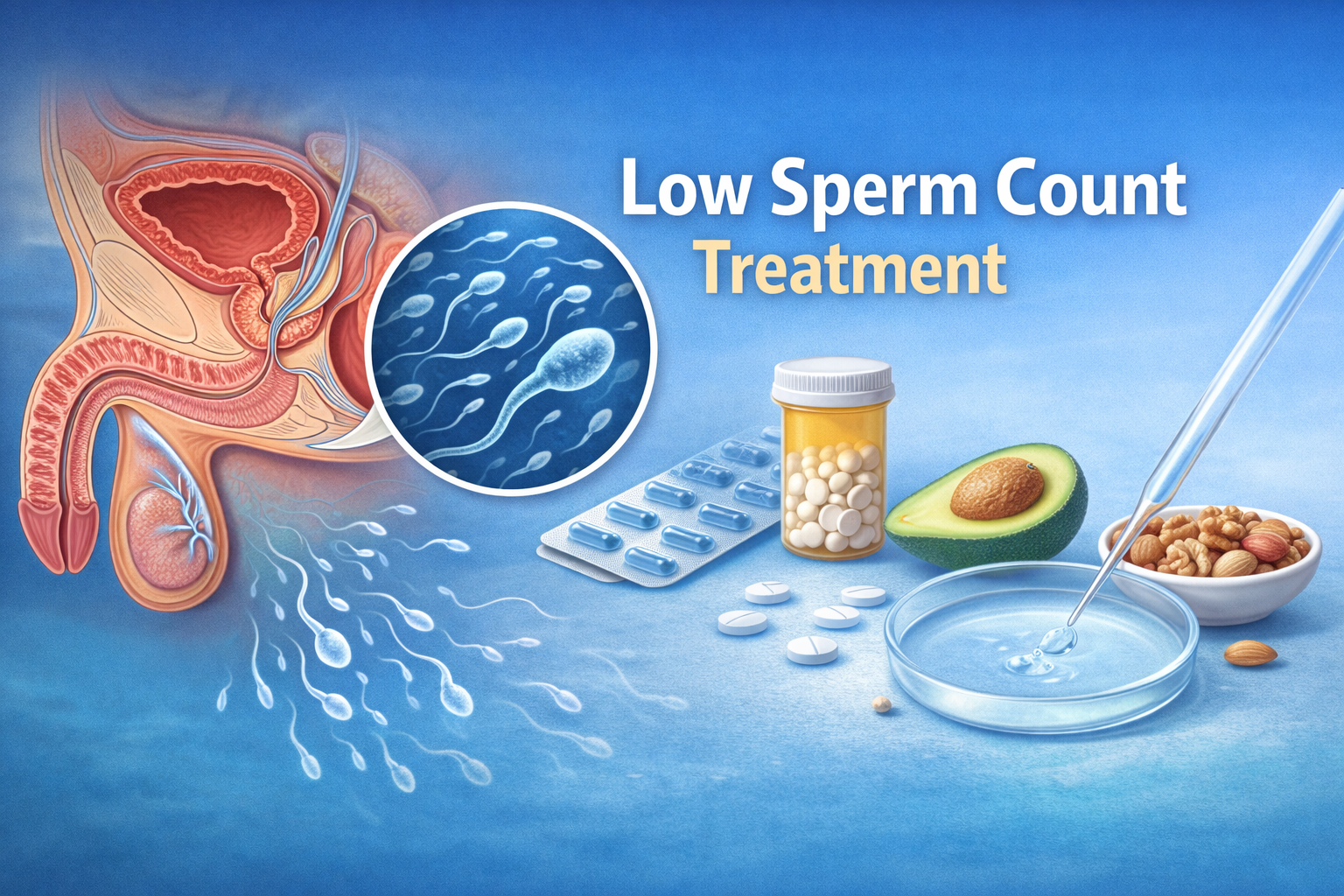
Sperm are produced in the testes. They travel through the reproductive tract and mix with fluid to form semen. During ejaculation, semen carries sperm that may fertilise the egg.
When sperm concentration is low, the chances of reaching and fertilising the egg reduce.
This does not always mean infertility. Many men with low sperm count still father children. But it can make conception slower.
Normal Sperm Count Range
Doctors evaluate fertility using semen analysis. This test measures sperm concentration, movement, and structure.
According to international guidelines, a normal sperm count is at least 15 million sperm per millilitre of semen. Total sperm count should be above 39 million per ejaculation.
Motility refers to movement. At least 40 percent of sperm should be moving actively. Morphology refers to shape. At least 4 percent should have a normal structure.
These numbers act as a guide, not a guarantee. Fertility depends on multiple factors.
Symptoms of Low Sperm Count
Low sperm count usually has no obvious symptoms. Most men discover it only during fertility evaluation.
The most common sign is difficulty conceiving after trying for several months or a year.
Some men may notice low semen volume. Others may experience hormonal symptoms such as reduced facial hair, fatigue, or reduced sexual desire.
Erectile issues may also occur in some cases, especially when hormonal imbalance is involved.
In many men, there are no warning signs at all. That is why testing becomes important.
Causes of Low Sperm Count
Low sperm count rarely happens due to a single reason. It is usually a mix of medical, lifestyle, and environmental factors.
Medical causes include hormonal imbalance, infections, varicocele, and genetic conditions. Varicocele refers to enlarged veins around the testes that affect sperm production.
Lifestyle habits also play a major role. Smoking, alcohol use, obesity, and chronic stress reduce sperm health.
Environmental exposure matters too. Heat, pollution, chemicals, and radiation affect sperm production.
Think of sperm production like a factory. When raw material, temperature, and working conditions are ideal, output is high. When any factor changes, production drops.
How to Check Sperm Count
The most reliable way to check sperm count is semen analysis.
The test involves collecting a semen sample and examining it in a laboratory. Doctors measure sperm concentration, motility, morphology, and volume.
Some home testing kits exist. They provide basic information but are not as accurate as laboratory tests.
For proper evaluation, lab testing is recommended.
Understanding Semen Analysis Report
A semen report can feel confusing at first. But each parameter has a simple meaning.
Volume shows how much semen is released.
Concentration tells how many sperm are present.
Motility shows how actively sperm move.
Morphology shows whether sperm have a normal shape.
All four factors together determine fertility potential.
A low result in one area does not mean infertility. Doctors evaluate the complete picture.
Medical Treatments for Low Sperm Count
Treatment depends on the cause.
If infection is present, antibiotics are used. Hormonal imbalance may require hormone therapy.
Varicocele may need surgery. This procedure improves blood flow and supports sperm production.
Doctors may prescribe antioxidant therapy. These medicines improve sperm health and protect against damage.
Treatment is personalized. There is no single solution for everyone.
Medicines That Improve Sperm Count and Motility
Certain nutrients support sperm production.
Zinc supports hormone balance. Coenzyme Q10 improves energy production in sperm. L-carnitine supports motility. Vitamins C and E protect sperm from oxidative stress.
These supplements work gradually. They support natural sperm development over time.
They should be taken under medical guidance.
Natural Ways to Increase Sperm Count
Lifestyle changes can make a big difference.
Balanced diet supports hormone function. Regular exercise improves circulation and metabolism.
Sleep helps hormone production. Stress reduction improves reproductive health.
Avoiding heat exposure is important. Tight clothing, hot baths, and laptops placed on the lap can affect sperm production.
These changes act slowly but steadily.
Foods That Improve Sperm Quality
Nutrition plays a major role in fertility.
Nuts provide essential fatty acids and minerals. Fruits supply antioxidants.
Leafy vegetables support vitamin intake. Omega-3 rich foods support sperm membrane health.
A balanced plate supports reproductive health naturally.
Lifestyle Changes That Improve Fertility
Daily habits matter more than quick fixes.
Stopping smoking improves sperm health. Reducing alcohol helps hormone balance.
Maintaining a healthy weight supports testosterone levels.
Regular physical activity improves blood flow and reduces stress.
These changes improve overall health along with fertility.
Fertility Treatments When Sperm Count Is Very Low
When sperm count is extremely low, assisted reproductive techniques help.
IUI places sperm directly inside the uterus.
IVF fertilises the egg outside the body.
ICSI injects a single sperm into the egg.
These treatments improve chances of pregnancy even when sperm numbers are low.
Sperm Motility and Pregnancy
Movement matters as much as count.
Sperm must travel through the reproductive tract to reach the egg. Good motility increases chances of success.
Doctors assess progressive movement. This means sperm move forward in a straight path.
Poor motility reduces fertilisation chances but treatment can help.
Can Sperm Count Improve Over Time?
Yes, sperm production follows a cycle of around 74 days.
Lifestyle changes today reflect in sperm quality after a few months.
Improvement requires patience. There is no instant change.
Consistent healthy habits support long-term fertility.
Myths About Sperm Count
Many myths create unnecessary fear.
Frequent ejaculation does not cause permanent infertility. The body continuously produces sperm.
Watery semen does not always mean low sperm count.
Fertility depends on multiple factors, not appearance alone.
Medical evaluation provides clarity.
When to See a Doctor
Couples trying for pregnancy for more than a year should seek evaluation.
Men with erectile issues or hormonal symptoms should also consult a doctor.
Early diagnosis improves treatment success.
Ignoring symptoms delays solutions.
Prevention Tips
Preventive care supports fertility.
Regular exercise, balanced diet, and stress management help maintain hormone balance.
Avoid exposure to toxins and excessive heat.
Routine health checkups detect issues early.
Conclusion
Low sperm count is a medical condition, not a personal failure.
It is common. It is treatable. And in many cases, fertility improves with proper care.
Early diagnosis, lifestyle changes, and medical support create the best outcomes.
With the right guidance and patience, many men with low sperm count successfully become fathers.