
}})
Kidney stones are one of the most painful urological conditions. Many people first try medicines, home remedies, and hydration. This works for small stones. But when stones grow large, become hard, or start blocking urine flow, treatment needs to change. At that stage, surgical removal becomes the safest and most effective option.
This is where PCNL kidney stone surgery plays a major role.
PCNL is a modern, minimally invasive procedure used to remove large or complicated kidney stones directly from the kidney. It is especially helpful when stones are too big to pass naturally or too dense to break with shockwave treatment. Patients often experience significant relief after the stone is removed because the source of pain and blockage is eliminated.
This guide explains PCNL in a clear and patient-friendly way. It covers what PCNL is, when it is needed, how it is performed, recovery, risks, success rate, and what to expect after surgery.
When Kidney Stones Become Too Large for Medicines
Kidney stones start small. Some remain silent. Some pass through urine with mild discomfort. But others grow over time and become difficult to manage.
Large stones behave differently. They can sit inside the kidney for months or years. They may block urine flow. They can cause repeated infections, severe pain, and even damage kidney function if ignored.
At this stage, tablets and fluids are no longer enough.
Doctors recommend pcnl surgery for kidney stone when stones become too large or complex for other treatments. Instead of waiting for the stone to pass, the surgeon removes it directly from the kidney.
Think of it like a large rock stuck inside a water pipe. Increasing water pressure will not move it. The only effective solution is to remove it physically.
What Is PCNL Surgery?
PCNL stands for Percutaneous Nephrolithotomy.
The term sounds technical, but the concept is simple.
“Percutaneous” means through the skin.
“Nephro” refers to the kidney.
“Lithotomy” means stone removal.
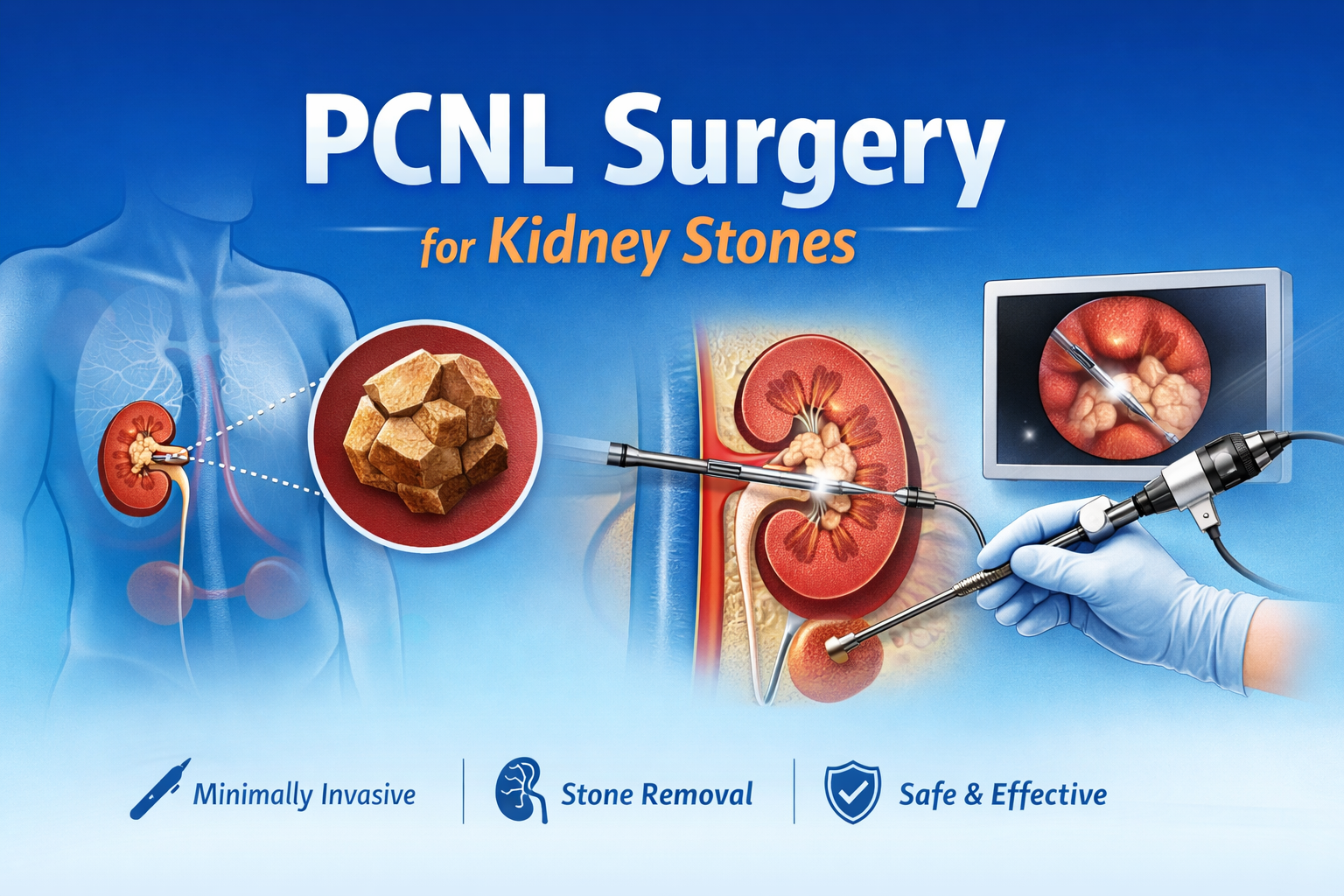
In this procedure, the surgeon makes a very small opening in the back and reaches the kidney through that path. A thin camera and specialized instruments are used to locate and remove the stone.
It is considered a minimally invasive urology procedure because the incision is small and there is no large open surgery.
Compared to older methods, PCNL allows quicker healing, less pain, and faster return to routine life.
When Is PCNL Recommended?
Not every kidney stone requires PCNL. The decision depends on size, location, hardness, and symptoms.
Doctors usually suggest PCNL when stones are larger than 2 cm, when multiple stones are present, or when a staghorn stone occupies a large portion of the kidney. It is also recommended when shockwave treatment fails or when stones cause repeated infection or blockage.
If urine cannot drain properly due to stones, pressure builds inside the kidney. Over time, this can damage kidney tissue. Removing the stone becomes necessary to protect long-term kidney health.
Types of PCNL Procedures
PCNL has evolved with technology. Today, surgeons can choose between standard PCNL and mini PCNL depending on the situation.
Standard PCNL is commonly used for large and complex stones. It allows removal of bigger fragments quickly and is effective for staghorn stones or stones filling multiple areas of the kidney.
Mini PCNL surgery uses a smaller instrument and smaller access path. This results in less bleeding and faster recovery. It is often preferred when stones are moderately large but not extremely complex.
Both techniques aim to achieve the same goal, which is complete stone removal with minimal discomfort.
PCNL With DJ Stenting: Why It Is Done
During PCNL, doctors sometimes place a thin tube called a DJ stent between the kidney and bladder.
This stent keeps urine flowing smoothly while the kidney heals. After surgery, swelling or small stone fragments can temporarily block urine flow. The stent prevents this blockage and reduces pressure.
It also helps avoid complications and supports faster recovery.
The stent is temporary. It is removed after the healing period.
This approach is different from URSL with DJ stenting, which is used when stones are located in the ureter rather than the kidney.
Step-by-Step PCNL Procedure Explained
The idea of kidney surgery can feel overwhelming. But PCNL is a structured and carefully planned procedure.
First, anesthesia is given so the patient remains comfortable and pain-free during surgery. The surgeon then makes a small incision in the back and creates a pathway to the kidney using imaging guidance.
A camera helps locate the stone precisely. The stone is then broken using laser or ultrasound energy. The fragments are removed through the tube. If needed, a DJ stent is placed to maintain urine flow.
The incision is small and is dressed after the procedure.
It is similar to clearing a blocked pipe using a camera-guided tool rather than breaking the entire wall.
PCNL Surgery Duration
PCNL usually takes about one to two hours. The exact duration depends on the stone size, its location, and how many stones are present.
Larger stones or staghorn stones may take longer. Smaller stones are removed more quickly.
The procedure is planned carefully before surgery to ensure efficiency and safety.
Success Rate of PCNL
PCNL has one of the highest success rates among kidney stone treatments, especially for large stones.
In many cases, stones are removed completely in a single session. This reduces the need for repeated procedures.
Because removal is direct, patients often feel relief soon after surgery. Pain reduces and urine flow improves once the obstruction is gone.
Recovery After PCNL Surgery
Recovery after PCNL is usually smooth and predictable.
Patients typically stay in the hospital for two to four days. Mild pain around the back is normal for a few days and is managed with medicines.
Most people return to daily activities within one to two weeks. Heavy lifting and strenuous exercise are avoided until the doctor confirms healing.
The experience is closer to recovering from a minor procedure rather than a major open surgery.
Risks and Complications
Every surgery carries some risks. PCNL is considered safe, but patients should understand possible complications.
Bleeding, infection, temporary urine leakage, or the need for repeat treatment may occur in rare cases.
Serious complications are uncommon when the procedure is performed by experienced urologists using modern equipment.
Doctors monitor patients closely after surgery to detect and manage any issues early.
PCNL vs Other Kidney Stone Treatments
Kidney stone treatment depends on size and location.
Small stones often pass with medicines and hydration. Medium stones may be treated with shockwave therapy. Stones in the ureter are usually treated with URSL.
PCNL is reserved for large kidney stones that cannot be treated effectively with these methods.
Choosing the right treatment is like choosing the right tool for a job. A small nail needs a hammer. A large bolt needs specialized equipment.
Cost of PCNL Surgery
The cost of PCNL varies based on multiple factors.
It depends on the hospital, city, stone size, room category, tests required, and whether a DJ stent is used. The total cost usually includes surgery, investigations, hospital stay, medicines, and follow-up care.
Patients are encouraged to discuss estimates clearly before planning surgery.
Who Should Not Delay PCNL?
Delaying treatment for large stones can be harmful.
Persistent pain, infection, swelling of the kidney, or reduced kidney function are warning signs that should not be ignored.
Large stones can gradually damage the kidney if left untreated. Early removal protects kidney function and prevents complications.
Life After PCNL Surgery
Removing the stone is only part of the journey. Preventing future stones is equally important.
Patients are advised to drink enough water, follow a balanced diet, reduce salt intake, and maintain a healthy weight. Follow-up scans help ensure that no fragments remain and detect early recurrence.
Kidney stones can return if lifestyle factors remain unchanged.
Think of it like cleaning a clogged drain. If the same debris continues to enter, the blockage may return.
Common Questions Patients Ask
Many patients worry about pain, safety, and recovery.
PCNL is done under anesthesia, so there is no pain during surgery. Mild discomfort afterward is temporary.
The procedure is considered safe when done by trained specialists. Recovery usually takes one to two weeks, though full healing may take longer.
Stones can recur, but lifestyle changes and medical guidance reduce the risk.
DJ stents are removed after recovery, and in some cases, both kidneys can be treated together depending on patient condition.
Conclusion
PCNL is one of the most reliable treatments for large and complex kidney stones.
It allows direct removal of stones through a small incision. It protects kidney function. It offers faster recovery compared to traditional surgery.
Most patients experience significant relief after treatment and return to normal life within weeks.
Timely treatment makes a big difference. Ignoring large stones often leads to complications.
With proper medical care, follow-up, and lifestyle changes, patients can become stone-free and maintain long-term kidney health.