
}})
Erectile dysfunction, often called ED or impotence, is one of the most common male health concerns. Yet, many men hesitate to talk about it. Some feel embarrassed. Some think it is only due to stress. Others believe it is just a part of aging and must be accepted.
But here is the truth.
Erectile dysfunction is common, medically understood, and very treatable.
It can affect young men and older men. It can happen suddenly or slowly over time. And in many cases, it is not just a sexual problem. It can be an early sign of conditions like diabetes, high blood pressure, or heart disease.
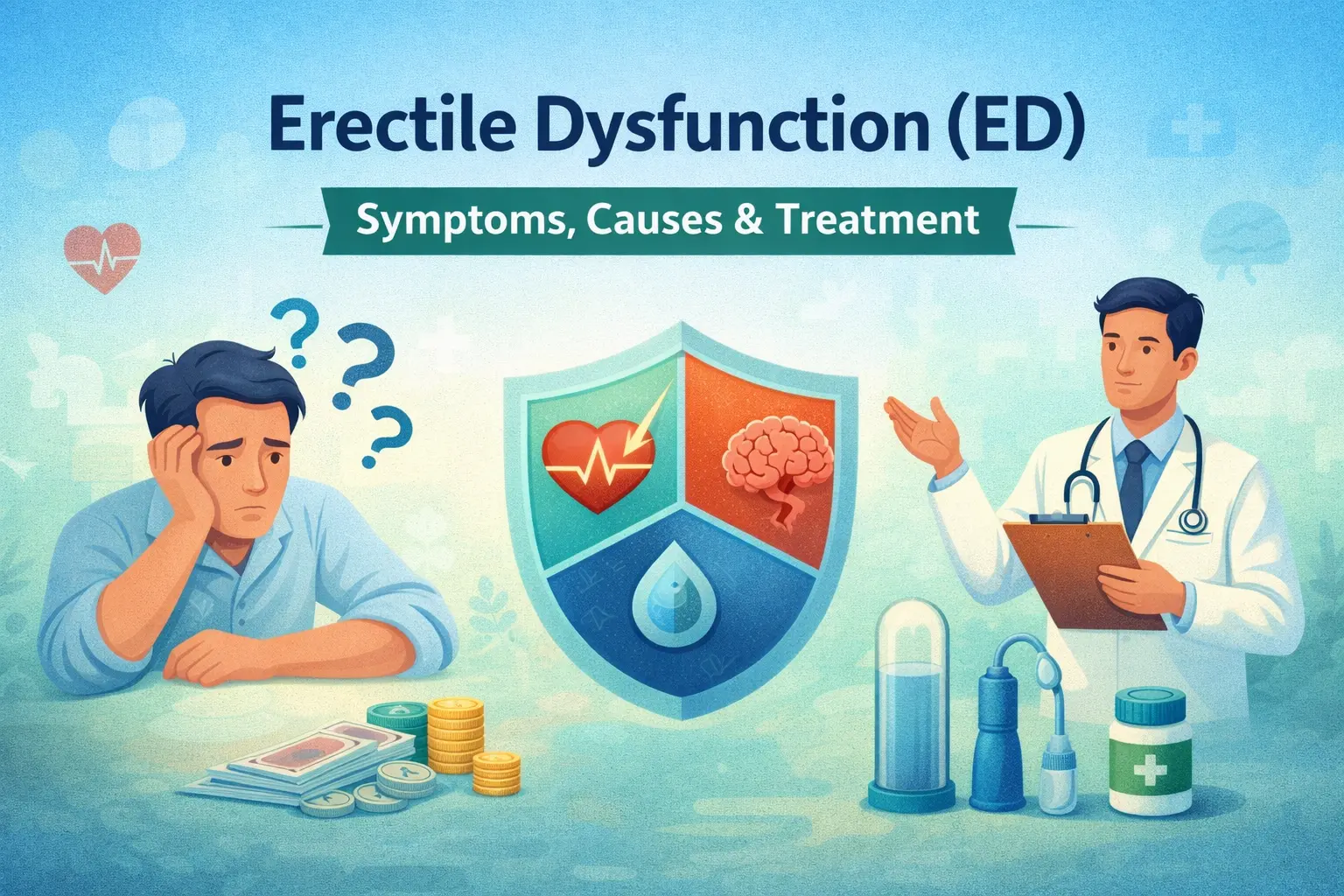
This guide explains erectile dysfunction in simple language. You will learn what it really means, how to recognize the symptoms, why it happens, which doctor to see, and what treatment options are available, including ED treatment in India.
Erectile Dysfunction Meaning in Simple Words
Erectile dysfunction means having ongoing difficulty getting or keeping an erection firm enough for sexual activity.
It does not mean a man has lost interest in sex.
It does not mean he cannot have children.
It does not mean something is wrong with his masculinity.
An erection depends on three main things working together:
- Healthy blood flow to the penis
- Proper nerve signals from the brain
- A relaxed and focused mind
If any one of these is disturbed, the erection may become weak or disappear.
Think of it like watering a garden with a hose. You need good water pressure, an open pipe, and a working tap. If any part fails, the flow reduces. ED works the same way.
Is Occasional Difficulty Normal?
Yes. Occasional erection problems are normal.
Everyone has stressful days. Poor sleep, alcohol, work pressure, anxiety, or relationship issues can affect performance once in a while.
But erectile dysfunction becomes a medical issue when:
- The problem happens regularly
- It lasts for weeks or months
- It causes worry or relationship stress
- It reduces confidence or quality of life
Ignoring long-term ED is like ignoring a warning light on your bike or car. The vehicle may still run, but something inside may need attention.
Common Symptoms of Erectile Dysfunction
ED does not look the same in every man.
Some men struggle to get an erection at all. Others get one but lose it quickly. Some notice their erections are softer than before. A few can perform in some situations but not in others.
Common symptoms include:
- Difficulty getting an erection
- Trouble maintaining firmness
- Reduced hardness compared to earlier years
- Anxiety before sexual activity
- Avoiding intimacy due to fear of failure
There are two patterns doctors often notice.
One is situational ED, where the problem occurs only in specific situations. This is often linked to stress or performance anxiety.
The other is consistent ED, where the problem happens almost every time. This usually has a physical cause.
Warning Signs That Need Quick Medical Attention
Sometimes erectile dysfunction is a sign of deeper health problems.
You should consult a doctor sooner if ED appears along with:
- Chest pain or breathlessness while walking
- Numbness or weakness in legs
- A history of pelvic surgery or spinal injury
- Sudden loss of erections without stress
- Painful erections
- Curving or hard lumps in the penis
These symptoms may point to blood vessel or nerve damage.
Causes of Erectile Dysfunction
ED rarely has just one cause.
In most men, it is a mix of physical and mental factors.
Understanding the cause is important because treatment depends on it.
Blood Flow Problems
This is the most common cause.
An erection needs strong blood flow. Conditions that damage blood vessels reduce this flow slowly over time.
Common examples include:
- Diabetes
- High blood pressure
- High cholesterol
- Smoking
- Obesity
- Lack of physical activity
These conditions narrow the blood vessels, just like dirt narrowing a pipe. Less blood reaches the penis, so erections become weak.
Doctors take ED seriously because penile blood vessels are small. They show problems earlier than heart vessels.
Nerve-Related Causes
Nerves carry messages from the brain to the penis.
They can be damaged by:
- Long-standing diabetes
- Spine problems
- Accidents
- Surgery for prostate or bladder
When signals become weak, erections weaken too.
Hormonal Causes
Low testosterone can affect desire and erection strength.
It is not the most common cause, but it matters in some men, especially those with fatigue, low energy, mood changes, or reduced body hair.
Medicines and Substances
Many everyday medicines can affect erections.
Some blood pressure tablets, antidepressants, and prostate medicines are known examples.
Alcohol also plays a big role. It relaxes the mind but blocks nerve signals needed for an erection.
Smoking damages blood vessels directly.
Psychological Causes
The brain is the control center of sexual response.
Stress, anxiety, depression, guilt, and relationship problems can block erection even when the body is healthy.
Performance anxiety works like a loop:
One failure leads to fear.
Fear causes tension.
Tension causes another failure.
Breaking this loop often needs counseling along with medical support.
Which Doctor to See for Erectile Dysfunction?
Many men are unsure where to start.
A general physician can do basic tests.
But the main specialist for ED is a urologist or andrologist.
Other specialists may help if needed:
- Endocrinologist for diabetes or hormones
- Cardiologist if heart risk is high
In India, most patients directly consult a urologist.
Doctors like Dr. Ashish Kumar Saini, who trained at AIIMS and has extensive experience in urology and andrology, regularly manage erectile dysfunction using structured medical evaluation instead of guesswork.
Book Appointment:
https://www.drashishsaini.com/book-online-consultation
How Doctors Diagnose Erectile Dysfunction
Diagnosis is simple and respectful.
It usually begins with a discussion about symptoms, lifestyle, sleep, stress, and medicines.
Doctors check blood pressure, weight, and waist size.
Blood tests may include:
- Blood sugar
- Cholesterol
- Kidney function
- Testosterone if needed
In selected cases, a penile Doppler test may be done to assess blood flow.
It is like checking wiring and plumbing before repairing a machine.
Erectile Dysfunction Treatment Options
Treatment follows a step-by-step approach.
Doctors begin with the simplest and safest methods.
Lifestyle Changes
This is the foundation of treatment.
Regular walking or exercise improves blood flow. Weight loss reduces hormone imbalance. Stopping smoking repairs blood vessels slowly. Good sleep restores hormone balance.
Managing diabetes and blood pressure is crucial.
Many men see improvement with these steps alone.
It is like repairing the road before blaming the car.
Oral Medicines
These are the most commonly used treatments.
Medicines like sildenafil or tadalafil increase blood flow during sexual stimulation.
They do not increase desire. They only help the body respond better.
Important safety note:
These medicines should not be used with nitrate heart medicines.
Always use them under medical guidance.
Psychological Therapy
When stress or anxiety is involved, counseling helps greatly.
It may feel uncomfortable at first. But mental blocks cannot be fixed with tablets alone.
Medical treatment plus therapy often gives the best results.
Vacuum Devices
These devices draw blood into the penis using suction.
They are safe and drug-free.
Some couples prefer them when medicines are unsuitable.
Injections or Urethral Therapy
When tablets fail, doctors may offer medicine directly into penile tissue or the urine opening.
This is effective but requires proper training.
Surgery
Penile implants are used only in severe cases where other treatments fail.
They have high satisfaction when selected carefully.
ED Treatment in India
In India, treatment usually follows this path:
Consultation → blood tests → lifestyle advice → oral medicines → advanced options if needed.
Most modern hospitals offer vacuum devices, injections, and implants.
Avoid clinics offering instant cures or untested herbal pills.
If a product promises permanent results in a few days, be cautious.
“Pills to Enhance Sex”: A Safety Note
Prescription ED medicines are tested and regulated.
Many supplements sold online are not.
Some secretly contain unknown chemicals. Some harm the liver. Some affect the heart.
Always consult a doctor before using any sexual medicine, especially if you have diabetes, heart disease, or take regular medication.
Conclusion
Erectile dysfunction is common. It is treatable. And it often reflects overall health.
Ignoring it helps no one.
Getting evaluated can improve sexual health and sometimes prevent serious future problems like heart disease.
If ED is affecting your confidence or relationship, speaking to a doctor is not weakness. It is responsibility.