
}})
Urinary tract infections (UTIs) are among the most common infections affecting women. Many patients report that UTI symptoms begin shortly after sexual intercourse, which often raises the question:
Can sex cause a UTI?
The answer is yes. Sexual activity can increase the risk of bacteria entering the urinary tract, which may lead to infection. In medical practice, this is sometimes referred to as post-coital UTI or honeymoon cystitis.
According to Dr. Ashish Saini, understanding why UTIs occur after sex and learning proper prevention strategies can significantly reduce the risk of recurrent infections.
This guide explains why UTIs happen after sex, common symptoms, risk factors, prevention tips, and available treatments.
Key Takeaways
- Sexual activity can increase the risk of urinary tract infections.
- Symptoms often appear within 24–48 hours after intercourse.
- UTIs are usually treatable with appropriate medical care.
- Preventive habits such as urinating after sex and maintaining hygiene can reduce risk.
- Recurrent infections require medical evaluation.
What is a Urinary Tract Infection (UTI)?
A urinary tract infection occurs when bacteria enter and multiply in any part of the urinary system.
The urinary system includes:
- Kidneys
- Ureters
- Bladder
- Urethra
Most UTIs affect the lower urinary tract, especially the bladder and urethra.
Women are more prone to UTIs because their urethra is shorter and closer to the vaginal and anal regions, making it easier for bacteria to enter the urinary tract.
Can Sex Cause a UTI?
Yes, sexual activity can increase the risk of developing a urinary tract infection.
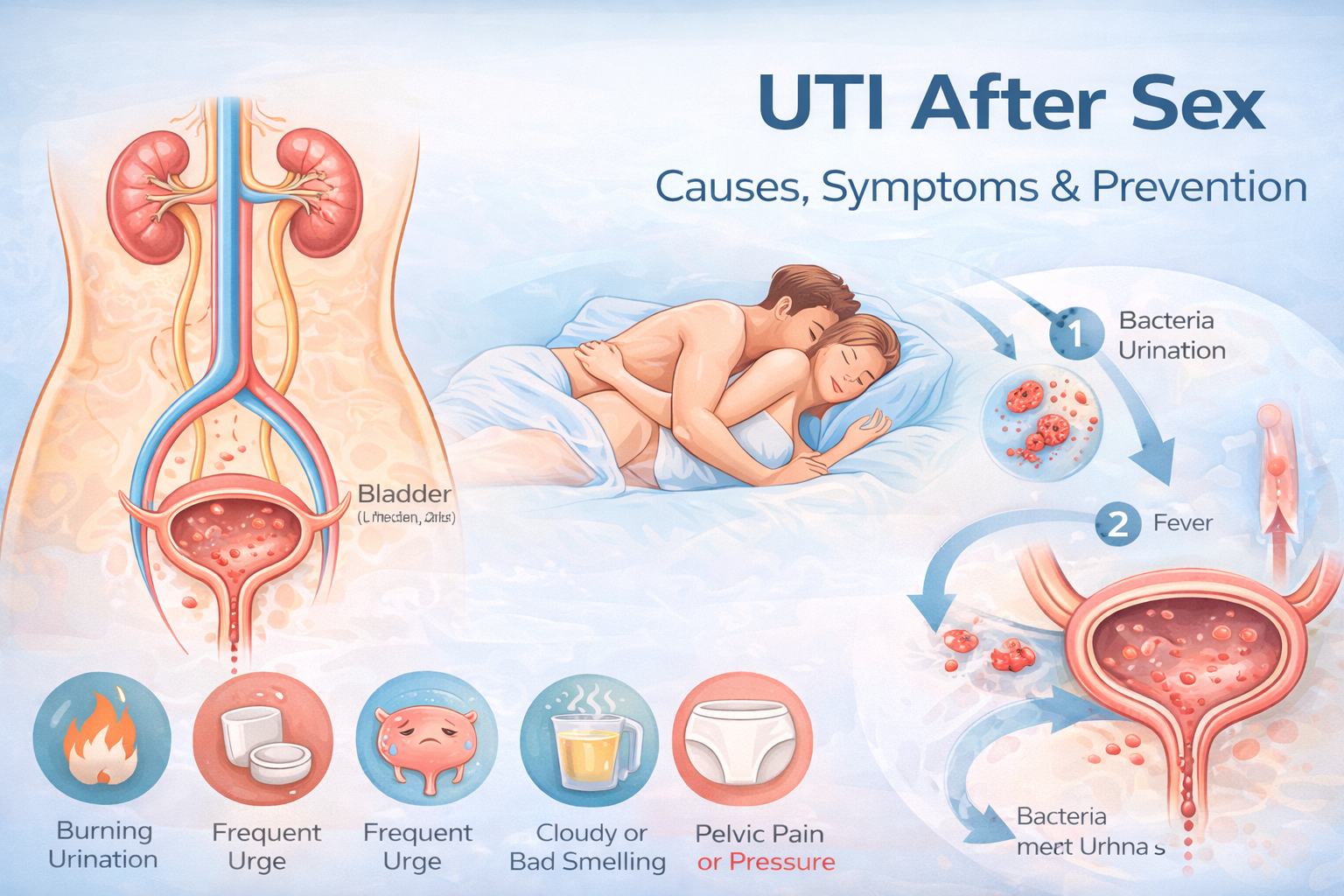
During intercourse, bacteria from the genital or anal region can be pushed toward the urethral opening. Once bacteria enter the urethra, they can travel to the bladder and multiply, causing infection.
Many women experience symptoms such as:
- Burning during urination
- Frequent urge to urinate
- Pelvic discomfort
These symptoms may appear within 24 to 48 hours after sexual activity.
Why Do UTIs Occur After Sex?
Several factors explain why UTIs commonly occur after intercourse.
1. Bacteria Transfer During Intercourse
Sexual activity can push bacteria toward the urethra, increasing the chance of infection.
The most common bacteria responsible for UTIs are Escherichia coli (E. coli), which normally lives in the digestive tract.
2. Female Anatomy
Women have a urethra that is only about 3–4 cm long, allowing bacteria to reach the bladder more easily than in men.
3. Friction and Irritation
Friction during intercourse can irritate the urethral opening, making bacterial entry easier.
4. Use of Certain Contraceptives
Some contraceptive methods may increase UTI risk, including:
- Spermicides
- Diaphragms
- Certain lubricants
These may alter the natural bacterial balance around the genital area.
Symptoms of UTI After Sex
The symptoms of a UTI after sexual activity are similar to those of other bladder infections.
Common symptoms include:
- Burning sensation while urinating
- Frequent urge to urinate
- Passing small amounts of urine repeatedly
- Cloudy or strong-smelling urine
- Pain or pressure in the lower abdomen
- Pelvic discomfort

Some patients may also experience:
- Blood in urine
- Fatigue
- Mild fever
If symptoms appear soon after intercourse, it may indicate a post-coital urinary tract infection.
Who Is More Likely to Get UTI After Sex?
Some individuals are more prone to developing UTIs following sexual activity.
Risk factors include:
- Frequent sexual activity
- History of recurrent UTIs
- Poor genital hygiene
- Use of spermicidal contraceptives
- New sexual partners
- Hormonal changes during menopause
Patients with recurrent UTIs may require medical evaluation to identify underlying causes.

How to Prevent UTI After Sex
Preventing UTIs after sexual activity often involves simple lifestyle and hygiene practices.
Urinate After Intercourse
Urinating soon after sex helps flush bacteria from the urethra before they reach the bladder.
Stay Well Hydrated
Drinking enough water increases urine flow and helps remove bacteria from the urinary tract.
Maintain Proper Hygiene
Cleaning the genital area before and after intercourse can reduce bacterial contamination.
Avoid Spermicides if Prone to UTIs
Some women experience increased infection risk with spermicidal contraceptives.
Wear Breathable Underwear
Cotton underwear helps maintain airflow and reduces bacterial growth.
Wipe From Front to Back
This prevents bacteria from the anal region from reaching the urethra.
When Should You See a Doctor?
While mild symptoms may sometimes improve with hydration, medical consultation is recommended if symptoms persist.
Consult a doctor if you experience:
- Burning urination lasting more than 24 hours
- Fever or chills
- Severe pelvic or abdominal pain
- Blood in urine
- Recurrent UTIs
According to Dr. Ashish Saini, untreated urinary tract infections can spread to the kidneys and lead to more serious complications.
Early treatment is important for preventing complications.
How Doctors Diagnose UTI
Doctors usually diagnose UTIs using simple laboratory tests.
Urine Analysis
A urine sample is examined to detect bacteria, white blood cells, or blood.
Urine Culture
A urine culture helps identify the exact bacteria responsible for infection and determines the most effective treatment.
Treatment for UTI After Sex
UTIs are typically treated with prescription medications provided by a doctor.
Treatment may include:
- Antibiotics to eliminate bacteria
- Pain relief medication
- Increased fluid intake
Most patients experience improvement within a few days of treatment.
For patients who frequently develop UTIs after sex, doctors may recommend preventive treatment strategies.
Can UTIs After Sex Become Recurrent?
Some women experience recurrent UTIs, meaning repeated infections over time.
Recurrent UTIs are usually defined as:
- Two infections within six months
- Three or more infections within one year
In such cases, doctors may recommend additional evaluation and preventive measures.
Expert Advice From Dr. Ashish Saini
According to Dr. Ashish Saini, UTIs after sex are common but preventable in many cases.
Maintaining proper hygiene, staying hydrated, and seeking timely medical care can significantly reduce the risk of complications.
Patients experiencing frequent or severe urinary symptoms should consult a qualified healthcare professional for a proper diagnosis and treatment.