
}})
Male infertility is more common than most people realize. In many couples who struggle to conceive, the male partner contributes either fully or partially to the problem. Yet many men start with basic treatments like vitamins or lifestyle changes and hope that things will improve on their own.
Sometimes they do.
Sometimes they do not.
When simple measures fail, advanced male infertility treatment becomes necessary. The good news is that modern reproductive medicine offers multiple solutions. From hormone correction to microsurgery to IVF and ICSI, treatment options today are far more precise than they were a decade ago.
This guide explains male infertility causes and modern treatments in a clear and stepwise way. No confusion. No complicated medical language. Just practical information.
Understanding Male Infertility
What Is Male Infertility?
Male infertility means a couple is unable to achieve pregnancy because of sperm-related issues. These may involve:
- Low sperm count
- Poor sperm movement
- Abnormal sperm shape
- Complete absence of sperm, called azoospermia
Think of sperm like runners in a race. They must be present in enough numbers, run fast enough, and reach the finish line. If any of these fail, fertilization becomes difficult.
Why Advanced Treatment Is Needed
Basic treatment includes improving lifestyle, treating infections, or giving simple supplements. But advanced treatment becomes necessary when:
- Sperm count is extremely low
- Sperm are absent
- Testicular failure is suspected
- Genetic problems are present
- Previous treatments have failed
In such cases, waiting longer rarely helps. Targeted medical or surgical intervention becomes important.
Step by Step Male Infertility Evaluation
Before jumping into advanced therapy, doctors follow a structured diagnostic journey. Skipping tests is like trying to repair a broken phone without checking the battery first.
A step by step male infertility evaluation includes:
- Semen analysis
- Hormone testing
- Ultrasound imaging
- Genetic testing if needed
Each step builds on the previous one. Together, they create a clear picture.
Common Causes of Male Infertility
Understanding the cause helps choose the right treatment.
Testicular Causes
Damage to the testicles can affect sperm production. This may happen due to infection, injury, or developmental issues.
Hormonal Imbalance
Hormones like testosterone, FSH, and LH regulate sperm production. If hormone levels are abnormal, sperm count can fall.
Varicocele
Varicocele is enlargement of veins in the scrotum. It increases heat around the testicles, and sperm do not function well in high temperature.
Obstruction
Sometimes sperm are produced but cannot exit due to blockage in the tubes.
Genetic Disorders
Conditions like Y chromosome microdeletion or Klinefelter syndrome can impair sperm production.
Lifestyle Factors
Smoking, obesity, alcohol, stress, and excessive heat exposure reduce sperm quality over time.
Modern medicine treats these causes differently. That is why diagnosis matters.
When to Move to Advanced Treatment
Many couples ask when to move from basic male infertility treatment to advanced ART like ICSI.
Advanced therapy is considered when:
- Severe oligospermia is diagnosed
- Azoospermia is confirmed
- IUI has failed multiple times
- Infertility has persisted for years
Waiting too long can reduce overall success, especially if the female partner’s age is increasing.
Modern Solutions for Male Infertility
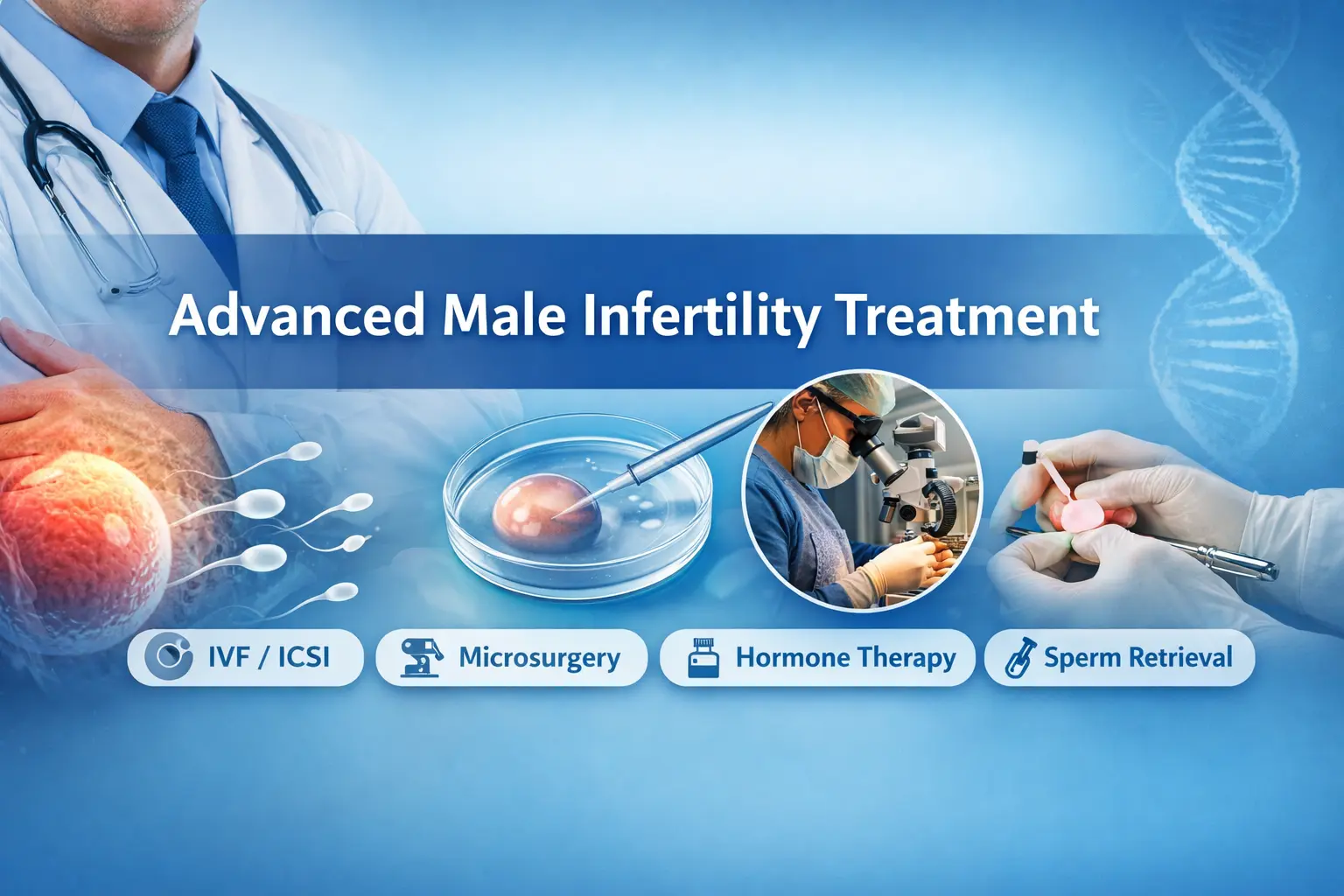
Advanced male infertility treatment includes several categories:
- Hormonal therapy
- Microsurgery
- Assisted reproductive techniques
- Sperm retrieval procedures
Modern solutions for male infertility combine lifestyle changes, medicines, surgery, and ART when needed. Treatment is rarely one-dimensional.
Assisted Reproductive Techniques (ART)
ART plays a major role in advanced cases.
IVF
In vitro fertilization involves combining egg and sperm outside the body. Fertilization occurs in a laboratory.
ICSI
Intracytoplasmic sperm injection involves injecting a single sperm directly into an egg. This technique is especially helpful in severe male infertility.
TESE, micro-TESE, PESA, TESA
These are surgical sperm retrieval procedures. They are used when sperm are not present in semen.
Assisted reproductive techniques for male infertility IVF ICSI TESE have dramatically improved success in difficult cases.
ICSI, in particular, has allowed many men with extremely low sperm counts to achieve fatherhood.
Surgical Treatments
Varicocele Microsurgery
Microsurgical varicocele repair improves sperm count and pregnancy rates in many patients. It corrects abnormal veins and restores a healthier environment for sperm production.
Obstruction Correction
If sperm flow is blocked, surgery can reopen the pathway.
Testicular Biopsy Procedures
In non obstructive azoospermia, doctors may retrieve sperm directly from testicular tissue using micro-TESE.
Microsurgery requires expertise. Outcomes are better in experienced hands.
Hormonal Treatment
Hormonal imbalance causes male infertility in specific cases. Hormone based treatments aim to restore balance.
For example:
- Low testosterone may require targeted therapy
- High prolactin may need medication
- FSH or LH therapy may stimulate sperm production
However, testosterone injections without supervision can worsen fertility. So treatment must be individualized.
Sperm Retrieval Techniques Explained
TESE, micro-TESE, PESA, and TESA are procedures to retrieve sperm directly.
- In obstructive azoospermia, sperm production is normal but blocked. Retrieval success is high.
- In non obstructive azoospermia, sperm production is limited. Micro-TESE helps find small areas where sperm may still be present.
Success rates of ICSI with testicular sperm extraction in non obstructive azoospermia vary. But even limited sperm can sometimes achieve fertilization with ICSI.
Lifestyle Fertility Support
Advanced treatment does not ignore lifestyle.
Weight control improves hormone levels.
Smoking cessation improves sperm quality.
A diet rich in antioxidants supports sperm function.
Stress reduction improves sexual health.
Lifestyle changes are not a miracle cure. But they improve overall outcomes.
Genetic Testing & Counseling
Genetic infertility requires careful counseling.
Y chromosome defects may affect sperm production.
Klinefelter syndrome affects hormone balance.
Genetic counseling explains risks to offspring and guides reproductive planning.
Latest advances in male infertility like micro-TESE, regenerative therapies, and genetic workup offer new hope in severe cases.
Advanced & Emerging Treatments
Research continues to evolve.
Micro-TESE techniques are becoming more refined.
Stem cell research is exploring future possibilities.
AI-based sperm selection is improving embryo quality in some centers.
These methods are still evolving. But they represent the future of fertility science.
Treatment Planning Based on Cause
The best treatment plan for male infertility based on cause, lifestyle factors, and female partner age requires personalization.
Factors considered include:
- Age of both partners
- Duration of infertility
- Severity of sperm defect
- Previous treatment response
No two cases are identical.
Success Rates Comparison
Success depends on the treatment chosen.
- Varicocele repair improves sperm count in many patients
- Hormone therapy helps selected cases
- IVF success depends on egg quality and age
- ICSI improves fertilization rates in severe male factor
Doctors usually discuss realistic expectations before starting treatment.
Risks & Limitations
- Advanced treatments have risks.
- Surgery carries minor bleeding or infection risk.
- Hormones may cause mood changes or acne.
- ART cycles may fail despite good embryos.
- Understanding limitations helps manage expectations.
Emotional & Psychological Impact
Infertility affects confidence. It affects relationships. It creates silent stress.
Men often hide their emotions. But support matters.
Counseling can help couples cope better. Open discussion reduces guilt and blame.
Infertility is a medical condition. Not a weakness.
Conclusion
Advanced male infertility treatment has evolved significantly. What once seemed impossible is now manageable in many cases.
Correct diagnosis leads to targeted treatment. Modern medicine offers hormonal correction, microsurgery, and assisted reproductive techniques tailored to each individual.
Early intervention improves success. Delaying evaluation reduces options.
With the right approach, many couples who struggle today can achieve pregnancy tomorrow.