
}})
Imagine feeling the urgent need to urinate 20, 30, even 40 times a day - and still feeling pain and pressure even after going. For millions of people living with interstitial cystitis (IC), this is not a bad day. It is every single day.
Interstitial cystitis, also called painful bladder syndrome (PBS) or IC/BPS, is one of the most misunderstood and underdiagnosed chronic conditions affecting the bladder. It is not a simple urinary tract infection (UTI). It does not go away with a short course of antibiotics. And unfortunately, many patients wait years before receiving a correct diagnosis.
In this guide, you will learn what interstitial cystitis actually is, how to recognize its symptoms, what triggers flare-ups, and - most importantly - what treatment options exist to help you live a better, more comfortable life.
What is Interstitial Cystitis?
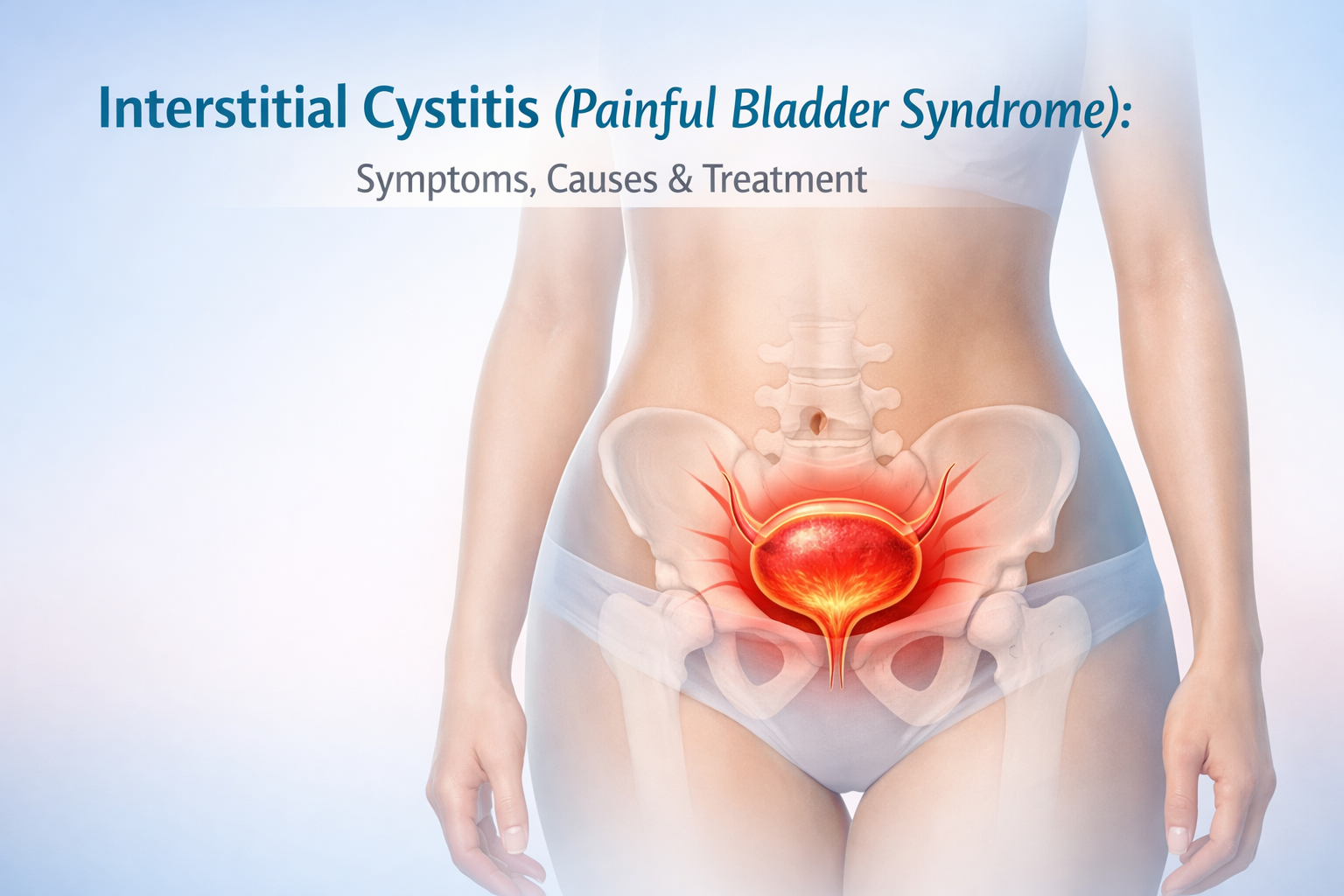
Interstitial cystitis/bladder pain syndrome (IC/BPS) is a chronic pelvic condition lasting more than six weeks that affects the urinary bladder, causing discomfort, pressure, or pain. It is characterized by chronic inflammation and lower urinary tract symptoms that are not due to infection or any other clearly identifiable cause.
IC may also lead to scarring and stiffening of the bladder wall, reducing how much urine the bladder can hold compared to before.
The condition goes by several names - interstitial cystitis, painful bladder syndrome, bladder pain syndrome - but they all refer to the same complex disorder. Expert opinion in the United States and Europe is that interstitial cystitis and painful bladder syndrome should be considered together as one syndrome, referred to as IC/BPS.
What makes IC particularly challenging is that it closely mimics other conditions. People of both sexes must first rule out urinary tract infections, bladder cancer, sexually transmitted diseases, and kidney stones. In women, endometriosis is another possibility. In men, IC can be mistaken for an inflamed prostate or chronic pelvic pain syndrome.
Who Gets Interstitial Cystitis?
IC can affect anyone, but it is far more common in women. Interstitial cystitis mainly affects women. However, men are increasingly being diagnosed as awareness grows. The condition is recognized globally, and IC/BPS is a chronic condition marked by chronic pain and voiding dysfunction, often without a clear cause, and its management often requires a multidisciplinary approach as well as multiple therapeutic interventions.
Symptoms of Interstitial Cystitis (Painful Bladder Syndrome)

Common Bladder Symptoms
IC/BPS symptoms vary from person to person. They can change every day or week, persist for months or years, or might even go away without any treatment.
The most frequently reported symptoms include:
- Bladder pressure and pain - Bladder pressure and pain that get worse as the bladder fills up.
- Pelvic and lower abdominal pain - Pain in the lower tummy, lower back, pelvis, or urethra, and in the vulva, vagina, scrotum, testicles, or penis.
- Frequent urination - A frequent urge to pee, often more than the normal seven to eight times daily, along with urgency - feeling like you need to go right now, even right after you already went.
- Pain during intercourse - Sexual intercourse may be painful for women who have IC.
How Severe is the Pain?
The bladder pain people feel with IC can range from a dull ache to piercing pain. For some, symptoms remain mild for years. For others, the pain becomes severe enough that normal activities - working, socializing, and sexual activity - become extremely difficult or impossible.
Hunner's Ulcers: A Specific Subtype
A small number of IC patients have a type of IC caused by painful ulcers on the bladder wall, known as Hunner's ulcers. These can be treated using laser surgery, but this is the only use of lasers recommended for IC patients.
What Causes Interstitial Cystitis?

The honest answer is: doctors are still not entirely sure. Interstitial cystitis has no known cause. It may involve multiple factors, including autoimmune problems, allergies, or inflammation.
Current research points to several possible contributing factors:
- Damaged bladder lining - The protective inner layer of the bladder may be worn down, allowing urine to irritate the bladder wall
- Autoimmune response - The immune system may mistakenly attack bladder tissue
- Nerve dysfunction - Pain signals from the bladder nerves may become hypersensitive
- Mast cell activation - Abnormal immune cell activity in the bladder wall
The precise causes are not fully understood, and interstitial cystitis can mimic other urinary tract disorders, making it particularly challenging to diagnose and manage.
Common IC Triggers and Flare-Up Foods
One thing most IC patients quickly learn is that certain foods and drinks can make symptoms dramatically worse.
Initial treatment for IC/BPS should be based on dietary and lifestyle modifications. The determination of specific dietary adjustments is based on known common irritants, and an elimination diet is used to identify additional exacerbating dietary factors. The final recommended diet should be individualized, with a diary to record which foods, beverages, additives, or substances cause symptoms to flare.
Common IC dietary triggers include:
- Citrus fruits (oranges, lemons, grapefruit)
- Caffeinated drinks (coffee, tea, energy drinks)
- Alcohol
- Spicy foods (Indian, Mexican, Thai cuisine)
- Chocolate
- Tomatoes and tomato-based sauces
- Carbonated drinks
- High-acid and potassium-rich foods
Many people with IC find that smoking makes their symptoms worse, and stress - while not proven to cause IC - can significantly worsen symptoms during a flare-up.
Expert Tip: Keep a daily food and symptom diary for at least 4–6 weeks. This is one of the most powerful tools you have to identify your personal triggers, which differ from person to person.
How is Interstitial Cystitis Diagnosed?
There is no single test for interstitial cystitis. When you report bladder pain along with frequency and urgency, the next step for your doctor is to rule out other conditions.
Diagnostic steps typically include:
- Medical history review - Your doctor will ask about symptoms, duration, and patterns
- Urinalysis and urine culture - You'll be asked to provide a urine sample, which is sent to a lab to check for infection.
- Postvoid residual urine volume test - Using ultrasound, this test measures the amount of urine remaining in your bladder after urination.
- Cystoscopy - A thin tube with a camera is used to view the inside of the bladder and urethra, usually performed if there is blood in the urine or if treatment has not helped.
- Potassium sensitivity test - Two solutions - water and potassium chloride - are placed into the bladder one at a time. If a patient feels noticeably more pain or urgency with the potassium solution, a provider may diagnose interstitial cystitis, since people with typical bladders cannot tell the difference between the two solutions.
Treatment Options for Interstitial Cystitis

The goal of IC/BPS treatment is to relieve symptoms. A healthcare provider will work with you to decide the most appropriate treatment, and may even combine treatments. Providers cannot predict how you'll respond to each treatment - you'll go through a trial-and-error process to see how your body responds.
Lifestyle and Dietary Changes
This is always the first line of defense. Avoiding known trigger foods, staying well-hydrated with water, reducing stress, quitting smoking, and gentle exercise can all reduce the frequency and severity of flare-ups.
Oral Medications
- Pentosan polysulfate sodium (Elmiron) - The only FDA-approved oral medication specifically for treating interstitial cystitis. It may restore the inner surface of the bladder, which protects the bladder wall from substances in urine that could irritate it. It may take two to four months before you begin to feel pain relief and up to six months to experience a decrease in urinary frequency.
- Tricyclic antidepressants (Amitriptyline) - Tricyclic antidepressants such as amitriptyline have been shown to help with both the pain and frequent urination of IC. In IC, these medications are used for their pain-relieving properties, not as treatment for depression.
- Antihistamines, anti-inflammatories, and muscle relaxants - Other oral medications include anti-inflammatory drugs, anti-spasmodics, antihistamines, and muscle relaxants.
Bladder Instillations (Intravesical Therapy)
DMSO (dimethyl sulfoxide) is believed to work as an anti-inflammatory agent that reduces pain. DMSO can be mixed with steroids, heparin, sodium bicarbonate, and/or local anesthetics to form a bladder cocktail.
Physical Therapy
Some people with interstitial cystitis experience painful spasms of the pelvic floor muscles. Physical therapy can help patients learn specific muscle exercises to strengthen and relax pelvic floor muscles.
Nerve Stimulation Therapies
- Transcutaneous electrical nerve stimulation (TENS) - With TENS, mild electrical pulses relieve pelvic pain and, in some cases, reduce urinary frequency by increasing blood flow to the bladder.
- Sacral nerve stimulation - A thin wire placed near the sacral nerves sends electrical impulses to the bladder, similar to what a pacemaker does for the heart. If the procedure decreases symptoms, a permanent device may be surgically implanted. This procedure may help relieve urinary frequency and urgency.
Bladder Distension
Bladder enlargement (distension) increases bladder capacity and interferes with pain signals being sent by nerve cells in the bladder.
Surgical Options (Last Resort)
Doctors rarely use surgery to treat interstitial cystitis because removing the bladder does not relieve pain and can lead to other complications. Surgical options such as fulguration (burning off ulcers) and resection (cutting around ulcers) are minimally invasive procedures reserved for specific cases where other treatments have failed.
Living With Interstitial Cystitis: Practical Management Tips
Living well with IC requires a proactive, personalized approach. Here is what works for many patients:
- Track everything - Keep a food, fluid, and symptom diary to find your personal triggers
- Bladder training - Gradually extend the time between bathroom visits to improve bladder capacity
- Stress management - Yoga, meditation, and deep breathing can reduce flare-up frequency
- Support groups - Connect with the Interstitial Cystitis Association (ichelp.org) for community support
- Comfortable clothing - Avoid tight waistbands or clothing that puts pressure on the bladder area
- Work with specialists - A urologist, pelvic floor physiotherapist, and pain management specialist together offer the best outcomes
Conservative and supportive therapies include cognitive therapies, dietary and fluid management, pelvic floor exercises, and bladder training as foundational approaches to IC management.
Conclusion
Interstitial cystitis (painful bladder syndrome) is a complex, chronic condition that can significantly affect your quality of life - but it does not have to define it. While there is currently no cure, the wide range of available treatments means that most people with IC can find meaningful symptom relief through a combination of diet changes, medication, physical therapy, and nerve therapies.
Key Takeaways:
- IC/BPS is not a UTI - antibiotics alone will not fix it
- Symptoms vary widely and include bladder pain, urgency, pelvic pressure, and frequent urination
- Trigger foods like caffeine, alcohol, citrus, and spicy foods often worsen symptoms
- Treatment requires a trial-and-error approach tailored to each individual
- Lifestyle changes - especially diet and stress management - are powerful first steps
- Work with a multidisciplinary care team (urologist + pelvic floor PT + pain specialist) for the best results
If you suspect you have interstitial cystitis, speak with a healthcare provider and ask for a referral to a urologist. Early intervention and proper diagnosis can make a significant difference in managing this condition long-term.