

}})
You glance into the toilet and notice your urine looks pink, red, or even dark brown. Your heart sinks. It is a moment that stops most people cold. Is this serious? Does it mean cancer? Should you go to the emergency room right now?
The truth is - seeing blood in urine is alarming, but it is not always a reason to panic. It could be something as simple as a urinary tract infection or even the beets you had at dinner. But it can also be a warning sign of something that genuinely needs medical attention. That is exactly why you should never ignore it.
This guide covers everything you need to know: what hematuria is, what causes it, whether it is dangerous, and what to do next.
What Is Blood in Urine (Hematuria)?
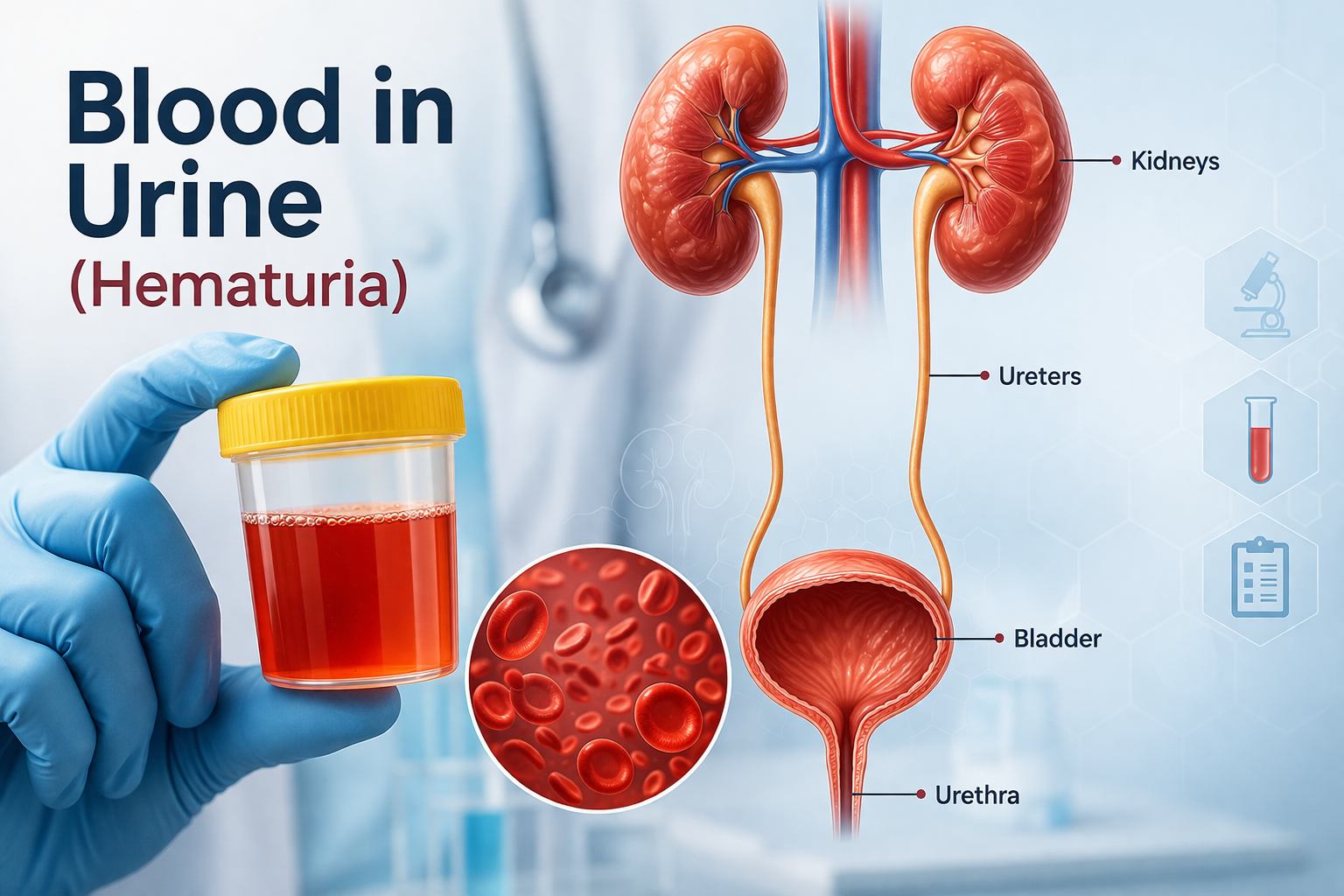
Hematuria is the medical term for the presence of red blood cells in your urine. It happens when the kidneys or another part of the urinary tract - the bladder, ureters, or urethra - allows blood cells to leak into your urine.
It affects people of all ages, including children and teens. In fact, researchers estimate that more than 1 in 5 people evaluated by a urologist are diagnosed with some form of hematuria.

Gross Hematuria vs. Microscopic Hematuria
There are two main types:
- Gross hematuria - This is the visible kind. Your urine may appear pink, red, or cola-colored. It only takes about 1 ml of blood per liter of urine to change the color dramatically.
- Microscopic hematuria (microhematuria) - You cannot see this with the naked eye. It is discovered only through a urine test (urinalysis) when a lab finds 3 or more red blood cells per high-power field under a microscope.
There is also a third, less discussed type called dipstick hematuria, where a chemical strip changes color on contact with urine. However, this test has a relatively high false-positive rate and must always be confirmed with a microscopic urinalysis before any diagnosis is made.
How Common Is Hematuria?
Hematuria is one of the most frequently seen conditions in urology. Microscopic hematuria is far more common than the visible form, affecting an estimated 2% to 31% of people at some point. Many people have it without ever knowing.
What Are the Symptoms of Hematuria?

Sometimes, the only sign is discolored urine. There is no pain, no urgency, no burning. This is called asymptomatic hematuria, and it is more common than people expect.
When other symptoms do appear, they may include:
- Pain or burning during urination
- A frequent, urgent need to urinate
- Pain in the lower back, abdomen, flanks, or pelvis
- Nausea and vomiting
- Fever and chills (often a sign of infection)
- Passing blood clots during urination, which can be painful
Important: The color of urine is not always reliable. Some foods, like beets, rhubarb, and blackberries, can turn urine red. Certain medications, such as phenazopyridine (a urinary tract pain reliever), can also do this. Always get a proper urine test to confirm whether blood is truly present.
What Causes Blood in Urine?

There is no single cause. Blood in urine has a wide range of possible triggers, from mild and temporary to serious and requiring treatment. Here are the most common ones.
Urinary Tract Infections (UTIs)
UTIs are among the most frequent causes of blood in urine, especially in women. When bacteria enter the urethra and multiply, the resulting infection and inflammation can cause bleeding. You will usually notice other symptoms too - a burning sensation when you pee, urgency, a strong odor, and sometimes a low-grade fever.
Kidney Stones and Bladder Stones
Minerals in urine can crystallize over time and form hard deposits known as stones. As they move through the urinary tract, they can scratch or tear the lining, causing bleeding. Kidney stones can also trigger severe cramping pain in the side or back, nausea, and vomiting. Some stones, however, cause no pain at all and are only discovered through imaging.
Enlarged Prostate (BPH)
In men, the prostate gland naturally grows larger with age, a condition called benign prostatic hyperplasia (BPH). As the prostate presses against the urethra, it can cause difficulty urinating, urgency, and blood in the urine. An infected prostate (prostatitis) can cause the same set of symptoms.
Kidney Disease and Glomerulonephritis
Glomerulonephritis is a condition where the tiny filtering units inside your kidneys become inflamed. This inflammation allows red blood cells to leak into your urine. It can occur on its own or as a complication of conditions like diabetes, lupus, or autoimmune disorders. Blood in urine from glomerulonephritis is often microscopic and may come with protein in the urine as well.
Cancer of the Urinary Tract
Painless, visible blood in urine is one of the most well-known warning signs of urinary tract cancers - including bladder cancer, kidney cancer, ureteral cancer, and prostate cancer. What makes these cases particularly dangerous is that blood can appear intermittently, leading some people to believe the problem has resolved on its own. It has not. Anyone over 35 who notices blood in their urine - even once - should be evaluated promptly.
Medications and Exercise
Certain common medications can lead to blood in urine:
- Blood thinners like aspirin, heparin, and warfarin
- The anticancer drug cyclophosphamide
- Some antibiotics, including penicillin
Vigorous exercise, particularly long-distance running, can also cause hematuria - sometimes called "runner's hematuria" or "march hematuria." It typically resolves on its own within a week, but you should still tell your doctor.
Inherited Conditions
- Sickle cell anemia - This genetic blood disorder can cause red blood cells to leak into the urine.
- Alport syndrome - A hereditary condition that damages the tiny blood vessels in the kidneys, allowing blood to appear in urine over time.
- Polycystic kidney disease (PKD) - Fluid-filled cysts on the kidneys can also contribute to hematuria.
Is Blood in Urine Dangerous?
This depends entirely on the underlying cause.
In many cases - especially in people under 35 - hematuria is temporary, goes away on its own, and has no serious cause behind it. A short-lived UTI, a hard workout, or a kidney stone passing through are all examples of causes that are manageable and rarely life-threatening.
However, blood in urine should never be dismissed as harmless without a proper evaluation. For people over 35, even a single episode of visible blood in the urine carries a higher risk of being linked to cancer of the urinary tract. Early detection of these conditions dramatically improves treatment outcomes.
There are also emergencies - heavy bleeding with clots that block urine flow, sudden drop in blood pressure, or blood loss leading to weakness and dizziness - that require immediate care.
The bottom line: Hematuria itself is not always dangerous, but what is causing it might be. Every episode of blood in urine deserves a medical evaluation.
Risk Factors: Who Is More Likely to Get Hematuria?
While anyone can develop hematuria, certain factors raise the risk:
- Age over 50 - Cancer risk increases, and prostate issues become more common in men
- Smoking history - One of the strongest risk factors for bladder cancer
- Family history - If kidney disease, kidney stones, or urinary cancers run in your family
- Certain medications - Blood thinners, NSAIDs, and some antibiotics
- Occupational exposure - Working with chemicals like benzene, aromatic amines, rubber, or dyes
- Dehydration - Not drinking enough fluids can concentrate urine and irritate the urinary lining
- Vigorous exercise or contact sports
- Prior UTIs or kidney stones
Women are more prone to hematuria from UTIs due to the anatomy of the urethra. Men are more prone to BPH-related hematuria as they age.
How Is Hematuria Diagnosed?
A doctor will begin with your medical history, current medications, and a physical exam - which may include a digital rectal exam (for men) or a pelvic exam (for women). From there, one or more of the following tests may be recommended:
- Urinalysis - The first-line test. Checks for red blood cells, white blood cells, protein, and other substances in your urine.
- Urine culture - Detects bacterial infections in the urinary tract.
- Urine cytology - Looks for abnormal or cancerous cells in the urine.
- Imaging tests - Ultrasound, CT scan, or MRI to visualize the kidneys, bladder, and ureters.
- Cystoscopy - A thin, flexible camera is inserted into the urethra to directly examine the bladder and urethral lining.
- Kidney biopsy - Reserved for cases where glomerular kidney disease is suspected.
Expert tip: The 2025 American Urological Association (AUA) guidelines recommend full evaluation for all adults aged 35 and over with confirmed microscopic hematuria (≥3 red blood cells per high-power field). For younger patients, evaluation is recommended if high-risk features are present, such as a smoking history or family history of urinary tract cancers.
How Is Blood in Urine Treated?
Treatment for hematuria targets the underlying cause - there is no one-size-fits-all approach.
In some cases - especially with microscopic hematuria that has no identified cause - no treatment is needed immediately. The doctor may recommend a follow-up urinalysis in 6 to 12 months to monitor for changes.
Can You Prevent Hematuria?
Not every cause of hematuria can be prevented. But you can reduce your risk by making a few consistent lifestyle choices:
- Drink plenty of water every day - Staying well hydrated dilutes urine and reduces the risk of stones and infection.
- Quit smoking - Smoking is a major risk factor for bladder cancer, one of the leading causes of visible blood in urine.
- Urinate before and after sexual intercourse - This helps flush out bacteria that could lead to a UTI.
- Limit high-sodium and high-protein diets - These can contribute to kidney stone formation.
- Maintain a healthy weight - Obesity is associated with kidney stones and increased cancer risk.
- Use protective equipment in contact sports - Bladder and kidney trauma from sports injuries are a known cause of hematuria.
- Limit exposure to industrial chemicals - If your work involves chemicals like dyes, rubber, or aromatic amines, use proper protective equipment and follow safety protocols.
When Should You See a Doctor?

The simple answer: always, and right away.
Even if you suspect your urine changed color from something you ate, it is far better to confirm that with a urine test than to assume all is well. Here is a quick guide:
- See a doctor soon if your urine looks pink, red, or brown - even if it happened just once.
- Go to urgent care or the emergency room if you notice large blood clots in your urine, severe pain, difficulty urinating, or feel dizzy or faint.
- Schedule a checkup if you have other symptoms like back pain, fever, or unexplained weight loss alongside urinary changes.
- Do not wait for it to go away if you are over 35. Even temporary or painless blood in the urine needs to be checked - it can be the first sign of something that is very treatable when caught early.
Conclusion
Blood in urine is one of those symptoms that your body uses to signal that something needs attention. It is not always a crisis - but it is never something to brush off. From UTIs and kidney stones to more serious conditions like bladder or kidney cancer, hematuria is the urinary system's way of saying "get this checked."
Key takeaways to remember:
- Hematuria means red blood cells are present in your urine - sometimes visible, sometimes only detectable under a microscope.
- The most common causes include UTIs, kidney stones, an enlarged prostate, and kidney disease.
- Cancer is a less common but critical cause - especially in people over 35 with painless, visible blood in urine.
- Diagnosis involves urinalysis, urine culture, imaging, and sometimes cystoscopy.
- Treatment depends entirely on the cause. Many cases are simple to treat; others need specialist care.
- Prevention strategies include staying hydrated, quitting smoking, and limiting dietary risk factors.
- Always see a doctor when you notice blood in your urine - early diagnosis saves lives.