
}})
If you have ever felt that burning, urgent, relentless need to urinate - only to produce a few painful drops - you already know how miserable a urinary tract infection can be. What is worse is that UTIs have a frustrating habit of coming back. According to medical research, nearly 20% of women who get one UTI will experience another, and 30% of those will face yet another recurrence.
The good news is that natural UTI prevention is very much within reach. With the right combination of diet choices, daily hygiene habits, and simple lifestyle adjustments, you can significantly lower your risk without relying entirely on antibiotics. This guide walks you through everything you need to know - practical, evidence-backed, and easy to apply starting today.
What Is a UTI and Why Does It Keep Coming Back?
A urinary tract infection occurs when bacteria - most commonly E. coli from the gut - enter the urethra and multiply in the bladder. Women are significantly more vulnerable than men because the female urethra is shorter, giving bacteria a shorter path to travel.
Common UTI symptoms include:
- A persistent, urgent need to urinate
- A burning sensation during urination
- Cloudy, dark, or strong-smelling urine
- Pressure or discomfort in the lower abdomen
Recurring UTIs are often triggered by the same preventable factors: poor hydration, certain hygiene practices, sexual activity, and an imbalance in vaginal bacteria. Understanding these triggers is the foundation of natural UTI prevention.
Hydration - The First and Most Powerful UTI Defense

If there is one thing every urologist, naturopath, and general practitioner agrees on, it is this: drink more water.
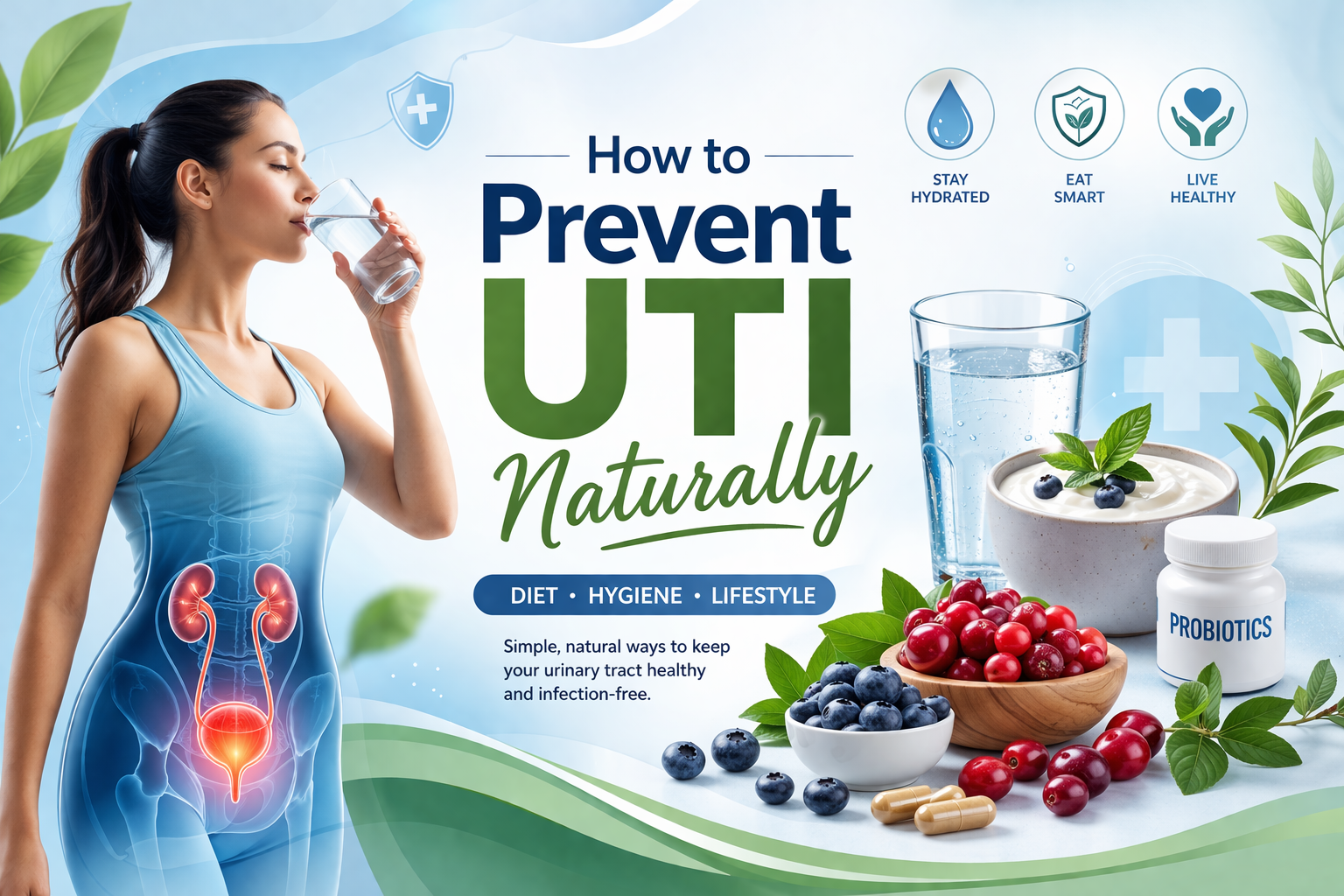
Staying well-hydrated increases the frequency of urination, which physically flushes bacteria out of the urinary tract before they have a chance to settle and multiply. It is one of the simplest and most effective natural UTI prevention strategies you can practice every day.
How Much Water Should You Drink?
Naturopathic experts generally recommend 70 to 80 ounces (roughly 2 to 2.4 litres) of plain water daily for good urinary tract health. Your urine should appear pale yellow. If it is dark or concentrated, your body is telling you it needs more fluids.
Beyond plain water, herbal teas - particularly those without caffeine - also play a role in hydration. Avoid alcohol and caffeinated drinks when you are feeling UTI symptoms, as both can irritate the bladder.
Foods That Help Prevent UTI Naturally

Diet plays a bigger role in urinary tract health than most people realize. Certain foods contain compounds that actively prevent bacteria from attaching to the walls of the urinary tract, while others support your immune system to fight infection more effectively.
Cranberries and Blueberries
Cranberries are probably the most well-known natural remedy for UTI prevention, and the science does support their use. They contain proanthocyanidins (PACs), compounds that prevent E. coli bacteria from sticking to the lining of the urinary tract. A Cochrane review of 50 randomized clinical trials confirmed that cranberry products significantly reduced UTI occurrence, especially in women with recurrent infections.
Blueberries work through a similar mechanism and are a great addition to smoothies, Greek yogurt, or salads. When using cranberry juice, always choose unsweetened versions - cranberry juice cocktails loaded with added sugar provide little benefit and may actually worsen bladder irritation.
Practical tip: Cranberry capsules or extracts are often a more concentrated and convenient option compared to juice, especially for those managing blood sugar.
Probiotic-Rich Foods
Your gut and urinary tract share a closer relationship than you might expect. The vaginal microbiome, largely dominated by Lactobacillus bacteria, acts as a natural defense against UTI-causing pathogens. When this balance is disrupted - by antibiotics, hormonal shifts, or poor diet - harmful bacteria can thrive.
Eating probiotic-rich foods helps restore and maintain this balance. Good sources include:
- Plain yogurt with live cultures
- Kefir
- Sauerkraut and kimchi
- Miso
- Tempeh and fermented vegetables
Research has shown that Lactobacillus rhamnosus and Lactobacillus fermentum strains are particularly effective at reducing the risk of urogenital infections. If you cannot get enough from food alone, a quality probiotic supplement is worth discussing with your doctor.
Vitamin C Sources
Vitamin C makes urine more acidic, which creates an environment where bacteria struggle to survive. It also boosts overall immune function, helping your body fight off infections more effectively. Aim to include vitamin C-rich foods in your daily diet:
- Oranges, lemons, and grapefruit
- Strawberries and kiwi
- Bell peppers
- Leafy green vegetables like spinach and broccoli
A daily supplement of 500 to 1,000 mg of vitamin C is also commonly recommended for those prone to recurrent UTIs, though it is always best to check with a healthcare provider first.
Foods to Avoid
Some foods and drinks can irritate the bladder and increase your UTI risk. If you are prone to urinary tract infections, try limiting:
- Alcohol - dehydrates the body and irritates the bladder lining
- Caffeine - coffee, energy drinks, and some teas can worsen urgency and irritation
- Spicy foods - can aggravate bladder sensitivity
- Refined sugar and processed foods - feed harmful bacteria and weaken the immune response
- Artificial sweeteners - some research links them to bladder irritation
Hygiene Habits That Reduce UTI Risk
Good hygiene is a cornerstone of UTI prevention, but many people are either doing too little or - surprisingly - too much.
Wiping Technique
This seems simple, but it matters enormously. Always wipe from front to back after using the toilet. Wiping back to front transfers intestinal bacteria directly toward the urethra, significantly increasing UTI risk. This applies after urination as well as bowel movements.
Sexual Hygiene
Sexual activity is one of the most common triggers for UTIs in women, sometimes called "honeymoon cystitis." Bacteria from the skin, hands, or anal area can easily be pushed toward the urethra during intercourse.
To reduce this risk:
- Urinate before and after sexual intercourse to flush out any bacteria
- Wash the genital area gently with mild soap and water before sex
- Stay hydrated and drink an extra glass of water after sex
- Consider the impact of your contraception method - diaphragms and spermicides have been linked to higher UTI rates
Choosing the Right Underwear
Your choice of underwear genuinely affects your UTI risk. Tight synthetic fabrics like nylon trap moisture and heat, creating an environment where bacteria thrive. Opt for:
- Cotton underwear - breathable and moisture-wicking
- Loose-fitting clothing - especially in warm weather
- Changing out of wet or sweaty clothing promptly
Avoid Irritating Products
Scented soaps, douches, vaginal deodorants, and bubble baths disrupt the natural bacterial balance of the vagina and can irritate the urethra. Stick to fragrance-free, gentle cleansers for the genital area, and let the body do the rest. The vagina is self-cleaning - it does not need internal washing.
Lifestyle Changes for Long-Term UTI Prevention

Beyond diet and hygiene, a few broader lifestyle habits can make a significant difference in preventing recurring UTIs.
Urination Habits
- Never hold your urine. Holding it allows bacteria to multiply inside the bladder. Go when you feel the urge.
- Take your time when urinating. Fully emptying the bladder leaves less residual urine where bacteria can grow.
- Urinate after sex - this one tip alone can dramatically reduce post-intercourse UTI risk.
Supplements Worth Considering
A few natural supplements have growing evidence behind them for UTI prevention:
- D-Mannose - a naturally occurring sugar found in cranberries and blueberries that prevents bacteria from adhering to the bladder wall. Studies show it can be highly effective in reducing recurrence, particularly for those experiencing frequent UTIs.
- Cranberry extract capsules - more potent and lower-sugar than juice
- Probiotic supplements - especially Lactobacillus strains
- Vitamin C - both dietary and supplemental
One study found that a combination of probiotics, D-mannose, and cranberry products reduced UTI incidence by 76%, while antibiotic use decreased by more than 90% in the study group. This is a promising signal for those looking for natural alternatives to long-term antibiotic prevention.
Always consult a healthcare professional before beginning any new supplement, especially if you are pregnant, managing other conditions, or taking medication.
When to See a Doctor
Natural prevention strategies are powerful, but they are not a substitute for medical treatment when an infection is already present. If you experience:
- Symptoms lasting more than two to three days despite home care
- Fever, chills, or nausea
- Pain in your back or side (which may indicate a kidney infection)
- Blood in the urine
...see a doctor promptly. Untreated UTIs can spread to the kidneys and become serious. If you are experiencing more than two UTIs per year, ask your doctor about a proper evaluation, as a small number of cases have an underlying structural cause that can be addressed.
Conclusion and Key Takeaways
Preventing UTIs naturally is about building consistent, daily habits rather than waiting for an infection to strike. Here is a quick summary:
- Drink 70–80 oz of water daily to flush bacteria from the urinary tract
- Eat cranberries, blueberries, and probiotic foods to prevent bacterial adhesion and restore healthy microbiome balance
- Add vitamin C to your diet to create an unfriendly environment for bacteria
- Wipe front to back, always and practice good sexual hygiene
- Choose cotton underwear and avoid scented intimate products
- Never hold your urine and fully empty your bladder each time
- Consider D-mannose or cranberry supplements if you experience recurrent UTIs
- See a doctor if symptoms worsen or persist beyond 2–3 days
Small, consistent habits are what protect your urinary health over the long term. Start with one or two changes this week and build from there.