
}})
You wake up in the night with a pounding pain in your lower back and a fever that came out of nowhere. Your urine is cloudy and you feel nauseous. This isn't a typical stomach bug - and it isn't just a bladder infection either.
These are the warning signs of a kidney infection, medically known as pyelonephritis - and it is one of the most serious types of urinary tract infection a person can develop. Unlike a lower UTI that stays in the bladder, a kidney infection means bacteria have traveled upward into one or both of your kidneys. Left untreated, it can permanently scar kidney tissue or spread to the bloodstream, causing life-threatening sepsis.
In this guide, you'll learn exactly how to recognize a kidney infection, what causes it, and what steps you can take to support recovery at home while getting the medical care this condition requires.
What Is a Kidney Infection (Pyelonephritis)?
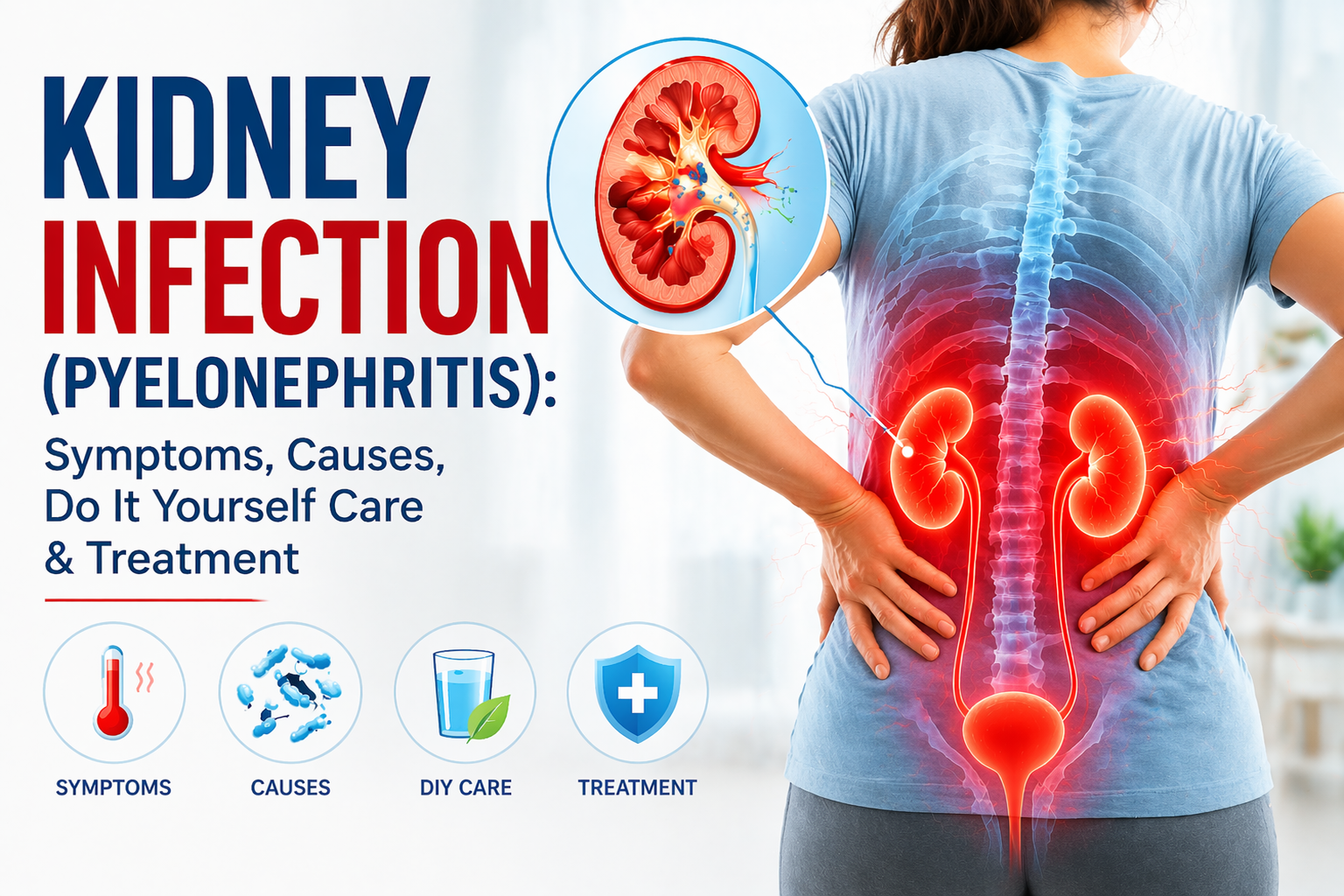
A kidney infection is a type of urinary tract infection (UTI) that affects one or both kidneys. It develops when bacteria - usually from the bladder - travel upward through the ureters and infect the kidney tissue itself. The medical term pyelonephritis comes from the Greek words for kidney (nephros) and inflammation (itis).
How Is a Kidney Infection Different from a UTI?
When most people say "UTI," they mean a lower urinary tract infection - an infection confined to the bladder or urethra. These are uncomfortable and require treatment, but they are generally not dangerous.
A kidney infection is an upper UTI. The critical difference is that kidney infections tend to come on suddenly, cause systemic symptoms like fever and chills, and produce significant pain in the back, side, or flank rather than just bladder discomfort. They are more serious, require longer antibiotic treatment, and carry the risk of organ damage and bloodstream infection if not properly addressed.
How Common Is It?
About 1 in 2,000 people develop a kidney infection each year in the United States. Despite being less common than lower UTIs, they account for a significant number of emergency room visits and hospitalizations because of how quickly they can escalate.
Warning Signs and Symptoms of a Kidney Infection
Recognizing a kidney infection early gives you the best chance of a straightforward recovery. The symptoms often appear suddenly and can feel dramatically more intense than a typical bladder infection.
Key symptoms include:
- Fever and chills - a high temperature that comes on abruptly is one of the most defining signs of a kidney infection, and something that does not typically happen with a lower UTI
- Back, side, or flank pain - a deep, aching pain on one or both sides of your lower back, just below the ribcage, often described as a dull but constant pressure or a sharper stabbing sensation
- Nausea and vomiting - the systemic nature of a kidney infection affects the whole body, not just the urinary system
- Painful or burning urination - similar to a bladder infection, but often more pronounced
- Frequent and urgent need to urinate - with little urine coming out each time
- Cloudy, dark, or bloody urine - urine may also have a strong or unpleasant odor
- Abdominal pain - some people feel discomfort in the lower abdomen or groin in addition to back pain
- Fatigue and general illness - the body's response to a spreading infection often causes significant tiredness and malaise
The fever and back pain combination is the most important distinguishing feature. If you have urinary symptoms with these two signs together - seek medical attention the same day.
What Causes a Kidney Infection?
How Bacteria Travel to the Kidneys
Most kidney infections begin the same way as bladder infections - bacteria enter the urinary tract through the urethra. From there, if the lower infection isn't treated (or if the immune system can't fight it off), bacteria travel upward through the ureters - the tubes connecting the bladder to the kidneys - and establish an infection in kidney tissue.
Less commonly, bacteria from another infection elsewhere in the body can travel through the bloodstream and settle in the kidneys. This route is rarer but possible - for example, an untreated infection in the skin, lungs, or even an infected heart valve can spread this way.
Bacterial Types Responsible
The most common bacterial cause of kidney infections is E. coli, which normally lives in the intestines but can migrate toward the urinary tract - particularly in women, whose urethra is anatomically closer to the anus. Other bacteria responsible include Proteus mirabilis, Enterobacter, and Staphylococcus. Viral causes are rare and generally limited to people with severely compromised immune systems.
Who Is Most at Risk?
Certain anatomical, medical, and behavioral factors significantly increase the likelihood of developing a kidney infection:
- Women - the shorter female urethra means bacteria have a much shorter distance to travel to reach the bladder. The proximity of the urethra to both the vagina and the anus increases the chance of bacterial entry. Pregnant women carry additional risk because the growing uterus places pressure on the ureters, slowing urine flow and making it easier for bacteria to accumulate
- People with urinary blockages - kidney stones, an enlarged prostate (in men), a narrowed urethra, or uterine prolapse can all prevent the bladder from fully emptying. When urine pools, bacteria thrive
- People with vesicoureteral reflux - a condition where small amounts of urine flow backward from the bladder into the ureters, pushing bacteria toward the kidneys
- People with weakened immune systems - diabetes, HIV, and immunosuppressive medications (such as those taken after organ transplants) all reduce the body's ability to fight bacterial infections, making kidney infections more likely and harder to clear
- People with nerve damage near the bladder - spinal cord injuries or nerve damage can prevent a person from feeling a bladder infection developing, meaning it often goes undetected until it spreads to the kidneys
- People using urinary catheters - catheters provide a direct pathway for bacteria to enter the urinary system, especially when used for extended periods
Do It Yourself Steps to Support Kidney Infection Recovery at Home
This is an important section to understand clearly: kidney infections cannot be cured with home remedies. Antibiotics are always required. Attempting to treat a kidney infection using only natural remedies is dangerous - it allows the infection to progress, potentially causing permanent kidney damage or life-threatening blood poisoning.
That said, there are meaningful do it yourself supportive steps you can take alongside prescribed antibiotics to help your body heal faster and manage discomfort during recovery:
1. Drinking Plenty of Water Hydration is the most important thing you can do at home. Drinking generous amounts of water helps flush bacteria through the urinary tract, supports kidney function during the infection, and prevents dehydration - which worsens symptoms significantly. Aim for pale yellow urine as a hydration target.
2. Avoid Alcohol and Caffeine Both alcohol and caffeine can irritate the already-inflamed urinary tract and contribute to dehydration. Eliminate both completely until your antibiotic course is finished and symptoms have resolved.
3. Apply a Warm Heating Pad A covered heating pad applied to the lower back or abdomen can ease flank pain and muscle discomfort associated with kidney inflammation. Use it for 15 to 20 minutes at a time. This is a safe, simple do it your own comfort measure that reduces pain without interfering with antibiotic treatment.
4. Take Your Full Course of Antibiotics - Without Exception This is the most critical step. Many people start to feel better within two to three days of starting antibiotics and stop taking the medication early. This is dangerous - incomplete treatment leaves some bacteria alive and allows the infection to return, often with antibiotic resistance. Always finish every single dose of your prescribed antibiotic course, even if you feel completely well.
5. Rest and Reduce Physical Strain A kidney infection puts the whole body under stress. Rest as much as possible during the first few days. Avoid strenuous physical activity, heavy lifting, and anything that causes pain to the affected area.
6. Monitor Your Symptoms Closely A key do it yourself responsibility is tracking your progress. Keep a mental or written note of:
- Whether fever is going up or down
- Whether back pain is improving, staying the same, or worsening
- Whether urine color and odor are normalizing
- Whether nausea is subsiding
If symptoms are not improving within 48 to 72 hours of starting antibiotics, or if they worsen at any point, contact your healthcare provider immediately - you may need a different antibiotic or hospital-level care.
When a Kidney Infection Becomes a Medical Emergency
While most kidney infections can be managed with outpatient antibiotic treatment, certain warning signs indicate an emergency that requires immediate hospital care. Go to the nearest emergency room without delay if you experience:
- Sudden, severe fever or pain that intensifies rapidly
- Bloody urine combined with fever, nausea, or vomiting
- Confusion, disorientation, or sudden changes in mental state
- Complete inability to urinate or very little output
- Severe shortness of breath or rapid heart rate
- Signs of severe dehydration - extreme thirst, dizziness, dry mouth, dark urine
These symptoms can indicate that the infection has spread beyond the kidneys into the bloodstream (sepsis) or that a serious complication such as emphysematous pyelonephritis (gas-producing bacterial destruction of kidney tissue) has developed. Both are life-threatening and require urgent intervention.
How Is a Kidney Infection Diagnosed?
When you see a healthcare provider with suspected kidney infection symptoms, they will typically begin with:
- Urinalysis: Examining a urine sample for white blood cells (indicating infection), red blood cells, bacteria, and unusual proteins
- Urine culture: Growing bacteria from the urine sample in a lab to identify the exact strain and determine which antibiotics it responds to - this guides treatment
- Blood tests: To check kidney function and assess whether bacteria have entered the bloodstream
- Imaging (CT scan or renal ultrasound): Used when symptoms are severe, when the infection isn't responding to treatment, or when a blockage like a kidney stone is suspected as the underlying cause
Medical Treatment - Antibiotics and Hospital Care
Standard Outpatient Treatment: Kidney infections are treated with antibiotics for a minimum of 14 days - significantly longer than the three to five days typically required for a lower UTI. Commonly prescribed antibiotics include trimethoprim-sulfamethoxazole (TMP-SMX), amoxicillin, ceftriaxone, cephalexin, ciprofloxacin, and levofloxacin. The specific antibiotic chosen will depend on the bacterial strain identified in the urine culture and any known drug allergies.
When Hospital Treatment Is Required: Some patients need hospitalization, including those who are very sick or have high fevers that don't respond to oral medication, those with severe nausea or vomiting preventing them from keeping oral antibiotics down, those with an underlying condition like a weakened immune system, and those whose infection isn't improving with outpatient antibiotics. Hospital treatment typically involves intravenous (IV) antibiotics followed by a transition to oral antibiotics once the patient is stable.
Recovery Timeline: Most people notice significant improvement within two to three days of starting antibiotics. Full recovery with complete clearance of the infection typically takes one to two weeks, depending on the severity and the individual's overall health.
Complications of Untreated Kidney Infections
A kidney infection is not a condition to wait out or manage with home remedies alone. Without proper antibiotic treatment, serious and permanent damage can occur:
- Kidney scarring: Repeated or severe infections can leave permanent scar tissue on the kidneys, reducing their filtering function over time and potentially leading to chronic kidney disease, high blood pressure, or kidney failure
- Sepsis (blood poisoning): If bacteria from the kidneys enter the bloodstream, sepsis can develop rapidly - a systemic inflammatory response that is life-threatening and requires intensive care unit treatment
- Emphysematous pyelonephritis: A rare but severe complication most common in people with diabetes, where bacteria produce gas inside the kidney tissue, causing rapid organ destruction
- Renal papillary necrosis: Progressive damage to the inner kidney structures that can severely impair kidney function
- Pregnancy complications: A kidney infection during pregnancy significantly increases the risk of delivering a baby with low birth weight and may also increase the risk of premature labor
Prevention - How to Stop Kidney Infections Before They Start
Most kidney infections begin as bladder infections that travel upward. Preventing the lower infection is the most effective prevention strategy. These do it yourself prevention habits significantly reduce your risk:
- Drink plenty of water daily - at least six to eight glasses to keep the urinary tract flushed and bacteria from building up
- Urinate regularly and fully - never hold urine for extended periods; holding urine allows bacteria to multiply in the bladder
- Urinate before and after sexual intercourse - sex can introduce bacteria into the urethra; flushing it out immediately before and after significantly reduces infection risk
- Wipe front to back - always after urination and bowel movements, to prevent E. coli from moving toward the urethra
- Avoid deodorant sprays, douches, and scented products near the genital area - these disrupt the natural bacterial balance and can make infection more likely
- Stay hydrated and maintain good kidney health - conditions like diabetes that affect immune function should be well managed to reduce infection susceptibility
- Don't ignore bladder infection symptoms - a lower UTI that is treated promptly with antibiotics is far less likely to travel upward and become a kidney infection
Conclusion & Key Takeaways
A kidney infection is serious - but it is also very treatable when caught early and handled correctly. The danger lies in delaying treatment, dismissing symptoms as just another UTI, or attempting to manage it entirely with home care.
Here's what to remember:
- Pyelonephritis is an upper UTI where bacteria infect one or both kidneys - more serious than a bladder infection
- Key warning signs are fever, chills, back or flank pain, nausea, and painful or cloudy urination - the fever plus back pain combination is the critical alert
- Most cases are caused by E. coli bacteria traveling upward from the bladder through the ureters
- Women, pregnant people, those with urinary blockages, and people with weakened immune systems are at highest risk
- Do it yourself home care - drinking water, applying heat, resting, avoiding alcohol and caffeine - supports recovery but cannot replace antibiotics
- Always complete the full 14-day antibiotic course, even if symptoms improve within days
- Go to the ER immediately if symptoms include confusion, bloody urine with fever and vomiting, inability to urinate, or signs of sepsis
- Prevention through hydration, front-to-back hygiene, urinating after sex, and treating UTIs promptly is your strongest defense against kidney infections
Your kidneys are essential organs. Treat a kidney infection with the urgency it deserves.