
}})
You feel a burning sensation every time you go to the bathroom. You're running to the toilet every 20 minutes, but barely anything comes out. Your lower belly feels heavy and uncomfortable. Sound familiar?
Most people immediately think "UTI" - but here's the thing: not all urinary infections are the same, and the difference between a bladder infection and a broader UTI can mean the difference between a simple antibiotic course and a hospital visit.
In this guide, you'll learn exactly what separates these two conditions, which one carries serious risks, and what steps you can take right now to manage symptoms and protect your health.
Understanding the Basics: UTI vs. Bladder Infection

Before jumping to symptoms and treatment, it helps to understand the relationship between these two terms - because most people use them interchangeably, and that's where the confusion starts.
What Is a UTI?
A urinary tract infection (UTI) is a broad term. It refers to an infection that can occur anywhere in your urinary system - the urethra, bladder, ureters, or kidneys. Think of it as an umbrella category that covers several types of infections, each affecting a different part of the system.
The urinary system has four key parts:
- Kidneys - filter waste from your blood and produce urine
- Ureters - tubes that carry urine from the kidneys to the bladder
- Bladder - stores urine until it's ready to leave the body
- Urethra - the tube that carries urine out of the body
A UTI can start in any of these areas. Where it begins - and whether it spreads - determines how serious it becomes.
What Is a Bladder Infection?
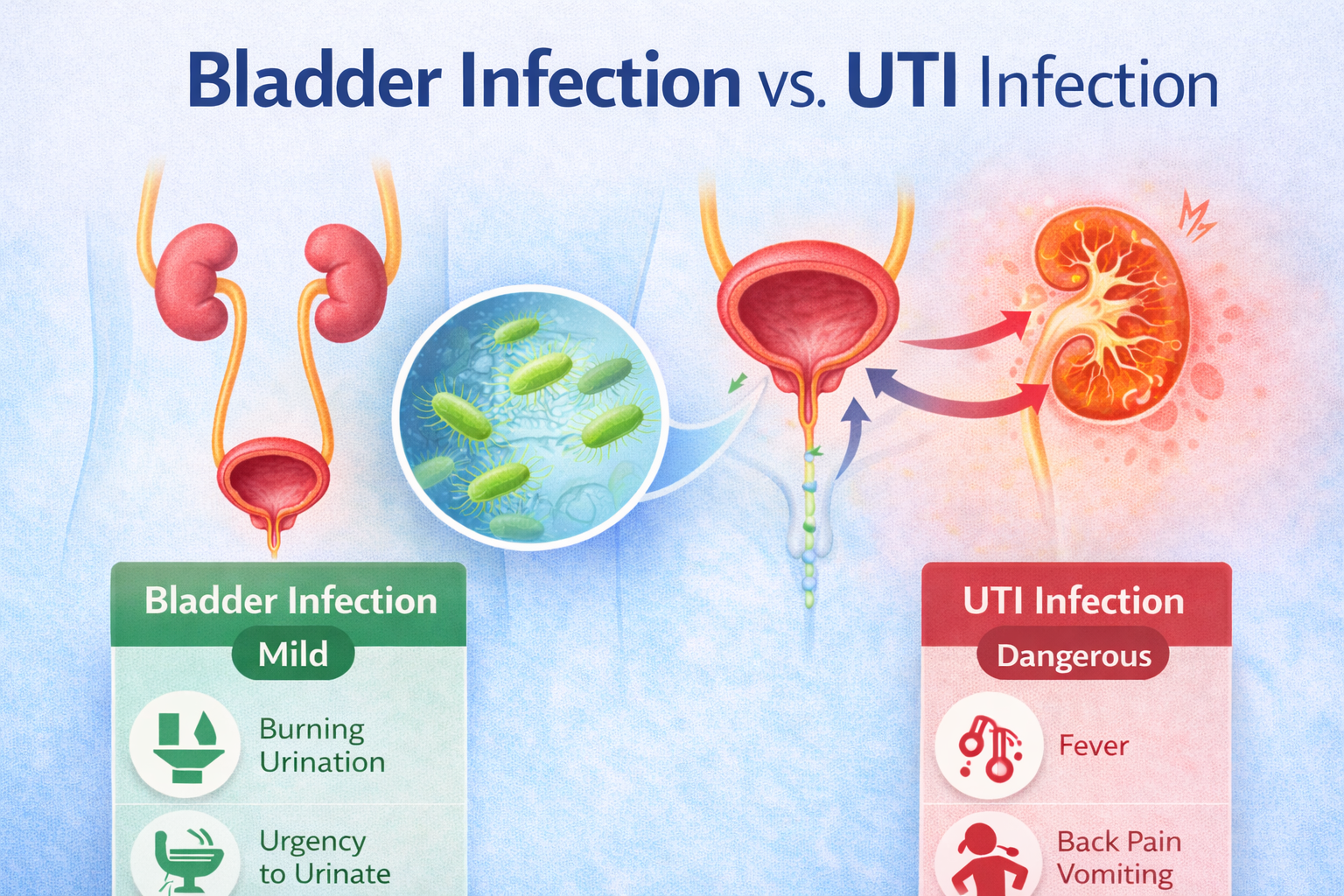
A bladder infection, medically known as cystitis, is one specific type of UTI. It's the most common type. When bacteria enter the urethra and travel up into the bladder, that's a bladder infection. It stays contained in the bladder and doesn't spread further - at least not initially.
Because most UTIs are bladder infections, the symptoms most people associate with a UTI are actually bladder infection symptoms.
How Are They Related?
Here's the clearest way to think about it: all bladder infections are UTIs, but not all UTIs are bladder infections. A UTI can also involve the urethra (urethritis) or - far more seriously - the kidneys (pyelonephritis).
The location of the infection is everything. That's what determines your symptoms, your risk level, and how aggressively it needs to be treated.
Symptoms - How to Tell Which One You Have

Symptoms can overlap, which is why so many people get confused. But there are distinct patterns that can help you identify what's going on.
Bladder Infection Symptoms
These are the classic signs most people recognize:
- Burning or pain during urination
- A constant urgent need to pee, even when very little comes out
- Pelvic pain or pressure just above the pubic bone
- Urine that looks cloudy, dark, or has an unusual smell
- Leaking small amounts of urine
These symptoms are uncomfortable and disruptive, but a bladder infection confined to the bladder is generally not life-threatening.
Kidney Infection Symptoms (The Dangerous One)
This is where it gets serious. A kidney infection develops when bacteria from a bladder infection travel upward through the ureters and reach one or both kidneys. The symptoms go far beyond the usual urinary discomfort:
- High fever and chills
- Nausea and vomiting
- Severe back pain, flank pain, or side pain
- Pink or red-tinged urine (a sign of bleeding)
- Extreme fatigue
- Confusion or mental changes, especially in older adults
If you have any combination of fever, back pain, and vomiting alongside urinary symptoms, this is a medical emergency - not a situation for you to do it your own home management.
Symptoms That Overlap
Both types share some common signs: burning when urinating, frequent urination, and cloudy or foul-smelling urine. This overlap is exactly why people delay seeking care - they assume it's just a simple bladder infection when it has already progressed. When in doubt, always seek medical evaluation.
What Causes These Infections?

The root cause of both conditions is bacteria entering the urinary tract. The most common culprit is E. coli, which accounts for more than 90% of bladder infections. E. coli naturally lives in the intestines but can migrate to the urethra - especially in people without a penis, because their urethra is shorter and closer to the anus.
Other contributing causes include:
- Sexual activity introducing bacteria to the urethra
- Holding urine for long periods, allowing bacteria to multiply in the bladder
- Using urinary catheters, which provide a direct path for bacteria
- Spermicide use with diaphragms, which can disrupt healthy bacteria balance
- Poor hand hygiene before touching the genital area
Who Is Most at Risk?
Certain groups face a higher chance of developing these infections:
- Women and people with a vagina - the shorter urethra makes it anatomically easier for bacteria to reach the bladder
- Postmenopausal individuals - lower estrogen levels change the vaginal environment, making infections more likely
- Pregnant people - hormonal and anatomical changes increase vulnerability; untreated UTIs during pregnancy can also affect fetal health
- People with diabetes - immune system changes make the body less effective at fighting bacterial infections
- Men with an enlarged prostate - the prostate can obstruct urine flow, allowing bacteria to grow
- People with a history of kidney stones - stones can block urine from draining properly, creating an ideal environment for infection
Do It Yourself Steps to Manage Symptoms at Home

If your symptoms are mild and you've already spoken with a healthcare provider (or are waiting for an appointment), there are several practical do it yourself strategies to ease discomfort and support recovery.
1. Hydrate Aggressively Drink plenty of water - aim for six to eight glasses per day. Staying hydrated helps flush bacteria through the urinary system. Your urine should be pale yellow; if it's dark, you need more water.
2. Use a Warm Compress Applying a warm compress or a covered heating pad to your lower abdomen can ease pelvic pain and pressure associated with a bladder infection. Keep it on for 15 to 20 minutes at a time.
3. Consider Cranberry Supplements Cranberry juice from the grocery store isn't proven to cure or reliably prevent UTIs. However, cranberry extract supplements may help reduce recurrence by making it harder for bacteria to stick to the bladder wall. Talk to a pharmacist or doctor before starting.
4. Urinate Frequently Don't hold it in. Urinating regularly flushes bacteria out of the bladder. Try not to go more than two to three hours between bathroom trips when you have an active infection.
5. Avoid Irritants During a UTI or bladder infection, avoid caffeine, alcohol, citrus juices, and spicy foods. These can irritate the bladder lining and make symptoms feel worse.
6. Try OTC Pain Relief Over-the-counter pain relievers like acetaminophen (paracetamol) can help manage discomfort. Note that these relieve symptoms but do not treat the infection itself.
7. Avoid Sexual Intercourse During an active infection, sexual activity can introduce additional bacteria and worsen irritation. Wait until your symptoms have fully resolved.
Important: These do it your own home strategies are supportive measures - they are not a substitute for antibiotics when an infection is confirmed. Most UTIs do not resolve without medical treatment.
When to Stop Self-Managing and See a Doctor
Some situations call for immediate professional care. Contact a healthcare provider promptly if:
- Symptoms do not improve within 24 to 48 hours of starting antibiotics
- You develop fever, chills, back pain, or vomiting alongside urinary symptoms
- You are pregnant
- You have diabetes or a condition affecting your immune system
- You have had more than two or three UTIs in the past six months
- Blood is visible in your urine
Go to the emergency room immediately if you experience fever combined with back pain and vomiting. This combination strongly suggests a kidney infection, which can become life-threatening if not treated urgently.
Medical Treatment Options
The standard treatment for both bladder infections and UTIs is antibiotics. The specific antibiotic and duration depend on the type and severity of the infection.
For bladder infections (uncomplicated UTIs): A three-to-five day course of antibiotics is typically prescribed. Commonly used antibiotics include trimethoprim, nitrofurantoin, ciprofloxacin, and amoxicillin.
For kidney infections (complicated UTIs): These require a longer course - often seven to fourteen days - and in severe cases, intravenous (IV) antibiotics administered in a hospital setting.
Key rules for antibiotic treatment:
- Always complete the full course, even if symptoms disappear early
- Never reuse an old prescription - bacteria vary and the wrong antibiotic won't work
- If symptoms worsen after starting antibiotics, call your doctor; you may need a different medication
For people with frequent recurrent infections, a doctor may recommend low-dose daily antibiotics, post-sex antibiotics, or non-antibiotic options like methenamine hippurate to reduce recurrence rates.
Do It Yourself Prevention Strategies That Actually Work
The best do it yourself approach to bladder infections and UTIs is preventing them from happening in the first place. These habits are simple, evidence-backed, and make a real difference - especially for people who get infections frequently.
- Drink enough water daily - six to eight glasses keeps bacteria from lingering in the bladder
- Urinate after sex - this is one of the most effective single habits for reducing UTI frequency; it helps flush out bacteria introduced during intercourse
- Wipe front to back - always, every time, to prevent E. coli from moving toward the urethra
- Urinate regularly - don't hold urine for long periods; aim to go every two to three hours
- Choose the right underwear - loose-fitting clothes and cotton underwear reduce moisture and bacterial growth around the urethra
- Reconsider birth control method - diaphragms and spermicide-coated condoms increase UTI risk; talk to a doctor about alternatives
- Take probiotics - some research suggests probiotics support healthy vaginal flora, which may reduce the number of harmful bacteria that could cause an infection
- For postmenopausal individuals - topical estrogen cream prescribed by a doctor can help change the vaginal pH and reduce recurrence
Conclusion & Key Takeaways
Bladder infections and UTIs are closely related but not identical - and understanding the difference can genuinely protect your health. A bladder infection is the most common type of UTI and, when caught early, is straightforward to treat. A kidney infection is a different story: it's serious, painful, and requires urgent medical care.
Here's what to take away:
- A UTI is the broader category; a bladder infection (cystitis) is the most common type
- E. coli causes more than 90% of bladder infections, usually entering through the urethra
- Bladder infection symptoms - burning, urgency, pelvic pressure - are uncomfortable but manageable with antibiotics
- Kidney infection symptoms - fever, back pain, vomiting - are a medical emergency
- Do it yourself home steps like hydration, warm compresses, frequent urination, and avoiding irritants help manage discomfort but don't replace antibiotics
- Prevention is possible through simple daily habits: drinking water, urinating after sex, and practicing good hygiene
- If you get infections frequently, talk to a doctor about long-term prevention strategies rather than treating each episode alone
Your urinary health matters. Don't dismiss symptoms that keep coming back - early action is always better than a complicated kidney infection you could have avoided.