

}})
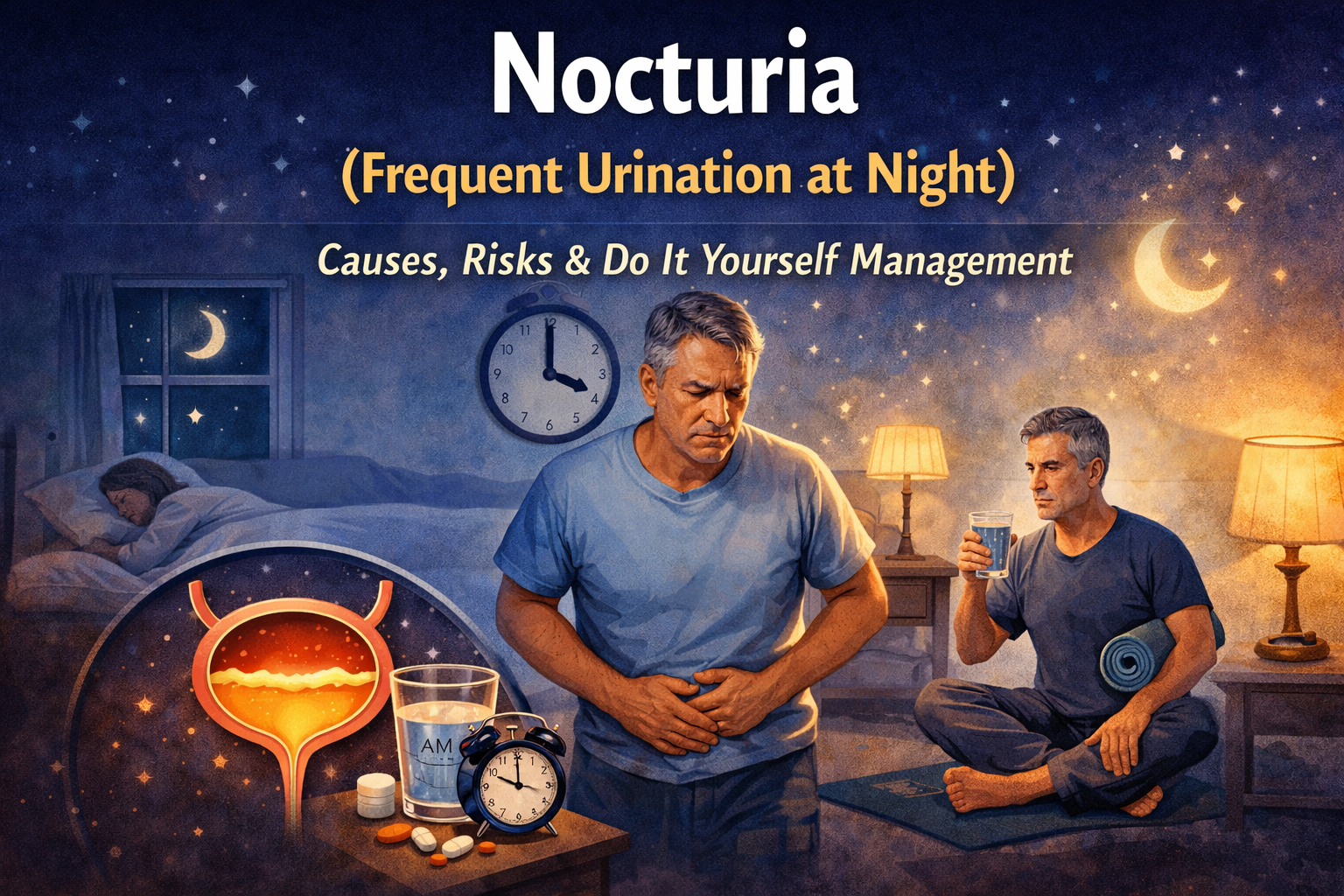
You wake up at 2 AM. Then again at 4 AM. By morning, you've been to the bathroom three times and you're exhausted before the day even begins. If this sounds familiar, you're not alone - and there's a name for it: nocturia.
Nocturia is one of the most overlooked sleep disruptors in adults. It affects millions of people globally, yet most brush it off as a normal part of getting older. It isn't always. In this guide, you'll learn exactly what causes frequent urination at night, who's most at risk, and practical do it yourself strategies you can start using today to get better sleep.
What is Nocturia?
Nocturia is a medical condition where you wake up more than once during the night specifically to urinate. It's not just an inconvenience - repeated nighttime waking fragments your sleep cycle, leaving you fatigued, unfocused, and less healthy over time.
Nocturia vs. Frequent Daytime Urination
These two conditions are often confused, but they're different. Frequent daytime urination means you're making many bathroom trips during the day but can sleep through the night without issue. Nocturia is strictly about bathroom trips after you go to bed and before you wake up in the morning.
Both can sometimes co-exist, but they often have different triggers and require different solutions.
How Common Is It?
Nocturia is far more common than most people realize:
- It affects more than 50% of adults over age 50
- Up to 1 in 3 people over age 30 experience it at some point
- Before age 50, it's slightly more common in women; after 50, it becomes more common in men
The numbers alone show this is not a rare condition - it's a widespread health issue that deserves attention.
Why Do You Wake Up to Pee at Night? Common Causes

There's rarely just one reason behind nocturia. It's usually a combination of lifestyle habits, medication effects, and underlying health factors. Here are the most common causes:
Fluid and Dietary Habits
- Drinking large amounts of fluid in the evening - especially water, tea, or juice
- Consuming alcohol or caffeine close to bedtime, both of which act as diuretics and increase urine production
- Eating salty or spicy foods that make you thirsty at night
Medications
- Diuretics (water pills) are a major trigger. These are commonly prescribed for blood pressure or heart conditions, and they cause the kidneys to flush out excess fluid - often at inconvenient hours
- If you take diuretics in the evening, your body will process that fluid while you sleep
Bladder-Related Issues
- A bladder that doesn't fully empty or fill properly can cause more frequent trips
- Bladder infections, inflammation, or obstruction can reduce bladder capacity, making small amounts of urine feel urgent
Habitual Waking
- Sometimes people train themselves - unintentionally - to wake and urinate out of routine, even when their bladder isn't truly full
Who Is Most at Risk?
Certain groups are more likely to develop nocturia. Understanding your personal risk helps you act sooner.
- Older adults (60+): The kidneys become less efficient at concentrating urine at night as we age, leading to higher overnight urine production
- Men with prostate issues: An enlarged prostate (benign prostatic hyperplasia) presses on the urethra and disrupts normal bladder function
- Women post-childbirth or in menopause: Pelvic floor changes and hormonal shifts affect bladder control
- People with obesity: Excess body weight puts pressure on the bladder and affects fluid regulation
- Those with poor sleep habits: Restless sleep increases the chance of waking up and noticing bladder urges that might otherwise be ignored
Health Conditions Linked to Nocturia

Nocturia is sometimes the first visible sign of a deeper health issue. Several medical conditions directly contribute to frequent nighttime urination:
- Diabetes (Type 1 and Type 2): High blood sugar causes the kidneys to work harder, pulling more fluid into the urine
- High blood pressure: Hypertension affects kidney function and fluid regulation overnight
- Congestive heart failure: Fluid that builds up in the legs during the day gets redistributed when you lie down at night, increasing urine production
- Obstructive sleep apnea: Interruptions in breathing trigger the release of hormones that signal the kidneys to produce more urine
- Edema (fluid retention): Swollen ankles or legs release fluid when elevated at rest, sending it to the bladder
- Restless legs syndrome: A condition that causes nighttime waking - sometimes mistaken for a urinary urge
- Polyuria: A condition where the body simply produces too much urine for the bladder to hold, regardless of drinking habits
Managing these underlying conditions is often the most effective path to reducing nocturia long-term.
Do It Yourself Tips to Reduce Nighttime Urination

Before reaching for medication, there's quite a lot you can do on your own. These do it your own adjustments are low-risk, cost-nothing, and often make a real difference within days.
1. Control Your Fluid Timing
- Stop drinking fluids 2 to 3 hours before bedtime
- You don't need to reduce your total daily water intake - just shift most of it to the morning and afternoon
- Avoid alcohol and caffeinated drinks (coffee, tea, cola) from late afternoon onward
2. Adjust When You Take Medications
- If you're on a diuretic, ask your doctor whether it can be taken in the morning or at least six hours before bed
- Never change your medication schedule without medical approval, but this is a question absolutely worth raising
3. Elevate Your Legs in the Evening
- If you have swollen feet or ankles (edema), elevate your legs for 30–60 minutes in the afternoon or early evening
- This helps fluid move out of your lower limbs before bed - rather than flooding your kidneys while you lie down at night
4. Try an Afternoon Nap
- A short nap (20–30 minutes) in the afternoon allows your bloodstream to reabsorb fluid during rest
- This can pre-emptively reduce the amount of urine your body produces at night
5. Wear Compression Stockings
- Compression socks help push fluid out of the legs and back into circulation during the day
- This prevents the nighttime "fluid dump" that overloads the bladder while you sleep
6. Strengthen Your Pelvic Floor
- Pelvic floor exercises (Kegel exercises) can improve bladder control and reduce urgency at night
- These are particularly helpful for women, but men benefit too - especially after prostate issues
7. Keep a Bladder Diary
- Track the time you wake up, how much you urinate, what you drank that day, and any medications taken
- This information is invaluable - both for spotting personal patterns and for helping any doctor you eventually see
These do it yourself strategies work best when you approach them consistently, not as a one-night experiment.
When to See a Doctor
Lifestyle changes help many people, but they're not always enough. You should contact a healthcare provider if:
- You wake up more than twice per night to urinate
- The pattern has been going on for several weeks or more
- You notice other symptoms like pain during urination, blood in urine, or unusual thirst
- You're already making lifestyle changes and seeing no improvement
- Your sleep is severely disrupted, affecting your daytime functioning
Nocturia is a treatable condition - it's not something you simply have to accept. A provider may check for underlying conditions through urine tests, blood tests (kidney function), bladder imaging, or a cystoscopy.
Medical Treatments Your Doctor May Recommend
Once the underlying cause is identified, treatment becomes much more targeted. Common medical approaches include:
Medications
- Anticholinergics (such as oxybutynin or tolterodine): Reduce overactive bladder symptoms - effective in up to 40% of patients
- Mirabegron (Myrbetriq): Relaxes the bladder muscle to increase storage capacity
- Desmopressin (DDAVP): Signals the kidneys to produce less urine overnight - particularly useful when the cause is nocturnal polyuria
- Regulated diuretics (bumetanide, furosemide): Help control how much urine is produced at specific times of day
Condition-Specific Treatments
- Sleep apnea → CPAP therapy
- Enlarged prostate → alpha-blockers or surgery
- Pelvic organ prolapse → pelvic floor therapy or surgical correction
- Diabetes → improved blood sugar management
Treatment is not one-size-fits-all. Your provider will factor in your age, overall health, existing medications, and the likely cause before recommending a plan.
Conclusion & Key Takeaways
Nocturia is not just an annoying sleep interruption - it's a signal your body is sending that something needs attention. Whether it's a simple habit fix or a sign of a deeper health condition, the good news is that it's almost always treatable.
Here's what to remember:
- Nocturia = waking more than once a night to urinate; it's different from daytime frequent urination
- Common triggers include late-night fluid intake, caffeine, alcohol, diuretics, and reduced bladder capacity
- Multiple health conditions - diabetes, sleep apnea, heart failure, enlarged prostate - can all be root causes
- You can start with do it yourself strategies: fluid timing, leg elevation, compression stockings, pelvic floor exercises, and a bladder diary
- If lifestyle changes don't work within 2–3 weeks, see a healthcare provider
- Medication and condition-specific treatments are highly effective when matched to the right cause
Don't accept broken sleep as inevitable. Small, consistent changes often make a significant difference - and if they don't, medical solutions are available and effective.