
}})
Most people flush and move on. But what if those few seconds before you flush could tell you something genuinely important about your health? Your urine colour is one of the easiest, most immediate health signals your body gives you - completely free, every single day.
From pale yellow to dark brown, cloudy white to even blue or green, each shade carries meaning. This guide breaks down the full urine colour chart in plain language, so you can understand what your body is communicating and know exactly when to act on it.
Why Urine Colour Matters More Than You Think
Your kidneys filter over 120 litres of blood every single day. What comes out as urine is a direct reflection of what is happening inside your body - your hydration level, your diet, your medications, and sometimes your organs. Changes in urine colour are often the earliest visible sign of something shifting internally, long before other symptoms appear.
The good news is that most colour changes are harmless and temporary. The better news is that learning to read them is a simple do it your own health habit that costs nothing and takes seconds.
The Urine Colour Chart - A Do It Yourself Health Guide
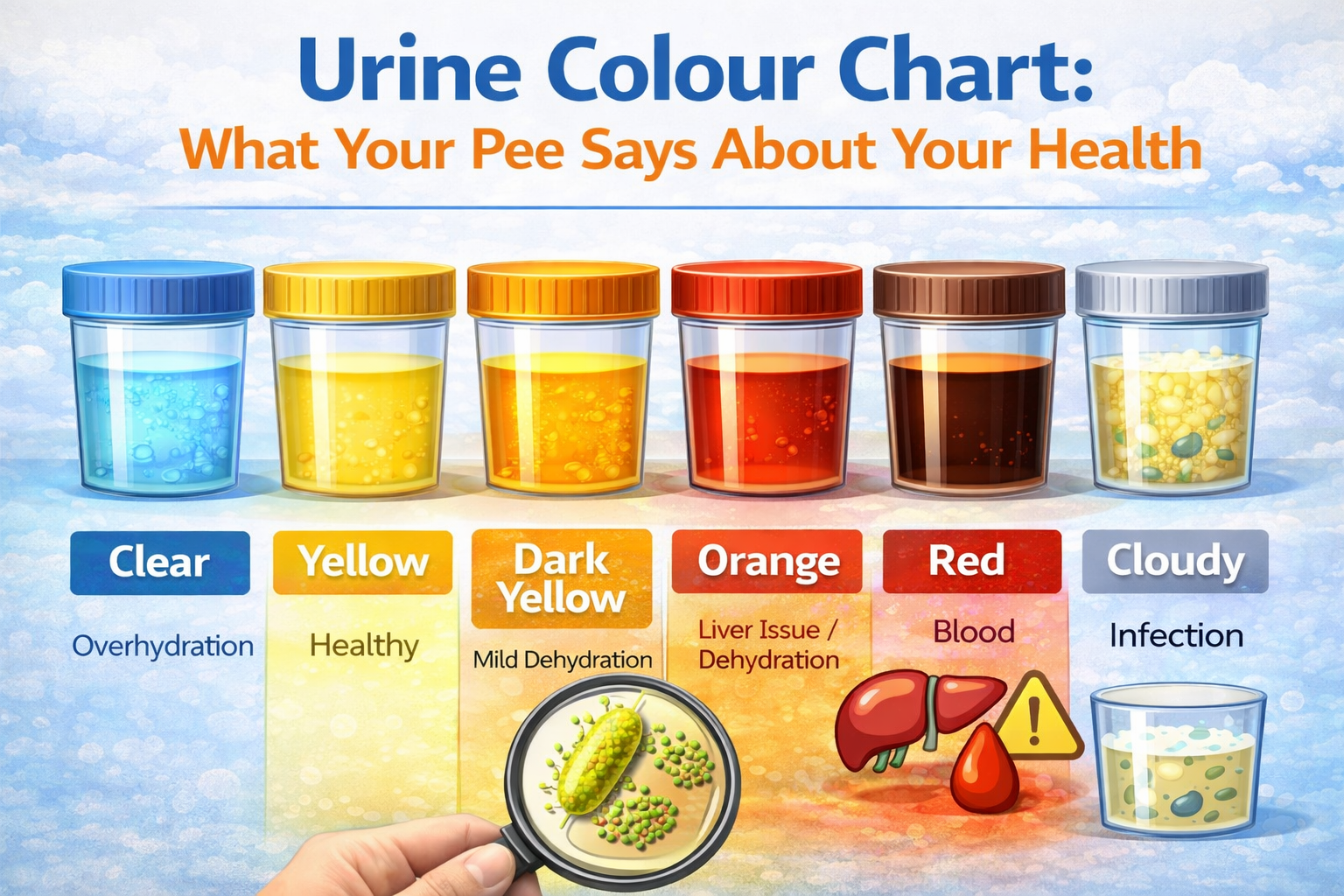
Here is what each colour typically signals, from the most common to the rarest.
Clear or Colourless Urine
Clear urine looks like plain water and usually means you have had a lot to drink. While staying hydrated is important, completely colourless urine can indicate overhydration. When you drink excessive amounts of water, your body's sodium and electrolyte balance gets disrupted - a condition called water intoxication. In extreme cases, this can become dangerous.
If your urine is consistently clear and you are not drinking unusually large amounts of water, it is worth mentioning to your doctor, as persistent clear urine without obvious cause can occasionally point to liver-related issues.
Pale Yellow to Amber - The Healthy Range
This is the gold standard. Pale yellow to medium amber urine is the sign of a well-hydrated, normally functioning body. The colour comes from urochrome, a natural pigment your body produces when breaking down haemoglobin. The more fluids you consume, the lighter the colour. As hydration dips, the shade deepens toward amber. This range is your baseline for a do it yourself daily check.
Neon or Bright Yellow
If you recently took a multivitamin or B-complex supplement, bright yellow urine is completely expected. The body excretes excess B vitamins - particularly riboflavin (B2) - through urine. It looks alarming but is harmless. No action needed beyond knowing the cause.
Orange Urine
Orange-coloured urine is most commonly a dehydration signal - your urine is highly concentrated because there is not enough fluid to dilute it. Drinking water usually resolves it within a few hours.
However, if the orange colour persists even after rehydrating, and is accompanied by pale stools or yellowing of the skin or eyes, it may point to a bile duct or liver issue. Certain medications like sulfasalazine (used for inflammatory conditions) and phenazopyridine (a urinary pain reliever) also commonly cause this colour change. High doses of vitamins A and B-12 are additional triggers.
Pink or Red Urine
This is the one that understandably causes the most concern. Red or pink urine has two very different explanations:
- Dietary causes: Beets, blackberries, and rhubarb are notorious for temporarily turning urine pink or red. It resolves on its own within 24 hours.
- Medical causes: Blood in the urine - known as haematuria - can cause this colour. Possible reasons include kidney stones, urinary tract infections (UTIs), an enlarged prostate, bladder or kidney tumours, or even intense physical exercise like marathon running.
If you have not eaten red-pigmented foods and notice pink or red urine, do not attempt a do it your own diagnosis for this one - book an appointment with your doctor promptly.
Dark Brown or Tea-Coloured Urine
Brown urine that looks like strong tea or cola is a more serious signal. Common causes include:
- Severe dehydration
- Eating large quantities of fava beans, rhubarb, or aloe
- Medications including metronidazole, chloroquine, certain statins, senna-based laxatives, and the muscle relaxant methocarbamol
- Liver disease, kidney disorders, or internal bleeding
- Rhabdomyolysis - a breakdown of muscle tissue triggered by extreme exercise, which can seriously stress the kidneys
If drinking more water does not clear dark brown urine within a day, that is the point to stop doing your own observation and see a doctor.
Blue or Green Urine
Rare, but it does happen. The usual culprits are food dyes or specific medications:
- Medications: Amitriptyline (an antidepressant), indomethacin (a pain and arthritis drug), propofol (a surgical anaesthetic), and cimetidine (used for acid reflux) can all produce blue or green urine.
- Dyes: Brightly coloured food or beverages containing artificial dyes can temporarily change urine colour.
- Infections: A Pseudomonas aeruginosa bacterial infection - though uncommon - can produce a blue-green tinge.
- Genetic condition: A rare inherited disorder called familial benign hypercalcemia (sometimes called "blue diaper syndrome") can cause blue urine, primarily in children.
If you are on none of the above medications and have not consumed unusual food dyes, this warrants a doctor's visit.
Cloudy or Foamy Urine
Murky, milky, or foamy urine is one of the most clinically significant changes to watch for. Possible causes include:
- Urinary tract infections (UTIs): Cloudy urine is a hallmark UTI symptom, often paired with a strong odour, burning during urination, or frequent urgency.
- Kidney stones: Can cause cloudiness alongside pain in the back or sides.
- Kidney disease: Persistently foamy urine - particularly after the foam is not caused by urinating quickly - may indicate protein in the urine (proteinuria), which is an early warning sign of kidney dysfunction.
- Pregnancy complications: In pregnant individuals, cloudy urine can be a sign of preeclampsia, a condition requiring immediate medical attention.
- Sexually transmitted infections (STIs): Some STIs can also cause cloudy or unusual discharge alongside urine changes.
Increased water intake may help if the cause is mild dehydration, but if cloudiness persists or is accompanied by any other symptom, seek medical advice.
What Causes Urine Colour to Change?

Beyond the specific colours above, four main factors drive colour variation:
- Hydration: The single biggest driver. More water means lighter urine.
- Diet: Certain foods - beets, rhubarb, carrots, asparagus, blueberries, and fava beans - are well-known colour influencers.
- Medications and supplements: Many common drugs and vitamins directly alter urine colour as a known side effect. Always check the information leaflet for new medications.
- Underlying health conditions: Liver, kidney, and bladder conditions can all manifest through urine colour changes before other symptoms become obvious.
When to Stop the Do It Your Own Checks and See a Doctor

Doing your own urine colour check is a great daily habit, but it has limits. See a healthcare professional if:
- Red or pink urine appears without any dietary explanation
- Dark brown urine persists despite adequate hydration
- Cloudy urine is accompanied by pain, burning, or a strong smell
- Orange urine appears alongside pale stools and yellowing skin
- Any unusual colour persists for more than 24–48 hours without a clear cause
- You notice foamy urine regularly over several days
Painless blood in urine is a particularly important one - it should never be ignored, as it can occasionally indicate bladder or kidney cancer in its early stages.
Simple Tips to Keep Your Urine - and Health - in Check
Making urine colour monitoring a regular do it your own practice is easy and takes no equipment. Alongside that habit, a few straightforward steps support urinary health overall:
- Aim to drink enough water that your urine stays pale yellow for most of the day
- Do not hold urine for long periods - it allows bacteria to multiply in the bladder
- Always try to fully empty your bladder when you go
- Avoid excessive caffeine and alcohol, which irritate the bladder lining
- Note any new medications and check whether colour changes are a listed side effect
- Keep a mental note of any unusual colours that appear more than once
These steps cost nothing and take no special equipment. They are simply the habit of paying attention to what your body is already showing you.
Conclusion
Your urine colour chart is one of the most underused, completely free health tools available to you. A quick glance before you flush can catch dehydration early, flag a possible infection, alert you to a medication side effect, or - in rarer cases - prompt you to investigate something more serious before it progresses.
Making this a do it your own daily habit does not require medical training. It requires only awareness. Know what pale yellow means, recognise when the colour shifts, understand the most likely causes, and know when a colour change deserves a doctor's attention rather than a wait-and-see approach.
Key Takeaways:
- Pale yellow to amber = healthy and well-hydrated
- Clear = possibly overhydrated; persistent cases worth discussing with a doctor
- Orange or dark brown = dehydration first, liver issues if it persists
- Pink or red without dietary cause = always see a doctor
- Cloudy or foamy = possible UTI, kidney issue, or infection
- Blue or green = usually medication or dye; rarely infection or genetics
- Any unexplained change lasting more than 48 hours = book an appointment