
}})
Urethral stricture is a condition where the urine passage becomes narrow because of scar tissue. It may start with mild symptoms. A weaker urine stream. Straining. Taking longer in the bathroom. Over time, it can worsen.
When diagnosed, most patients face a common decision.
Should they choose quick dilation for relief?
Or go for urethroplasty, which is a more definitive surgery?
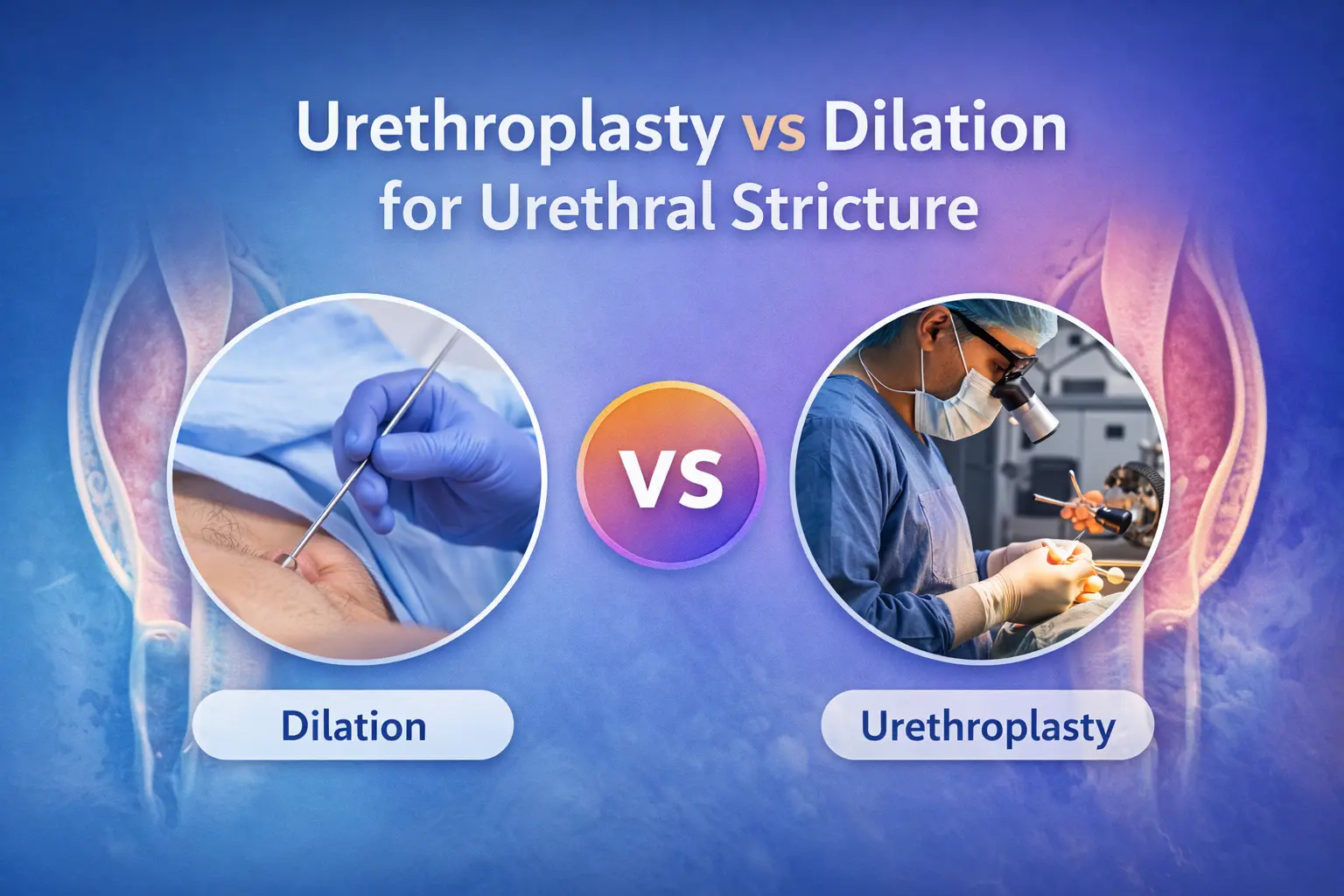
This guide explains urethroplasty vs dilation for urethral stricture in clear and practical terms. We will compare outcomes, recurrence, recovery, cost, and long-term success. Because choosing treatment is not just about today. It is about what happens next year. And five years later.
Understanding the Two Treatments
Before comparing them, let us understand what each one actually does.
What Is Urethral Dilation?
Urethral dilation is a non-surgical procedure. The narrowed urethra is gently stretched using dilators. It can be done under local anesthesia or short sedation.
The goal is simple. Open the narrow segment so urine can flow more freely.
It usually provides relief quickly. Patients often go home the same day.
But here is the key point.
Dilation does not remove scar tissue. It only stretches it.
Think of it like widening a tight rubber band. It may open temporarily. But the band still exists.
What Is Urethroplasty?
Urethroplasty is open reconstructive surgery. The scar tissue is either removed or the urethra is rebuilt using healthy tissue.
This is considered the definitive treatment in many cases.
Unlike dilation, urethroplasty corrects the structural problem. It addresses the root cause, not just the narrowing.
Recovery takes longer. Hospital stay is usually a few days. A catheter remains for some time.
But the long-term results are often superior.
When Doctors Recommend Dilation First
Doctors may recommend dilation as first line in specific cases.
Short bulbar urethral strictures often respond well initially.
First episode strictures may be treated conservatively.
Patients unfit for surgery may benefit from dilation.
Can urethral dilation be used as first line before urethroplasty in short bulbar urethral strictures?
Yes, in carefully selected patients.
Dilation offers quick symptom relief. It avoids major surgery at the beginning. For some patients, that is enough.
But not always.
When Urethroplasty Becomes the Better Option
At what stricture length do experts recommend urethroplasty instead of repeated dilation?
Long strictures.
Recurrent strictures.
Failed previous dilation or endoscopic procedures.
If narrowing keeps coming back… stretching again and again may worsen scar tissue.
Repeated dilation can increase fibrosis. Over time, the urethra becomes less flexible.
In such cases, urethroplasty offers a more durable solution.
Urethroplasty vs Dilation Outcomes
Let us compare them side by side.
Dilation is quick. Simple. Low cost initially. Same day discharge.
But relief is often temporary. Recurrence rates are high. Multiple sessions may be required.
Urethroplasty is more complex. It involves surgery. Hospital stay is longer. Recovery is slower.
But recurrence is significantly lower. Many patients remain symptom-free for years.
When comparing urethral stricture urethroplasty vs endoscopic dilation outcomes, long-term studies consistently show higher durable success with urethroplasty.
Success Rates Comparison
Success rates urethroplasty compared with dilation tell an important story.
Dilation success decreases over time. After repeated attempts, recurrence becomes common.
Urethroplasty has the highest durable success rates, often above 85 to 90 percent depending on stricture type.
The comparison of success rate complications and need for reintervention in urethroplasty versus dilation favors urethroplasty in recurrent or long strictures.
Temporary relief vs durable repair. That is the core difference.
Recurrence Rates
Recurrence rates after dilation compared to open urethroplasty are significantly higher.
Why does repeated urethral dilation often fail and when to switch to urethroplasty definitive surgery?
Because dilation stretches scar tissue without removing it. Scar tissue naturally contracts again.
Each repeat procedure may shorten the time between recurrences.
Switching to urethroplasty becomes reasonable when:
- Stricture returns quickly
- Multiple dilations have failed
- Scar segment is long
At that point, definitive repair often makes more sense.
Recovery Differences
Recovery differences between urethroplasty and dilation are important for planning.
Dilation recovery is short. Mild discomfort. Most patients return to normal routine quickly.
Urethroplasty recovery takes longer. Hospital stay is usually two to four days. A catheter remains for one to three weeks depending on technique.
Patient recovery time hospital stay and catheter duration after urethroplasty vs simple dilation must be discussed clearly before deciding.
Short recovery vs long-term benefit. That is the balance.
Pros and Cons
Let us look at the pros and cons of urethral dilation versus urethroplasty in practical terms.
Pros of Dilation
Quick procedure.
Minimal anesthesia.
Lower upfront cost.
Cons of Dilation
Temporary relief.
High recurrence.
Multiple procedures may be required.
Pros of Urethroplasty
Long-term cure in most cases.
Low recurrence.
Structural repair of urethra.
Cons of Urethroplasty
Surgery required.
Longer recovery.
Higher upfront cost.
When viewed over years, repeated dilation may cost more than a single definitive surgery.
Cost and Recovery Differences Between Urethroplasty and Dilation
Dilation is cheaper initially. It is outpatient. No long hospital stay.
But if it must be repeated several times, total cost increases.
Urethroplasty has higher initial cost due to surgery and hospitalization. However, it is often more cost-effective long term because recurrence is low.
Financial planning matters. But so does quality of life.
How Many Times Can Dilation Be Repeated?
How many times can dilation be repeated safely before considering urethroplasty surgery?
There is no fixed number. But effectiveness decreases with repetition.
Repeated dilation may:
- Increase scar tissue
- Make future surgery more complex
- Reduce durability of results
Most guidelines suggest reconsidering strategy after one or two recurrences.
Guideline-Based Algorithm
Guideline based algorithm for choosing between dilation DVIU and urethroplasty generally follows this flow:
First episode short stricture: dilation or DVIU.
Short recurrence: consider repeat endoscopic treatment.
Long or repeated recurrence: urethroplasty.
This approach balances safety and durability.
Is Urethroplasty the Gold Standard?
Is urethroplasty the gold standard?
For long segment strictures and recurrent disease, yes. Many experts consider urethroplasty the definitive treatment.
Especially in young patients with long life expectancy, durable repair makes sense.
Quick fixes may not be ideal for someone facing decades of recurrence.
Counseling Points for Patients
Counseling points for patients deciding between quick dilation and durable urethroplasty repair include:
Age.
Lifestyle.
Stricture length.
Recurrence history.
Work schedule.
Tolerance for surgery.
A working professional who cannot take time off may initially prefer dilation. A younger patient with repeated recurrences may choose surgery for lasting relief.
Shared decision making is essential.
Real-World Clinical Scenarios
Case 1: First time short stricture
Dilation recommended. Quick and reasonable.
Case 2: Recurrent narrowing after two dilations
Urethroplasty preferred for long-term solution.
Case 3: Long segment stricture diagnosed initially
Reconstructive surgery often recommended directly.
Each case differs. Blanket advice does not work.
Risks and Complications
Both treatments have risks.
Dilation risks include minor bleeding, infection, and recurrence.
Urethroplasty risks include bleeding, infection, temporary urinary discomfort, and rarely erectile issues.
Complication rates are generally low in experienced hands.
Conclusion
Choosing between urethroplasty vs dilation for urethral stricture depends on length, recurrence, and patient goals.
Dilation provides quick, temporary relief.
Urethroplasty offers durable structural repair.
Repeated stretching of scar tissue rarely provides long-term cure. Early definitive treatment often improves outcomes.
Discuss options openly with your urologist. Because the right choice today can prevent repeated procedures tomorrow.