
}})
Erectile dysfunction is more common than most people realise. Many men experience difficulty getting or maintaining an erection at some stage in life. Sometimes it happens due to stress or fatigue. Sometimes it is linked to medical conditions such as diabetes, nerve problems, or blood flow issues.
Medicines help many patients. Lifestyle changes help others. But in some cases, these options do not provide enough improvement. When that happens, doctors may suggest a surgical solution.
A penile implant is one such option. It is a medical device placed inside the body to help achieve an erection when natural function is not possible.
The decision is personal. It involves medical understanding, emotional readiness, and clear expectations. This guide explains penile implants in a respectful and simple way so patients and families can make informed choices.
What is a Penile Implant?
A penile implant is a medical device placed inside the penis to help men achieve and maintain an erection suitable for intercourse. It does not increase desire. It does not change sensation. It simply provides structural support when the natural erection mechanism is not working.
Think of it like a joint replacement. When a knee stops working properly, a medical implant helps restore movement. In a similar way, a penile implant restores the physical ability to have an erection.
The implant is hidden inside the body. Nothing is visible externally. Urination, sensation, and ejaculation generally remain unchanged unless other medical conditions exist.
Who Needs Penile Implant Surgery?
Penile implant surgery is usually considered when other treatments do not work.
Men with severe erectile dysfunction often struggle despite using medicines. This may happen due to diabetes, nerve damage, spinal problems, or vascular disease.
Some men develop ED after prostate surgery. Others experience it due to long-standing health conditions.
In these situations, implants offer a reliable option. They do not depend on tablets or injections. They provide consistent results.
The decision is made after proper evaluation and discussion with a urologist.
Types of Penile Implants
There are two main types of penile implants used today.
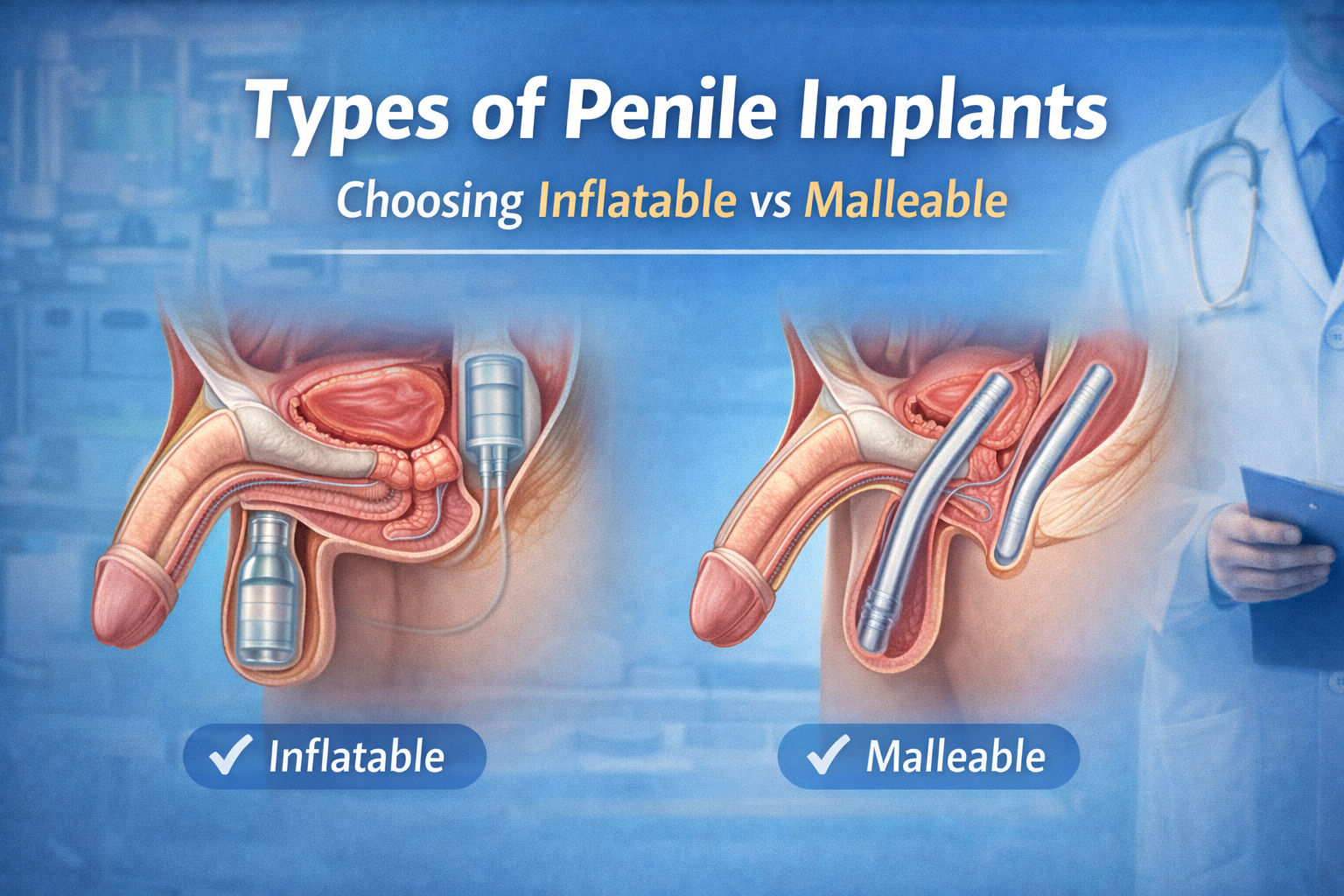
One type is inflatable. The other is malleable, also called semi-rigid.
Both work well. Both are medically approved. The choice depends on lifestyle, comfort, medical condition, and personal preference.
Inflatable Penile Implants
Inflatable implants are the most advanced option.
They consist of fluid-filled cylinders placed inside the penis. A small pump is placed in the scrotum. When activated, fluid moves into the cylinders and creates an erection. After intercourse, the fluid returns and the penis becomes soft again.
This design closely mimics a natural erection. It allows better concealment and more control.
Men can choose when to activate the implant. The penis remains relaxed otherwise.
For many patients, this option feels more natural in daily life.
Malleable or Semi-Rigid Implants
Malleable implants consist of bendable rods placed inside the penis.
They do not inflate or deflate. The penis remains semi-firm all the time. For intercourse, it is positioned manually.
The design is simple and durable. Surgery is shorter and easier compared to inflatable implants.
This option is often preferred by patients who want a straightforward solution or have certain medical conditions.
Though less natural in appearance, it provides reliable support.
Inflatable vs Malleable Implants
Choosing between the two types is similar to choosing between a manual and automatic system.
Inflatable implants offer flexibility and natural appearance. Malleable implants offer simplicity and durability.
Inflatable devices require learning how to use the pump. Malleable implants do not.
Inflatable implants usually cost more. Malleable implants are generally more affordable.
Doctors help patients decide based on comfort, health condition, and expectations.
How Penile Implant Surgery Works
The surgery is performed under anesthesia.
A small incision is made to place the implant inside the penis. The device is positioned carefully to match natural anatomy.
Once placed, the implant is tested for proper functioning. The incision is then closed.
The entire procedure is done under sterile conditions. It usually takes one to two hours.
Patients are monitored after surgery and guided about recovery.
Benefits of Penile Implant Surgery
Penile implants offer a long-term solution for erectile dysfunction.
They provide reliable erections whenever needed. There is no need for tablets before intimacy.
Many men regain confidence. Relationships improve. Emotional stress reduces.
Spontaneity returns because the implant does not require planning or medication timing.
For patients who have struggled for years, this can be life-changing in a very personal way.
Recovery After Implant Surgery
Recovery takes time and patience.
Hospital stay is usually short. Pain and swelling reduce gradually over a few days.
Doctors advise rest, medication, and proper wound care.
Full healing may take three to six weeks. Sexual activity is resumed only after medical clearance.
Learning to use the implant is part of recovery. Doctors guide patients step by step.
Risks and Side Effects
Every surgery carries risks. Penile implant surgery is no different.
Infection is a possible complication, though uncommon. Swelling and discomfort occur initially but improve with healing.
Mechanical failure may happen after several years, though modern devices are durable.
In rare cases, revision surgery may be required.
Careful surgical technique and proper follow-up reduce risks significantly.
Success Rate of Penile Implants
Penile implants have high satisfaction rates among patients and partners.
Many men experience long-term improvement in sexual function and emotional well-being.
The device functions reliably for years. Most patients report positive outcomes.
Success depends on realistic expectations and proper medical guidance.
Cost of Penile Implant Surgery
Cost varies depending on implant type, hospital facilities, and surgeon expertise.
Inflatable implants are generally more expensive due to their design.
Malleable implants are more affordable.
Insurance coverage may vary depending on policy and medical indication.
Patients should discuss cost clearly before surgery.
How to Choose the Right Implant
Choosing the right implant is a personal decision.
Age, health condition, lifestyle, and expectations play a role.
Some patients prefer natural appearance. Others prefer simplicity.
Budget also influences choice.
Partner involvement in discussion often helps.
Doctors guide patients by explaining benefits and limitations of each option.
Alternatives Before Implant Surgery
Implants are not the first step in treatment.
Doctors usually try oral medicines, injections, or vacuum devices before recommending surgery.
If these options fail or are unsuitable, implants are considered.
This stepwise approach ensures the best outcome.
Life After Penile Implant
Life after implant surgery returns to normal gradually.
Urination remains normal. Sensation usually remains unchanged.
The implant allows spontaneous intimacy. Confidence improves.
Most men adapt quickly and resume routine activities after recovery.
Follow-up visits ensure long-term success.
Common Myths About Penile Implants
Many myths create unnecessary fear.
Some believe implants affect masculinity. They do not. They simply restore function.
Some think pleasure reduces. In most cases, sensation remains unchanged.
Others assume implants are visible. They are completely internal.
Understanding facts removes anxiety.
When to Consult a Urologist
Persistent erectile dysfunction should not be ignored.
Men with diabetes-related ED, nerve problems, or failed medications should seek evaluation.
Early consultation helps identify treatment options.
Medical advice ensures safe decisions.
Conclusion
Penile implants are an effective solution for severe erectile dysfunction.
They provide reliability, confidence, and improved quality of life when other treatments fail.
Two main types are available. Each has its own benefits.
The right choice depends on individual needs and medical guidance.
Consulting an experienced urologist helps patients understand options clearly and make informed decisions about their health and future.