
}})
A ureteral stent is a soft, flexible tube placed inside the ureter to keep urine flowing between the kidney and the bladder. Doctors most commonly use it after a kidney stone procedure, when a stone blocks urine flow, or when the ureter is narrowed. Most stents stay in for a few days to a few weeks. While it is in place, mild discomfort, urinary urgency, blood-tinged urine, and back or lower-abdomen pain are common and usually manageable. Removal is quick, and symptoms typically resolve within days.
Being told you need a ureteral stent, or waking up from a kidney stone procedure with one in place, brings a lot of practical questions. What does it feel like? Can you work? Have sex? Exercise? Travel? How long does it stay in? What warning signs matter? This guide walks through everything you need to know about ureteral stents, written from a patient perspective and grounded in current urological practice.
What Is a Ureteral Stent?

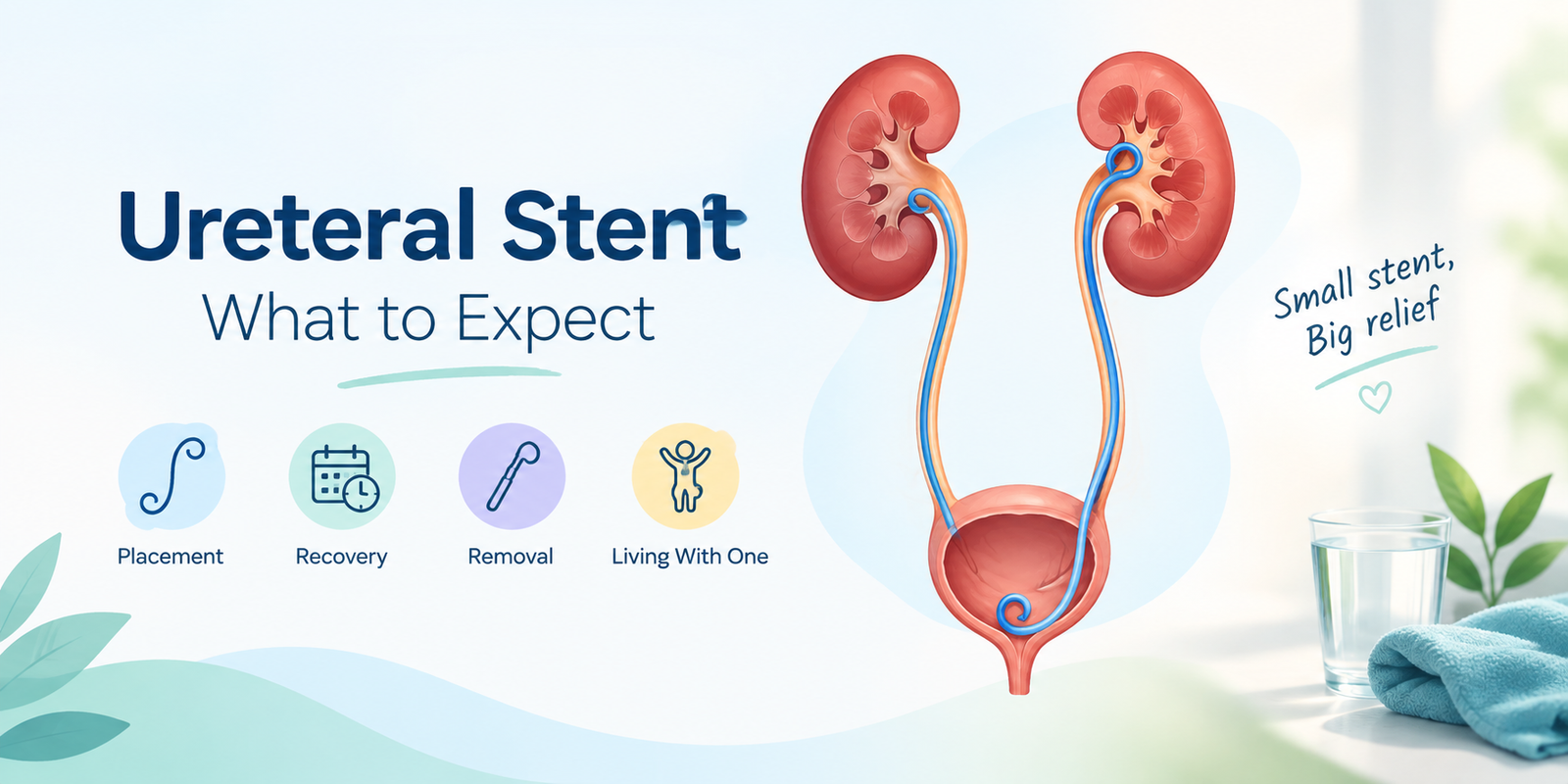
A ureteral stent is a thin, hollow, flexible tube, usually made of soft plastic, that sits inside the ureter, the tube that carries urine from the kidney to the bladder. It is typically about 22 to 30 centimetres long, with a small curl at each end that holds it in place. One curl sits in the kidney and the other in the bladder, which is why it is often called a "double J stent" or "DJ stent."
The stent is entirely inside the body. It is not visible from the outside, though some stents have a fine thread that comes out through the urethra to make later removal easier. Whether your stent has a string depends on why it was placed and how long it is intended to stay.
Why You Might Need a Ureteral Stent
Ureteral stents are used in several situations. The most common are:
- After a kidney stone procedure such as ureteroscopy with laser stone treatment, to protect the ureter as swelling settles and prevent obstruction
- To bypass a blocked ureter when a stone, tumour, or blood clot is preventing urine from draining
- To relieve hydronephrosis, the swelling of the kidney that occurs when urine cannot drain properly
- To hold open a narrowed ureter (a stricture) while it heals or before further treatment
- To help small stones pass by relaxing and widening the ureter
- Before shock wave lithotripsy for large stones, to protect the kidney and ureter
- In pregnancy when a stone or obstruction develops, and definitive treatment must be postponed
The specific reason for your stent shapes how long it will stay in and what recovery to expect.
What Happens During Ureteral Stent Placement
A stent is usually placed under general or spinal anaesthesia through a cystoscope, a thin instrument passed through the urethra and bladder. A guide wire is threaded up the ureter to the kidney, and the stent is guided into place over the wire. The whole placement takes 15 to 30 minutes when done on its own, and it is often combined with the stone or ureter procedure itself.
There is no external cut, and there are usually no stitches. Most people go home the same day or the next morning, with the stent already in place.
What to Expect in the First Few Days

Some symptoms after a stent is placed are completely normal and simply reflect the presence of the stent inside a sensitive area. The most common are:
| Symptom | What it usually means |
|---|---|
| Blood-tinged or pink urine | Normal irritation from the stent; drink more water, and it usually clears |
| Burning or discomfort when urinating | The stent tip in the bladder causing local irritation |
| Feeling the need to urinate more often | The bladder is aware of the stent |
| Sudden strong urges to go, sometimes with small leaks | Common early on and usually settles |
| Dull ache in the back or side of the affected kidney | Urine reflux up the stent during urination |
| Cramping in the lower abdomen | Normal bladder response to the stent |
| Blood in urine after activity or long standing | Very common and usually harmless |
Most of these symptoms improve within the first few days as the body adjusts. If they are severe or worsening, or if any warning sign below appears, contact your urologist.
Living With a Ureteral Stent: What You Can and Cannot Do
This is the practical section most patients wish someone had explained clearly.
Work
Most people return to office work within a day or two. Physically demanding jobs, especially those involving heavy lifting or prolonged standing, may need a longer break, since these can increase bladder pressure and worsen stent discomfort.
Exercise
Light walking is encouraged from day one. Vigorous exercise, running, cycling, weight training, and high-impact sports should generally be avoided while the stent is in, because they often cause increased bleeding, pain, and reflux of urine up the stent. Gentle stretching and yoga (avoiding deep twists) are usually fine.
Sex
Sexual activity is generally safe with a stent in place, but many people find it uncomfortable and prefer to wait until the stent is removed. If you do have sex, avoid vigorous positions that put pressure on the bladder, and expect a possible flare of stent symptoms afterwards.
Swimming and Baths
Bathing and swimming are usually safe once the placement site has healed, typically after 24 to 48 hours. Chlorinated pools are fine. Hot tubs are usually best avoided in the first week.
Travel
Short trips are generally fine. For longer travel, especially by plane, make sure you have enough water, easy bathroom access, and a copy of your medical summary in case you need care away from home. Long car journeys often worsen stent discomfort, so plan regular breaks.
Sleeping
Sleeping on the side opposite the stent is often more comfortable in the first few days. Some patients find a pillow between the knees helps reduce backache.
Hydration
Drinking plenty of water is one of the most useful things you can do. Well-hydrated urine is less concentrated, less irritating to the stented ureter, and helps flush any small clots or debris. Aim for pale yellow urine throughout the day.
Alcohol and Caffeine
Both irritate the bladder and can worsen stent symptoms. Moderate intake is fine for most people, but if you notice a link, reducing them helps.
When to Contact Your Doctor Urgently
Most stent symptoms are uncomfortable but not dangerous. Some warning signs, however, need prompt attention.
Contact your urologist urgently if you have:
- Fever above 38°C (100.4°F) or chills, which may signal a kidney infection
- Severe or worsening flank or back pain that is not helped by prescribed pain relief
- Heavy, persistent blood in the urine or the passage of large clots
- Nausea and vomiting that stops you from keeping fluids down
- An inability to urinate at all
- Cloudy, foul-smelling urine with burning and pain
- The stent visible outside the body or a sensation that it has moved significantly
A stent-related infection can escalate quickly, especially if the kidney above is obstructed, so do not wait it out.
How Long the Stent Stays In
The length of time varies with the reason it was placed:
- After a routine kidney stone procedure: usually 1 to 2 weeks
- After more complex stone treatment or ureteral injury: 2 to 4 weeks
- For strictures or long-term drainage: several weeks to months, with regular changes
Stents are not designed to stay in permanently. They can encrust with mineral deposits, become blocked, or migrate if left in for too long, which is why removal on schedule matters. Every stent placement should have a planned removal date documented, and losing track of a stent is one of the most preventable urological problems.
How the Stent Is Removed
Removal is quick and usually well tolerated. Two common methods are used:
- Stent with a string: The string that comes out through the urethra is gently pulled, and the stent slides out. It takes seconds and is often done in the clinic without anaesthesia.
- Stent without a string: Removal is done with a small cystoscope in the clinic or minor procedure room under local anaesthetic gel. The scope is passed into the bladder, the stent is grasped, and it is pulled out. It is over in a few minutes.
Most people feel mild burning and see a small amount of blood in the urine for a day or two afterwards. Full recovery is usually within 48 hours.
Recovery After Stent Removal
Once the stent is out, most of the discomfort you experienced with it in place resolves within a few days. Some men and women feel unexpectedly worse for the first 24 to 48 hours before improving, as the ureter adjusts. Drinking plenty of water, gentle activity, and simple pain relief usually cover this period. If severe pain, fever, or an inability to urinate develops after removal, contact your urologist promptly.
Managing Stent Discomfort at Home
Most day-to-day stent discomfort responds well to simple measures:
- Drink 2 to 3 litres of water daily unless your doctor has told you otherwise
- Take prescribed pain relief regularly rather than waiting for pain to build
- Use a warm compress on the back or lower abdomen for cramps
- Rest more than usual, especially in the first week
- Reduce caffeine, alcohol, and spicy food if they aggravate symptoms
- Empty your bladder promptly when you feel the urge, rather than holding
Alpha-blocker medications such as tamsulosin are often prescribed alongside a stent because they reduce ureteric spasm and can significantly improve stent tolerance. If your symptoms are hard to manage, ask your urologist whether this is an option for you.
Expert Care for Kidney and Ureter Health in Delhi NCR
Ureteral stents are usually straightforward, but the experience is much easier when you know what to expect and have a specialist who is available to answer questions. Dr. Ashish Saini is a urologist and andrologist at Excel Advanced Urology Center in Greater Kailash 1, New Delhi, whose practice covers the full range of urinary tract conditions, from kidney stone treatment to ureteric reconstruction.
- MCh Urology from AIIMS, New Delhi
- MBBS and MS from KGMU, Lucknow
- 15+ years of clinical experience in urology and andrology
- 21,000+ surgeries performed across urological procedures
This depth of training means stent placement, monitoring, and removal are all handled by an experienced hand, with clear guidance on managing symptoms and honest advice on timing removal, so the stent works for you rather than against you.
If you have a ureteral stent in place, are due to have one placed, or are worried about symptoms while living with one, book an online consultation for an expert assessment and clear next steps.