
}})
Quick answer: A hydrocele is a painless collection of fluid around the testicle inside the scrotum. It usually causes gradual, soft swelling of one side of the scrotum, often without pain. Most hydroceles in adult men are harmless, but they can become uncomfortable if large and sometimes signal an underlying problem such as infection, injury, or rarely a tumour. Small, symptom-free hydroceles can be observed. Larger or bothersome hydroceles are treated with a short surgical procedure that has excellent outcomes.
Hydrocele at a Glance
- What it is: fluid buildup in the sac surrounding the testicle
- Main sign: painless swelling of one side of the scrotum
- Common in: newborns and men over 40
- Serious? Usually no, but rule out infection, trauma, and tumour
- Treatment: observation for small hydroceles; surgery for larger ones
- Recovery: 1 to 2 weeks for most men
- Recurrence after surgery: low (around 1 in 20)
What is a Hydrocele?
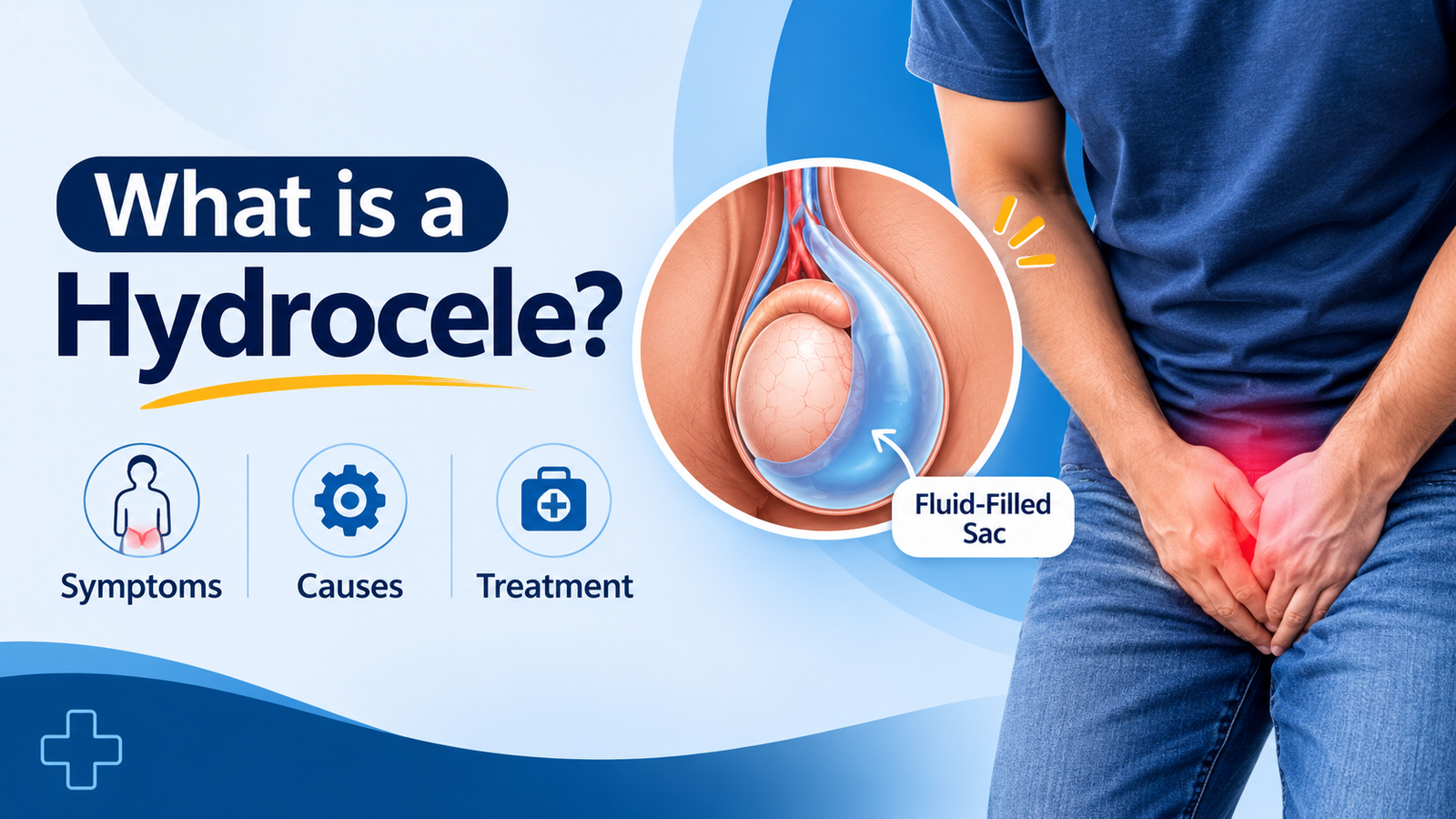
A hydrocele is a collection of clear fluid inside the thin sac that surrounds the testicle. This sac is called the tunica vaginalis. Normally, a small amount of fluid in this space keeps the testicle moving smoothly inside the scrotum. When the fluid builds up excessively, the scrotum swells, and the testicle feels surrounded by a soft, water-balloon-like fullness.
Hydroceles are one of the most common causes of scrotal swelling in men. They are usually painless and non-cancerous. The scrotum can become noticeably larger on one side, and in some cases both sides, without any sense of a hard lump on the testicle itself.
What Are the Symptoms of a Hydrocele?
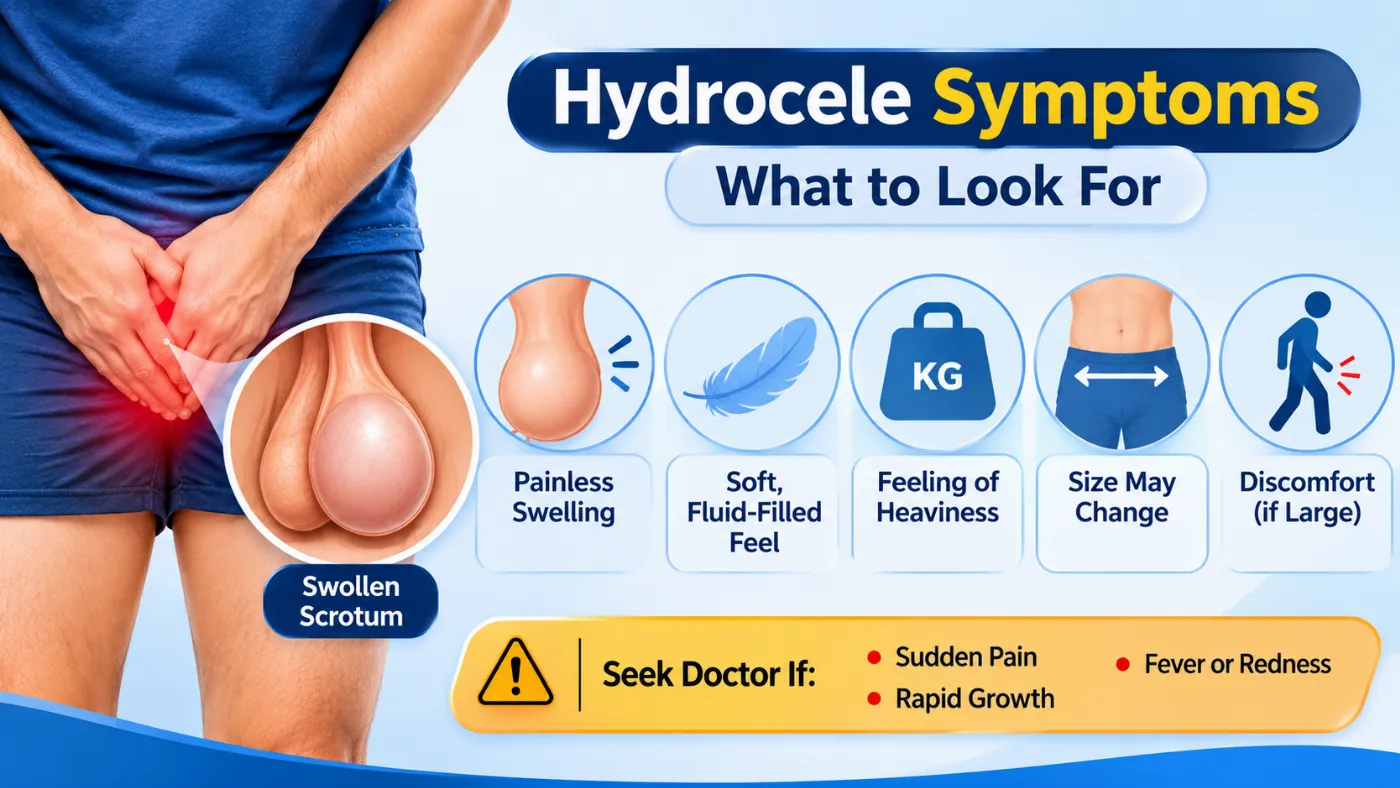
The main symptom of a hydrocele is painless, gradual swelling of one side of the scrotum. Most hydroceles do not cause any discomfort at all. When they do, it is usually a sense of heaviness or pressure rather than sharp pain.
Common symptoms of a hydrocele:
- Painless swelling of one side of the scrotum (or occasionally both)
- A soft, smooth, water-balloon feel when touched
- A feeling of heaviness in the scrotum
- Scrotal size that may change through the day, often smaller in the morning and larger by evening
- Discomfort during sex or physical activity if the hydrocele is large
- A visible or palpable enlargement that can be transilluminated (light passes through it)
Warning signs that need prompt evaluation:
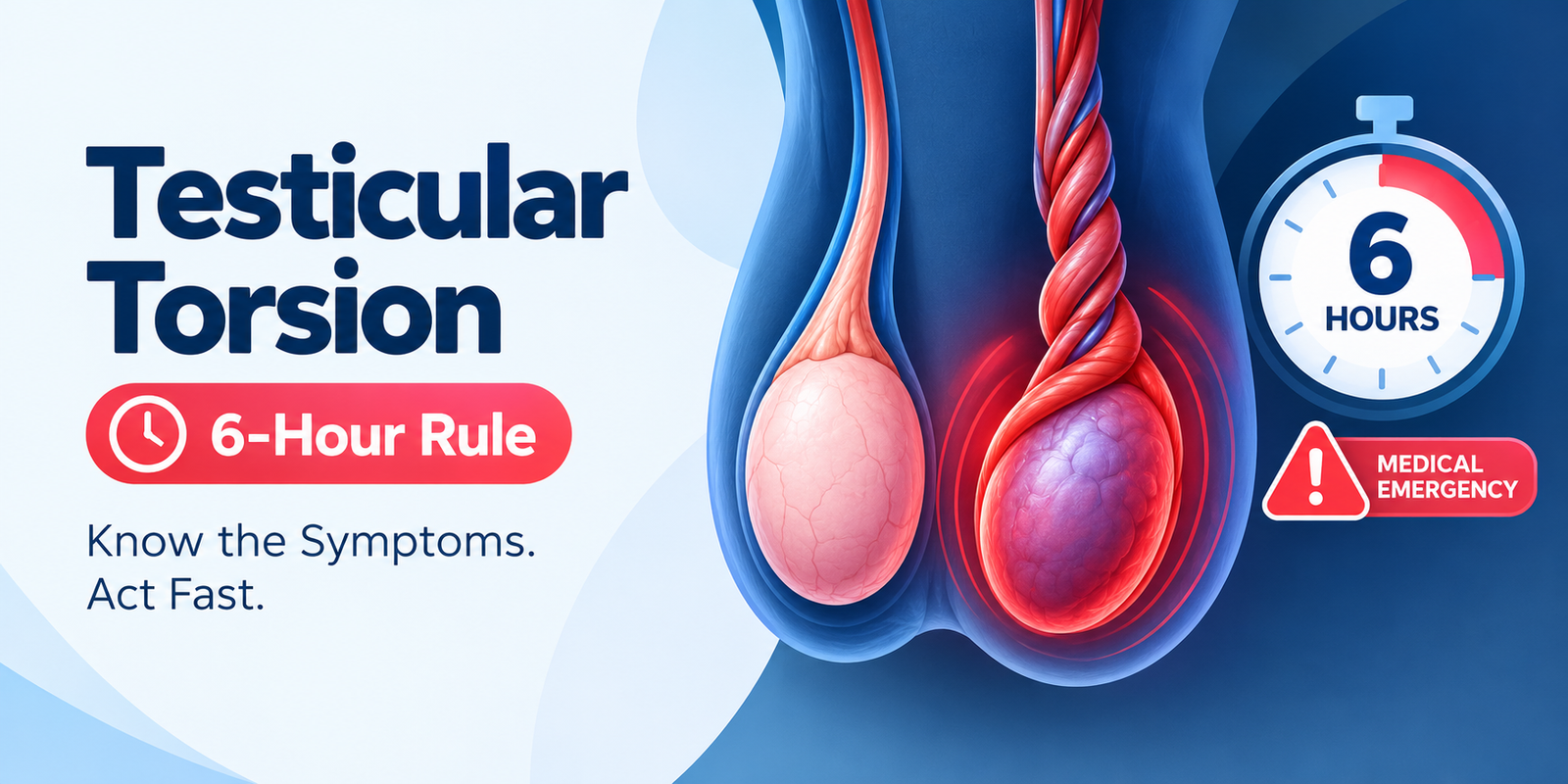
- Sudden swelling with severe pain (possible torsion or hernia)
- Rapid growth of the swelling
- Fever or redness of the scrotal skin
- A firm lump on or inside the testicle itself
For a broader look at scrotal swelling, read our article on why one of my testicles is swollen.
What Causes a Hydrocele?
Hydroceles are caused by an imbalance between the fluid produced inside the scrotal sac and the fluid absorbed back into the body. When production outpaces absorption, fluid collects around the testicle.
Common causes in adult men:
- Idiopathic (no identifiable cause, most common in men over 40)
- Infection of the testicle or epididymis (epididymo-orchitis)
- Injury or trauma to the scrotum
- Previous scrotal or inguinal surgery
- Varicocele repair or hernia repair complications
- Tumours of the testicle (uncommon but important to exclude)
- Filariasis (parasitic infection, relevant in parts of India)
- Radiation to the pelvic area
In newborns and infants, hydroceles happen when the connection between the abdomen and the scrotum fails to close normally after birth, allowing abdominal fluid to drain into the scrotum. Most of these resolve on their own by age 1 or 2.
What Are the Types of Hydrocele?
Hydroceles are classified by how they form and whether the sac stays connected to the abdomen. Understanding the type helps determine treatment.
| Type | Description | Common in |
|---|---|---|
| Communicating hydrocele | The sac is still connected to the abdomen; size changes with activity and position | Newborns and children |
| Non-communicating hydrocele | The sac is closed; fluid is produced locally and does not drain back | Adult men |
| Congenital hydrocele | Present from birth | Infants |
| Acquired hydrocele | Develops later, often after injury, infection, or surgery | Adults |
| Simple hydrocele | Clear fluid, usually idiopathic | Adults |
| Infected hydrocele (pyocele) | Pus in the sac from infection | Any age with infection |
| Blood-filled hydrocele (hematocele) | Blood instead of clear fluid, usually from trauma | After injury |
Hydrocele vs Other Scrotal Swellings: How to Tell the Difference
Hydrocele is one of several conditions that cause scrotal swelling, and distinguishing between them matters because treatment differs. Only a doctor can confirm the diagnosis, but the table below shows how they typically present.
| Condition | Pain | Feel | Transilluminates | Position |
|---|---|---|---|---|
| Hydrocele | Usually painless | Soft, fluid-filled | Yes | Surrounds testicle |
| Varicocele | Mild ache, worse standing | "Bag of worms" | No | Above testicle, usually left |
| Spermatocele | Painless | Smooth, movable cyst | Yes | Behind testicle, on epididymis |
| Epididymal cyst | Painless | Smooth, round | Yes | Behind testicle |
| Inguinal hernia | Mild to moderate | Soft bulge, reducible | No | Groin extending into scrotum |
| Epididymitis | Painful, warm | Firm, swollen | No | Behind testicle |
| Testicular tumour | Usually painless | Hard, firm | No | On the testicle itself |
If you have felt a lump rather than diffuse swelling, read our post on what to do if you find a lump in your testicle.
When is a Hydrocele Serious?
Most hydroceles are not serious, but a few situations need urgent evaluation. The key reasons to see a doctor promptly are to rule out an underlying problem rather than treat the hydrocele itself.
Signs that a hydrocele needs urgent evaluation:
- Rapid swelling developing over hours or days
- Severe pain with the swelling
- Fever and redness of the scrotum (possible infection)
- A firm lump felt within the testicle itself (possible tumour)
- Scrotal swelling after an injury that keeps growing
- A hydrocele in a child under 1 year that is not resolving, or in a baby that is tense and painful
Any new scrotal swelling in an adult should be examined by a urologist to confirm the diagnosis, even when there is no pain.
How is a Hydrocele Diagnosed?
A hydrocele is diagnosed through physical examination, transillumination, and scrotal ultrasound. The workup is painless and usually completed in a single visit.
- Medical history, including duration of swelling, pain, injury, infection, and recent surgery
- Physical examination of the scrotum, testicle, and groin
- Transillumination test, where a light shone through the scrotum glows evenly if fluid is present
- Scrotal ultrasound, the most useful test, which confirms fluid, assesses the testicle, and rules out tumour or hernia
- Urine test if infection is suspected
- Blood tests when a tumour or systemic cause is being considered
Ultrasound is especially important in adult men because it ensures a tumour or other underlying condition is not being missed behind the fluid.
How is a Hydrocele Treated?
Treatment depends on the size of the hydrocele, how much it bothers the patient, and whether an underlying cause is present. Many small, painless hydroceles need no treatment at all.
Observation
Small, symptom-free hydroceles are often simply monitored. Infant hydroceles usually resolve on their own by age 1 or 2 without any intervention.
Hydrocelectomy (Surgical Removal)
Hydrocelectomy is the most effective, definitive treatment for an adult hydrocele. It is a short, usually day-care procedure done under spinal or general anaesthesia. The surgeon makes a small cut in the scrotum, drains the fluid, and removes or inverts the sac so fluid cannot re-collect.
Hydrocelectomy has excellent outcomes:
- Success rate: over 95 percent
- Recurrence: low (around 1 in 20)
- Hospital stay: usually same-day discharge
- Return to normal activity: 1 to 2 weeks
Needle Aspiration (Rarely Used Alone)
Drawing out the fluid with a needle brings temporary relief, but hydroceles almost always come back. Aspiration is sometimes used with a sclerosing agent in men unfit for surgery, but it is not a first-line treatment.
Treating the Underlying Cause
If infection, injury, or another problem is driving the hydrocele, treating that condition is part of the plan.
What is Recovery Like After Hydrocele Surgery?
Most men recover from hydrocele surgery in 1 to 2 weeks and return to all normal activity within 4 to 6 weeks. Recovery is usually smooth with minimal complications.
Typical recovery timeline:
- Days 1 to 3: rest, scrotal support, pain relief, and ice packs over clothing
- Week 1: light walking is fine; avoid heavy lifting, sex, and strenuous activity
- Week 2: most men return to desk work and light routine
- Weeks 3 to 4: gradual return to normal exercise
- Weeks 4 to 6: cleared for sex and heavy lifting after urologist review
Mild bruising, swelling, and tenderness are expected in the first week. Fever, worsening pain, discharge, or spreading redness needs same-day medical review.
Can Hydrocele Come Back After Surgery?
Yes, but recurrence is uncommon. Around 1 in 20 men experience recurrence after a properly performed hydrocelectomy. Risk is higher after aspiration alone, which is why surgery is preferred.
Factors that reduce recurrence risk:
- Complete removal or inversion of the sac (not just drainage)
- Experienced urological surgeon
- Treatment of any underlying infection or inflammation first
- Good post-operative care including scrotal support
When to See a Doctor
See a urologist if you notice any painless scrotal swelling, feel a lump in or on the testicle, or have swelling that is getting bigger. Even painless swelling deserves evaluation to rule out other conditions.
Book a consultation if you have:
- Scrotal swelling that is new or growing
- A heavy, dragging feeling in the scrotum
- Discomfort during sex, exercise, or daily life
- A hydrocele that has been present for months without evaluation
- Scrotal swelling in a child that persists past age 1
Seek emergency care for sudden pain, redness, fever, or rapid swelling after injury. For a review of scrotal pain patterns, read our post on why do my testicles hurt.
Expert Care for Hydrocele in Delhi NCR
Hydrocele is one of the most common male health problems and one of the most successfully treated. A proper evaluation and the right procedure make the difference between a short recovery and recurrence.
Dr. Ashish Saini is a urologist and andrologist at Excel Advanced Urology Center in Greater Kailash 1, New Delhi, whose practice covers the full spectrum of male urological and reproductive health.
- MCh Urology from AIIMS, New Delhi
- MBBS and MS from KGMU, Lucknow
- 15+ years of clinical experience in urology and andrology
- 21,000+ surgeries performed across urological procedures
This depth of training means hydrocele is diagnosed accurately with ultrasound, underlying causes are properly ruled out, and surgery, when needed, is performed with minimal recurrence risk and quick recovery.
If you have noticed scrotal swelling or a change in your testicle, book an online consultation for a confidential, expert evaluation.