
}})
Prostate enlargement is a natural part of ageing for many men. After the age of 50, the prostate gland often begins to grow slowly. This growth is not cancer. It is a non-cancerous condition called benign prostatic hyperplasia. Still, it can affect daily life in a big way.
Urination becomes slow and difficult. Night-time bathroom visits increase. Sleep gets disturbed. Some men feel constant pressure in the bladder. Over time, these symptoms begin to affect confidence, comfort, and routine activities.
Medicines help in early stages. But when symptoms continue or worsen, surgical treatment becomes necessary.
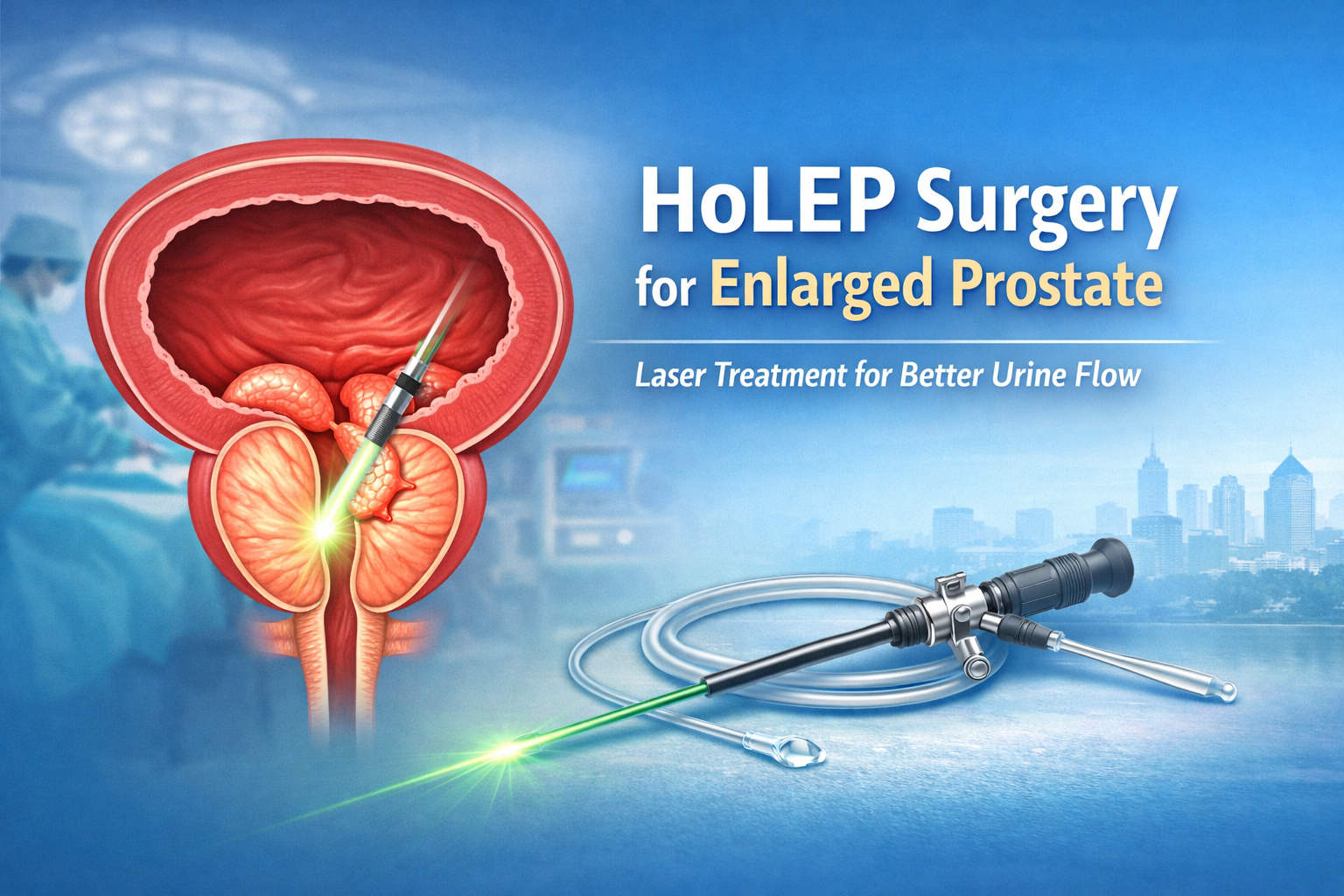
Holmium Laser Enucleation of the Prostate, commonly known as HoLEP, is a modern laser-based treatment designed to remove the extra prostate tissue that blocks urine flow. It is precise, minimally invasive, and suitable even for large prostate sizes.
Many patients search online for laser treatment for prostate or prostate laser surgery when medicines stop working. HoLEP is one of the most advanced and effective procedures available for such cases.
What is HoLEP Surgery?
HoLEP stands for Holmium Laser Enucleation of the Prostate. It is a minimally invasive procedure used to treat an enlarged prostate.
During the procedure, a special laser is used to separate and remove the enlarged portion of the prostate that is blocking urine flow. The surgery is done through the natural urinary passage, so there are no external cuts.
The removed tissue is then taken out safely, allowing urine to flow freely again.
Imagine a pipe clogged with debris. Water struggles to pass through. Once the blockage is cleared, flow becomes smooth again. HoLEP works in a similar way. It clears the obstruction and restores normal urination.
Why Do Men Need HoLEP Surgery?
As men age, the prostate may press against the urethra and restrict urine flow. This causes a range of urinary symptoms.
Initially, symptoms may appear mild. But over time, they become more noticeable.
Men may experience difficulty starting urination. The urine stream becomes weak. Frequent bathroom visits disrupt daily life. Night-time urination interrupts sleep. Some feel the bladder never empties completely.
In advanced cases, urine retention may occur. This can be painful and dangerous.
When medicines no longer provide relief, surgical removal of the enlarged tissue becomes necessary. HoLEP is often recommended in such situations.
Symptoms That Indicate Prostate Surgery May Be Needed
Prostate symptoms usually develop slowly. Many men ignore them at first.
But certain signs suggest that the condition is progressing.
Urination becomes slow and interrupted. There may be hesitation before urine starts. Some men need to strain.
Night urination increases. Waking up repeatedly affects sleep quality.
The bladder may feel full even after passing urine. Some men experience urgency and discomfort.
In severe cases, urine may stop completely. This requires urgent treatment.
Recognising these symptoms early helps prevent complications and long-term bladder damage.
How the HoLEP Procedure is Performed
HoLEP surgery follows a structured and controlled process.
The patient is given anesthesia to ensure comfort. A thin endoscope is inserted through the urethra to reach the prostate.
The holmium laser is used to carefully separate the enlarged prostate tissue. This tissue is pushed into the bladder.
A special device then breaks the tissue into smaller pieces and removes it safely.
A catheter is placed temporarily to help urine drainage while healing begins.
The procedure does not require external incisions. This reduces pain and speeds recovery.
HoLEP vs TURP Surgery
TURP has been a commonly used surgery for prostate enlargement for many years. HoLEP represents a newer approach using laser technology.
Laser energy allows more precision and reduces bleeding. Hospital stay is usually shorter.
HoLEP is particularly effective for larger prostates. TURP may require repeat procedures in some cases, while HoLEP removes more tissue and reduces recurrence.
Both surgeries are effective. The choice depends on individual condition and doctor recommendation.
Benefits of HoLEP Surgery
HoLEP offers several advantages for patients.
Bleeding is minimal due to laser precision. Recovery is faster compared to traditional surgeries.
The procedure is suitable even for very large prostates. Many patients experience long-term relief from urinary symptoms.
Another important benefit is durability. The removed tissue rarely grows back in a way that causes obstruction again.
Patients often feel a significant improvement in quality of life. Sleep improves. Confidence returns. Daily activities become easier.
Success Rate of HoLEP
HoLEP has consistently shown high success rates.
Most patients experience stronger urine flow and better bladder emptying. Long-term improvement is common.
Repeat surgeries are rarely required because the obstructing tissue is completely removed.
Results depend on patient health, prostate size, and post-surgery care.
Recovery After HoLEP Surgery
Recovery after HoLEP is usually smooth.
Hospital stay is typically one to two days. The catheter is removed within 24 to 48 hours.
Mild burning during urination may occur initially. Blood-tinged urine may be seen for a few days.
Normal activities usually resume within one to two weeks. Heavy work and strenuous exercise should be avoided temporarily.
Hydration and proper medication help healing.
Side Effects of Laser Prostate Surgery
Temporary side effects may occur after surgery.
Burning urination is common in early recovery. Urinary urgency may increase briefly.
Some patients notice mild blood in urine.
These symptoms gradually improve as healing progresses.
Risks and Possible Complications
HoLEP is considered safe when performed by experienced surgeons.
Infection may occur in rare cases. Temporary urinary leakage may happen during recovery.
Retrograde ejaculation is a known effect. This means semen flows backward into the bladder instead of outward.
Serious complications are uncommon.
Cost of HoLEP Surgery
The cost of HoLEP varies depending on hospital, city, and medical facilities.
It includes surgical equipment, hospital stay, tests, and professional expertise.
Insurance coverage may reduce expenses in some cases.
Patients should discuss cost details during consultation.
Who is Eligible for HoLEP?
HoLEP is suitable for men with enlarged prostate who continue to experience symptoms despite medications.
It is particularly useful for large prostate size and severe urinary obstruction.
Patients with recurrent infections or urine retention may benefit.
Eligibility is determined after medical evaluation.
Preparation Before Surgery
Preparation involves medical assessment and planning.
Blood tests, urine tests, and PSA tests are performed.
Medical history is reviewed carefully.
Certain medicines may need to be stopped before surgery.
Clear preparation ensures safety and better outcomes.
Post-Surgery Care
Post-surgery care plays an important role in recovery.
Drinking adequate water helps flush the bladder.
Heavy lifting and strenuous work should be avoided initially.
Medications must be taken as prescribed. Follow-up visits help monitor healing.
Gradual return to routine ensures better recovery.
HoLEP vs Other Laser Treatments
Other laser treatments such as thulium and green light laser are also used for prostate conditions.
Each method has its role.
HoLEP is especially effective for large prostates because it removes more tissue.
Treatment selection depends on patient condition and surgeon expertise.
Long-Term Outcomes
HoLEP provides long-term relief from urinary symptoms.
The removed tissue does not regrow easily. Repeat surgery is uncommon.
Patients experience improved urine flow and comfort.
Regular follow-ups help maintain results.
Conclusion
HoLEP is a modern solution for enlarged prostate.
It is minimally invasive, precise, and designed for long-term relief. Patients recover faster and regain normal urinary function.
Early consultation helps identify symptoms and choose the right treatment at the right time.
Timely care prevents complications and improves quality of life for men dealing with prostate enlargement.