
}})
The iTind procedure is a minimally invasive treatment for an enlarged prostate (BPH) in which a small temporary device is placed inside the prostate through the urethra. Over a few days, it gently reshapes the prostate channel to improve urine flow, and then it is removed. There is no cutting, no tissue removal, and no permanent implant. Recovery takes only a few days, and the risk of sexual side effects is very low.
An enlarged prostate is a very common problem in aging men. Many start noticing a weak urine stream, frequent trips to the bathroom, or waking up at night to pass urine. It may begin slowly, but over time, it starts affecting comfort, sleep, and confidence.
Traditional prostate surgeries are effective. However, they involve cutting tissue and a longer recovery. Not every patient wants that. Some want relief without major surgery.
This is where the iTind procedure for an enlarged prostate comes in. It is a minimally invasive treatment for BPH that helps improve urine flow without removing prostate tissue. No cuts. No permanent implant. Short recovery. Many men prefer it when symptoms are moderate, and quality of life is affected.
Think of it like reshaping a narrow pipe instead of replacing it. The aim is to open the passage and restore normal flow.
What is the iTind Procedure?
The iTind procedure is a minimally invasive treatment used for Benign Prostatic Hyperplasia, also called BPH. BPH means the prostate gland has enlarged and is pressing on the urine passage.
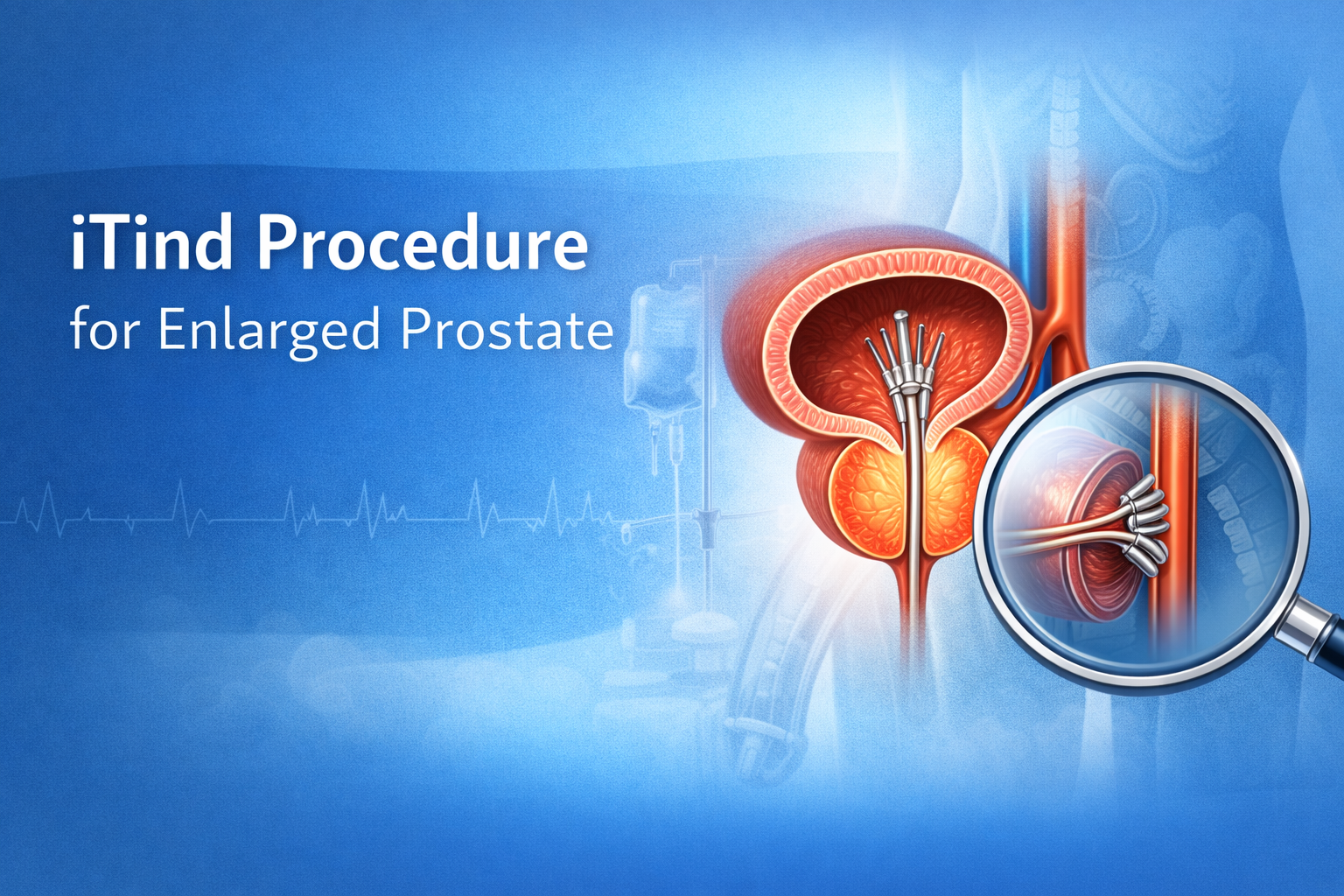
In this procedure, a small temporary device is placed inside the prostate through the urethra. It stays for a few days and gently reshapes the prostate channel. This helps urine pass more easily.
No tissue is cut. Nothing permanent is left inside. Once the device has done its job, it is removed.
It works on a simple idea. If a door is stuck, sometimes you do not replace the door. You adjust the hinges so it opens smoothly again.
Understanding Enlarged Prostate (BPH)
The prostate is a small gland located below the bladder. It surrounds the urethra, which is the tube that carries urine out of the body.
With age, the prostate can grow larger. This condition is called BPH. It is not cancer, but it can cause bothersome urinary symptoms.
Common symptoms include:
- Weak urine flow
- Frequent urination
- Night urination
- Difficulty starting urine
- Feeling that the bladder is not empty
Many men ignore these signs in the beginning. Over time, the symptoms can affect daily routine, travel, sleep, and confidence. You can read more about the full range of prostate (BPH) treatment options.
How the iTind Device Works
The iTind device is inserted through the urethra using a small scope. Once inside the prostate, it expands in three directions.
This gentle expansion creates small channels in the prostate tissue. These channels help improve urine flow.
The device stays in place for a few days. During this time, it reshapes the prostate opening. After that, it is removed.
No cutting is involved. No laser. No tissue removal. It works like placing a support inside a narrowed passage so that it slowly opens up and stays functional.
Step-by-Step iTind Procedure
The process is simple and usually done as a day-care procedure.
Evaluation and planning: The doctor evaluates symptoms, prostate size and urine flow. Tests like ultrasound or uroflowmetry may be done.
Anaesthesia: Local anaesthesia or light sedation is usually used. The patient remains comfortable and relaxed.
Device placement: A small scope is passed through the urethra. The iTind device is placed inside the prostate.
Device left in place: The device stays for a few days. During this time, it reshapes the prostate channel.
Device removal: The device is removed during a short follow-up visit. No surgery is needed for removal.
The entire process is designed to be simple and patient-friendly.
Who is an Ideal Candidate for iTind?
Not every patient needs surgery. Not every patient is suited for iTind either. It works best in selected cases.
Ideal candidates include:
- Men with mild to moderate prostate enlargement
- Patients who want to avoid major surgery
- Men are concerned about sexual side effects
- Patients with persistent urinary symptoms despite medicines
It may not be suitable for very large prostates or severe obstruction. Choosing the right treatment is like choosing the right shoe size. One size never fits all.
Benefits of the iTind Procedure
One of the biggest reasons patients consider iTind is its simplicity and minimal invasiveness.
Key advantages include:
- No permanent implant
- No tissue removal
- Minimal anaesthesia
- Day-care procedure
- Faster recovery
- Low risk of sexual side effects
Many men prefer it because it improves symptoms while preserving normal body functions.
iTind vs UroLift vs Rezum vs TURP
There are many treatment options for BPH. Each has its role depending on prostate size, severity, and patient preference. The table below compares iTind with the other common options.
In short, UroLift uses permanent implants, Rezum uses heat, and TURP removes tissue, while iTind reshapes the passage temporarily and leaves nothing behind. For a detailed comparison, see our guide on iTind vs TURP. The doctor decides based on symptoms, prostate size, and overall health.
Anaesthesia and Hospital Stay
The iTind procedure usually does not require general anaesthesia. Local anaesthesia or light sedation is enough.
Patients are often discharged the same day. It is treated as a day-care procedure. This makes it suitable for people who want quicker recovery and less hospital time.
Recovery Timeline
Recovery is usually faster compared to surgical procedures.
First 24 hours: Mild discomfort may be present. Some patients notice frequent urination.
First week: Urinary urgency or burning sensation may occur. This settles gradually.
Two to four weeks: Urine flow improves. Symptoms begin to reduce.
Return to work: Many patients resume routine work within a few days.
Recovery feels like getting used to new footwear. Initially uncomfortable, then natural.
What to Expect in the First Week
The first week is an adjustment phase. Some patients experience urinary urgency, mild discomfort, burning during urination, or a slight change in urine pattern.
These symptoms are temporary and usually improve as healing progresses.
Risks and Complications
Every medical procedure carries some risks. iTind is generally safe, but minor effects can occur.
Possible issues include temporary discomfort, urinary irritation, mild bleeding, or infection in rare cases. Serious complications are uncommon when the procedure is performed by trained specialists.
Sexual Function and Continence
One major concern among patients is sexual health. The iTind procedure is designed to preserve sexual function, and the risk of erectile dysfunction is very low.
Retrograde ejaculation is also uncommon compared to traditional surgeries, and urinary control remains intact in most patients. This is one of the main reasons younger patients or sexually active men consider this treatment.
Long Term Results
Many patients experience lasting symptom relief after the procedure. Urine flow improves, night urination reduces, and daily comfort increases.
Follow-up visits help monitor progress. Some patients may require additional treatment later if prostate enlargement progresses with age, because BPH is a long-term condition and management may evolve.
Aftercare Instructions
After the procedure, a few precautions help with recovery. Drink plenty of fluids, avoid heavy lifting for a short period, take prescribed medicines, and attend follow-up visits.
Recovery is gradual. The body adapts over days and weeks.
Cost of the iTind Procedure in India
The cost of iTind in India depends on prostate size, the clinic, diagnostic tests, and follow-up care. Some insurance plans may cover part of the procedure, so it is worth checking your policy details with the clinic.
For a full breakdown of pricing in rupees, see our detailed iTind procedure cost in India guide. The most reliable way to know your exact figure is a consultation.
When iTind May Not Be Suitable
iTind is not the right option in all cases. It may not be suitable for very large prostate size, severe urinary obstruction, suspicion of prostate cancer, or patients needing urgent surgical intervention.
In such cases, other treatments like TURP or laser surgery may be recommended.
Patient Experience and Lifestyle Impact
Patients often report better sleep because night urination has reduced. Travel becomes easier. Long meetings feel manageable again. Confidence improves.
Small changes in daily life make a big difference. When urination becomes effortless, mental comfort improves as well.
Why Choose Dr. Ashish Saini for iTind in Delhi
Dr. Ashish Saini is a urologist and andrologist with an MCh in Urology from AIIMS New Delhi, more than 15 years of experience, and over 21,000 surgeries performed. Because he offers the full range of BPH treatments, your care is matched to your anatomy and goals rather than a single device.
The iTind procedure in Delhi is performed at Excel Advanced Urology Centre in Greater Kailash 1. You can learn more about the doctor or book a consultation to discuss whether iTind is right for you.
Conclusion
The iTind procedure offers a modern approach to managing enlarged prostate symptoms. It is minimally invasive, does not involve cutting tissue, and allows quicker recovery.
For men who want symptom relief without major surgery, it can be a practical option. The treatment focuses on improving urine flow while preserving natural functions.
Every patient is different. The right treatment depends on prostate size, symptoms, and health status. Consulting a urologist helps identify the most suitable option, and early evaluation leads to better outcomes and better comfort in daily life.