
}})
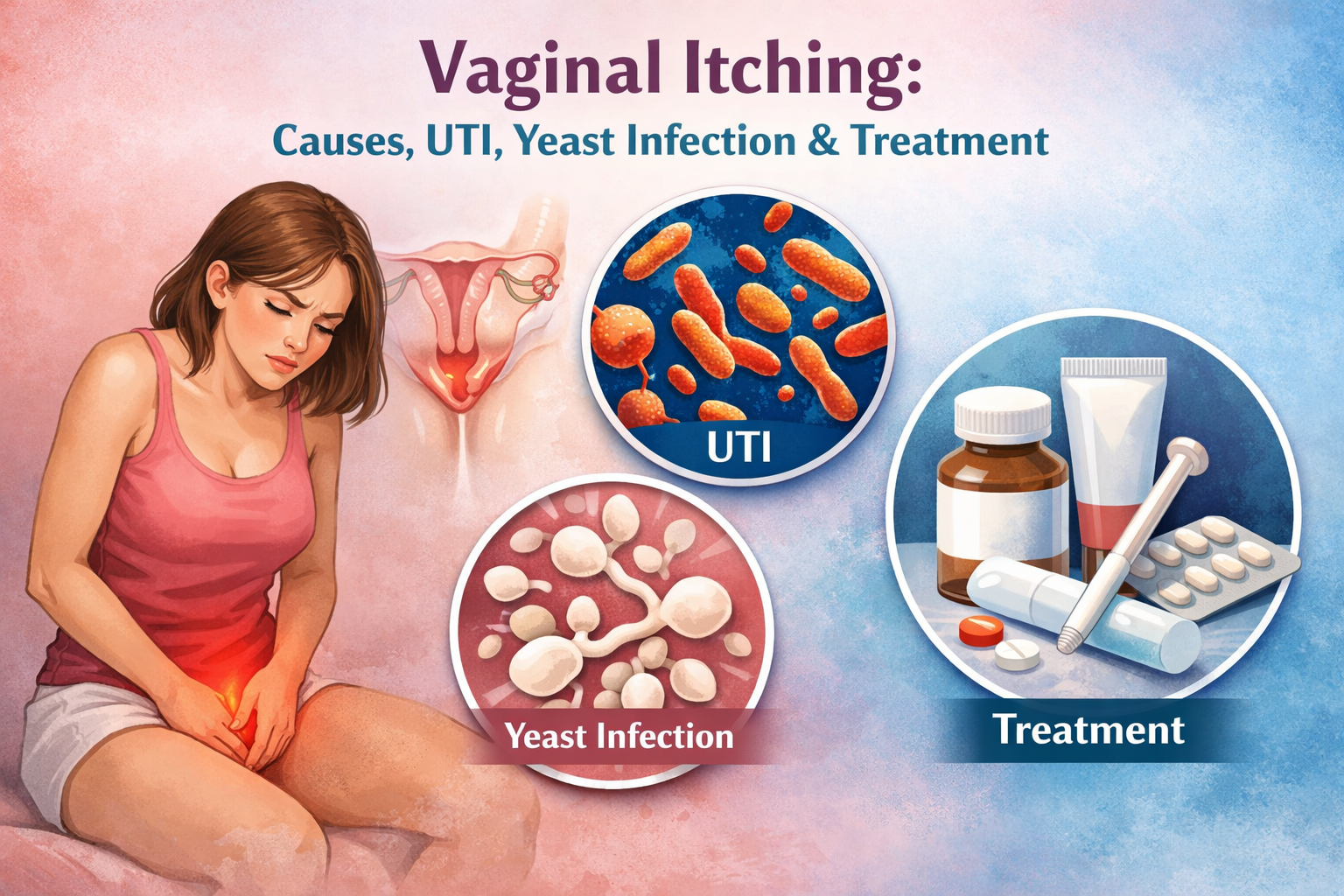
Vaginal itching is a common yet uncomfortable condition that many women experience at some point. While occasional itching may be harmless, persistent or severe irritation can indicate an underlying issue such as a yeast infection, urinary tract infection (UTI), or skin irritation.
Many women search for questions like “Does UTI cause itching?” “What are vaginal itching causes?”, or “How to identify yeast infection symptoms?” These concerns are valid because vaginal itching can have multiple causes, and identifying the right one is essential for proper treatment.
In this comprehensive guide, you’ll learn about vaginal itching causes, their connection with UTIs, yeast infection symptoms, and effective treatment options.
What is Vaginal Itching?
Vaginal itching refers to an uncomfortable sensation in or around the vaginal area that creates a strong urge to scratch. It may occur internally, externally, or both.
While mild itching can sometimes result from temporary irritation, persistent itching is often a sign of infection or imbalance.
Common Causes of Vaginal Itching

Vaginal itching can result from a wide range of factors. Understanding the cause is key to choosing the right treatment.
1. Yeast Infection (Most Common Cause)
A yeast infection occurs due to the overgrowth of Candida, a naturally present fungus in the vagina. When the balance of bacteria and yeast is disturbed, it leads to infection.
Women with yeast infections often experience intense itching along with discomfort.
Common symptoms include:
- Thick, white (cottage cheese-like) discharge
- Redness and swelling
- Burning sensation, especially during urination or intercourse
2. Urinary Tract Infection (UTI)
A common question is: Does UTI cause itching?
UTIs typically cause burning and irritation, not itching. However, some women may experience mild itching due to irritation around the urethra.
UTI symptoms include:
- Burning while urinating
- Frequent urge to urinate
- Cloudy or strong-smelling urine
If itching is the primary symptom, it is more likely due to a vaginal condition rather than a UTI.
3. Bacterial Vaginosis (BV)
Bacterial vaginosis occurs when there is an imbalance in vaginal bacteria.
It may cause:
- Mild itching
- Thin gray or white discharge
- Fishy odor
Unlike yeast infections, itching is usually less intense.
4. Allergic Reactions & Irritation
The vaginal area is sensitive and can react to various products.
Common irritants include:
- Soaps and body washes
- Perfumed hygiene products
- Detergents
- Sanitary pads or tampons
This type of itching usually improves after removing the irritant.
5. Sexually Transmitted Infections (STIs)
Certain STIs can cause vaginal itching along with other symptoms.
These may include:
- Unusual discharge
- Pain during urination
- Sores or lesions
Medical testing is required for diagnosis.
6. Hormonal Changes
Hormonal fluctuations during:
- Menopause
- Pregnancy
- Menstrual cycle
can lead to vaginal dryness and itching.
7. Poor Hygiene or Excessive Cleaning
Both poor hygiene and excessive washing can disrupt the natural vaginal balance.
- Lack of hygiene → bacterial growth
- Over-cleaning → loss of protective flora
Maintaining balance is essential.
Yeast Infection Symptoms: How to Identify

Yeast infections are one of the most common causes of vaginal itching.
The symptoms are usually distinct and easy to recognize.
Typical signs include:
- Severe itching and irritation
- Thick, white discharge
- Redness and swelling of the vulva
- Burning sensation
Unlike UTIs, yeast infections primarily affect the vaginal area rather than the urinary tract.
Does UTI Cause Itching? (Important Clarification)
This is one of the most searched queries.
UTIs usually do NOT cause itching.
Instead, they cause:
- Burning sensation during urination
- Frequent urination
- Urgency
However, mild irritation near the urethra may sometimes feel like itching.
If itching is the main symptom, consider:
- Yeast infection
- Bacterial vaginosis
- Allergic reaction
Other Symptoms Associated with Vaginal Itching
Vaginal itching rarely occurs alone. It is often accompanied by other symptoms that help identify the cause.
Watch for:
- Abnormal discharge
- Odor
- Pain during urination
- Redness or swelling
- Rash or sores
These signs provide important clues for diagnosis.
When Should You See a Doctor?
While mild itching may resolve on its own, persistent symptoms require medical attention.
Consult a doctor if:
- Itching lasts more than a few days
- Symptoms worsen
- There is unusual discharge or odor
- You experience pain or sores
- It occurs frequently
Early treatment helps prevent complications.
Diagnosis of Vaginal Itching
Doctors diagnose vaginal itching based on symptoms and examination.
Common diagnostic methods include:
- Physical examination
- Vaginal swab test
- Urine test (if UTI suspected)
- STI testing (if needed)
Proper diagnosis ensures targeted treatment.
Treatment of Vaginal Itching

Treatment depends on the underlying cause.
1. Treatment for Yeast Infection
- Antifungal creams or tablets
- Oral antifungal medications
Symptoms usually improve within a few days.
2. Treatment for Bacterial Vaginosis
- Antibiotics prescribed by a doctor
3. Treatment for UTI
- Antibiotics
- Increased fluid intake
4. Treatment for Irritation
- Avoiding irritants
- Using gentle, unscented products
Home Remedies for Mild Relief
While medical treatment is essential for infections, some remedies can provide relief:
- Wearing loose, breathable cotton underwear
- Avoiding scented products
- Maintaining hygiene
- Keeping the area dry
Avoid self-medication without a diagnosis.
Prevention Tips for Vaginal Health
Preventing vaginal itching is possible with simple lifestyle habits.
Healthy practices include:
- Maintaining proper hygiene
- Avoiding harsh products
- Wearing breathable clothing
- Managing blood sugar levels
- Practicing safe sex
Expert Insight: Listen to Your Body
Vaginal itching is your body’s way of signaling an imbalance. Whether it’s a yeast infection, irritation, or bacterial issue, identifying the cause early helps in faster recovery.
Ignoring symptoms or self-diagnosing incorrectly can lead to prolonged discomfort and complications.
Conclusion
Vaginal itching is common but should never be ignored if persistent. Whether it’s caused by a yeast infection, UTI, or irritation, understanding the symptoms helps you take the right steps toward treatment.
Early care, proper hygiene, and awareness are key to maintaining vaginal health.