
}})
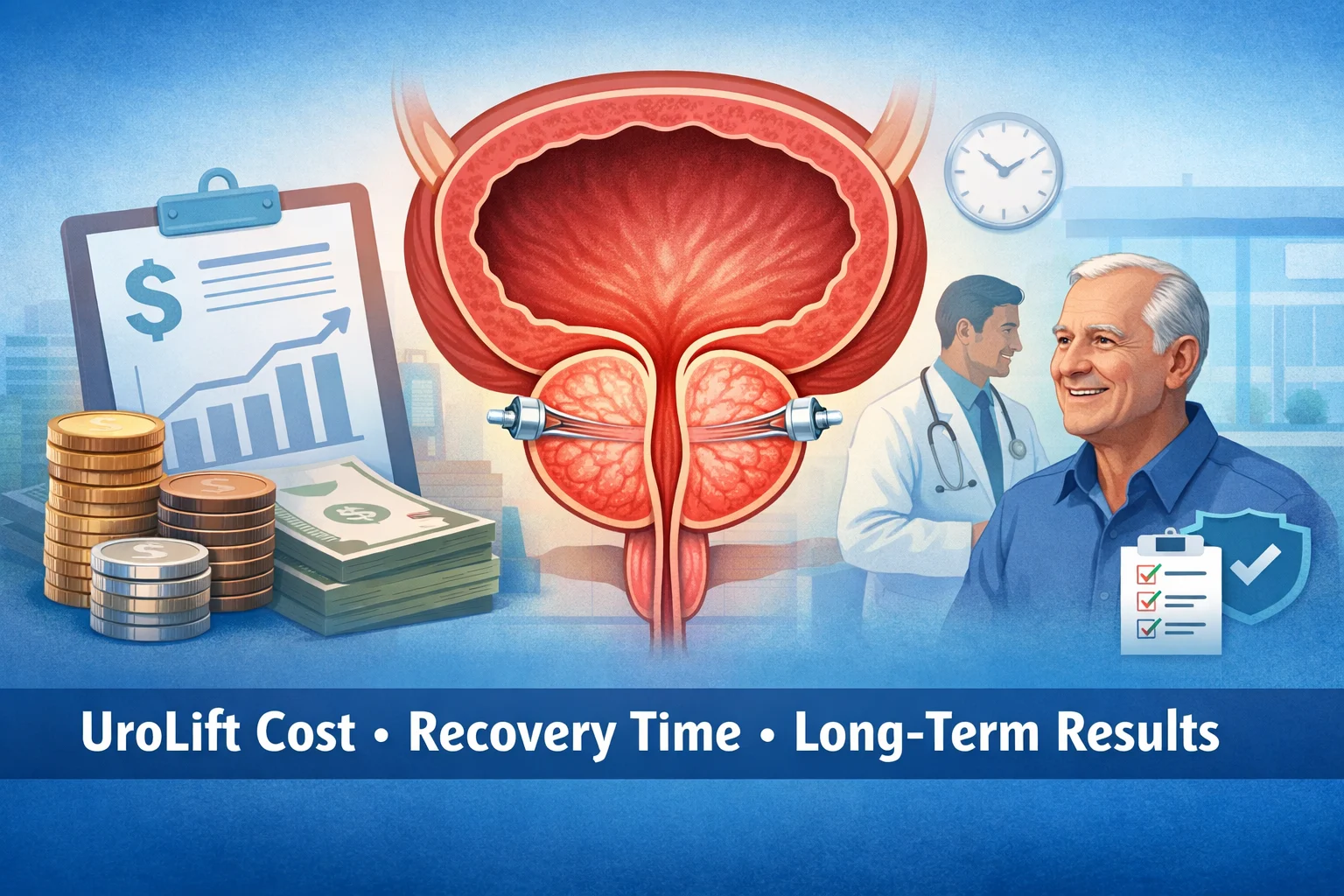
UroLift is a minimally invasive treatment for an enlarged prostate (BPH) that uses tiny permanent implants to hold the prostate tissue away from the urethra, without cutting or removing tissue. In India, the cost typically ranges from ₹2,50,000 to ₹4,50,000, depending on the number of implants. Most patients are discharged the same day, return to light work within a few days, and many experience symptom relief that lasts five years or longer.

Benign Prostatic Hyperplasia, commonly known as BPH or enlarged prostate, affects millions of men as they age. It usually develops gradually. At first, the symptoms may seem minor: a slightly weak urine stream, a need to urinate more often at night, perhaps a little difficulty starting urination.
Over time, the problem can become more noticeable. The bladder may not empty. Bathroom visits become frequent and urgent. Some men feel pressure or discomfort while urinating.
Think of the urinary system like a plumbing pipe. If something presses against the pipe, the flow slows down. The same thing happens when the prostate enlarges and squeezes the urethra.
One option that has gained attention in recent years is the UroLift procedure, a minimally invasive treatment designed to relieve urinary obstruction without removing prostate tissue. This guide explains UroLift cost in India, recovery time, side effects, and long-term results in clear and simple language, so you know what to expect before choosing treatment.
What is the UroLift Procedure?
The UroLift procedure is a minimally invasive treatment designed to relieve urinary blockage caused by an enlarged prostate.
Unlike traditional surgeries, UroLift does not remove prostate tissue. Instead, it uses tiny implants to lift and hold the enlarged tissue away from the urethra. Imagine curtains blocking sunlight from a window. Instead of cutting the curtains away, you simply tie them back so the light can pass through. UroLift works similarly.
The implants gently pull the obstructing tissue aside. This opens the urinary channel and improves flow. Because there is usually no large incision and no removal of tissue, recovery tends to be faster than with traditional surgery, and most patients return home the same day. You can read more on the UroLift procedure in Delhi page.
How the UroLift Procedure Works

The process usually begins with local anaesthesia or light sedation, so the patient stays relaxed and comfortable. A thin instrument is passed through the urethra, the natural urinary passage, so no external surgical cuts are required.
Once the device reaches the prostate, the surgeon places small implants into the enlarged tissue. These implants act like tiny anchors. They pull the prostate tissue away from the urethra, the passage widens, and urine flows more easily.
The procedure typically takes about 30 to 60 minutes. After a short observation period, most patients go home the same day.
UroLift Cost in India
Cost is one of the most common concerns for patients considering treatment. In India, the UroLift procedure costs generally range from ₹2,50,000 to ₹4,50,000. The biggest factor is the number of implants needed, which depends on the size and shape of the prostate.
For an international context, UroLift typically costs around 8,000 to 15,000 US dollars in the United States and 6,000 to 9,000 pounds in the United Kingdom, which is why many patients find treatment in India far more affordable. Because the final figure depends on your prostate and the implants required, the most reliable way to know your exact cost is a consultation. You can book an online consultation for a personalised estimate.
Does Insurance Cover UroLift in India?
Insurance coverage for UroLift in India depends on your individual policy. Many health plans cover minimally invasive BPH procedures when doctors confirm they are medically necessary, though you may still have certain out-of-pocket costs.
Insurers often ask for proof that medicines were tried first, along with test results confirming urinary obstruction. The simplest step is to share your policy details with the clinic's team, who can guide you on documentation before scheduling.
UroLift Recovery Time
One of the main reasons patients choose UroLift is the relatively quick recovery. Because the procedure does not remove tissue or involve major incisions, the body generally heals faster than after traditional prostate surgery.
Most patients return home the same day and resume light daily activities within a few days. Recovery still varies between individuals, as age, overall health, and prostate size all influence healing, but UroLift usually allows a return to normal routines sooner than surgery.
What to Expect During Recovery
The recovery process usually unfolds gradually over several weeks. During the first few days, patients may notice mild urinary discomfort, burning during urination, or a frequent urge to urinate. These symptoms usually ease as the urinary tract heals.
Within the first week, many patients notice improvement in urine flow, with the bladder emptying more easily. By the second or third week, most people return to normal daily activities, and exercise, work, and travel become comfortable again. Full recovery often occurs within four to six weeks, although urinary symptoms may keep improving over time.
Returning to Work After UroLift
People with desk jobs or light duties often return to work within two to five days, which makes UroLift convenient for those who cannot take extended leave.
Jobs that involve heavy lifting or intense physical activity may need a longer break. In those cases, doctors usually recommend waiting about one to two weeks before returning to strenuous work. Listening to your body and resuming activity gradually helps ensure smooth healing.
Short-Term Side Effects
Most side effects after UroLift are temporary and mild. Patients may experience burning during urination, mild blood in the urine, pelvic discomfort, or an increased urge to urinate during the first few days.
These effects occur because the urinary tract has been briefly irritated during the procedure, and for most patients, they improve within two to four weeks. Serious complications are uncommon when the procedure is performed by an experienced urologist.
Long-Term Results of UroLift
Clinical studies show encouraging outcomes for many patients. Men commonly report stronger urine flow, fewer nighttime bathroom visits, and improved bladder emptying.
Imagine removing a small obstruction from a road. Once the blockage is gone, traffic moves more smoothly. In the same way, when prostate tissue is lifted away from the urethra, urine flows more freely. These improvements often lead to better sleep, more comfort during daily activities, and a better quality of life.
How Long Do UroLift Results Last?
Research shows that UroLift results can last five years or longer for many patients. However, BPH is a progressive condition, and the prostate may continue to grow over time.
Because of this, some patients may need additional treatment in the future, either by repeating the procedure or choosing another therapy. Even so, many patients enjoy several years of meaningful symptom relief.
UroLift vs iTind vs TURP vs HoLEP
Patients often compare UroLift with other prostate procedures. UroLift repositions tissue rather than removing it, which means faster recovery and minimal sexual side effects for many men. The table below shows how it compares.
In short, iTind reshapes the passage temporarily, TURP removes tissue surgically, and HoLEP removes tissue with a laser. TURP and HoLEP often give stronger relief for very large prostates, but need longer recovery. The right choice depends on prostate size, symptom severity, and personal priorities.
Who is the Best Candidate for UroLift?
UroLift is usually recommended for men with moderate BPH symptoms and prostate sizes between about 30 and 80 grams. It is particularly attractive for patients who want to avoid traditional surgery or who wish to preserve sexual function.
Men with very large prostates or severe urinary retention may benefit more from other procedures such as HoLEP or TURP. A urologist carefully evaluates each patient before recommending treatment.
When UroLift May Not Be Recommended
UroLift offers many advantages, but it is not suitable for everyone. Doctors may recommend other treatments if the prostate is very large, if severe urinary retention is present, or if the prostate anatomy prevents proper implant placement. In those situations, procedures such as HoLEP or TURP may provide more effective long-term results.
Why Choose Dr. Ashish Saini for UroLift in Delhi
Dr. Ashish Saini is a urologist and andrologist with an MCh in Urology from AIIMS New Delhi, more than 15 years of experience, and over 21,000 surgeries performed. Because he offers the full range of BPH treatments, your care is matched to your prostate size and goals rather than to a single device.
The UroLift procedure is performed at Excel Advanced Urology Centre in Greater Kailash 1, New Delhi, with clear, upfront guidance on cost and recovery.
Conclusion
The UroLift procedure provides a minimally invasive option for treating urinary symptoms caused by an enlarged prostate. It places small implants that gently pull prostate tissue away from the urethra, improving urine flow without removing tissue, which means faster recovery and minimal downtime for many patients.
Understanding the UroLift cost in India, recovery time, and long-term results helps you make an informed decision. For men with weak urine flow, frequent urination, or nighttime bladder symptoms, consulting a qualified urologist is the first step. Book a consultation to find the option built around your body.