
}})
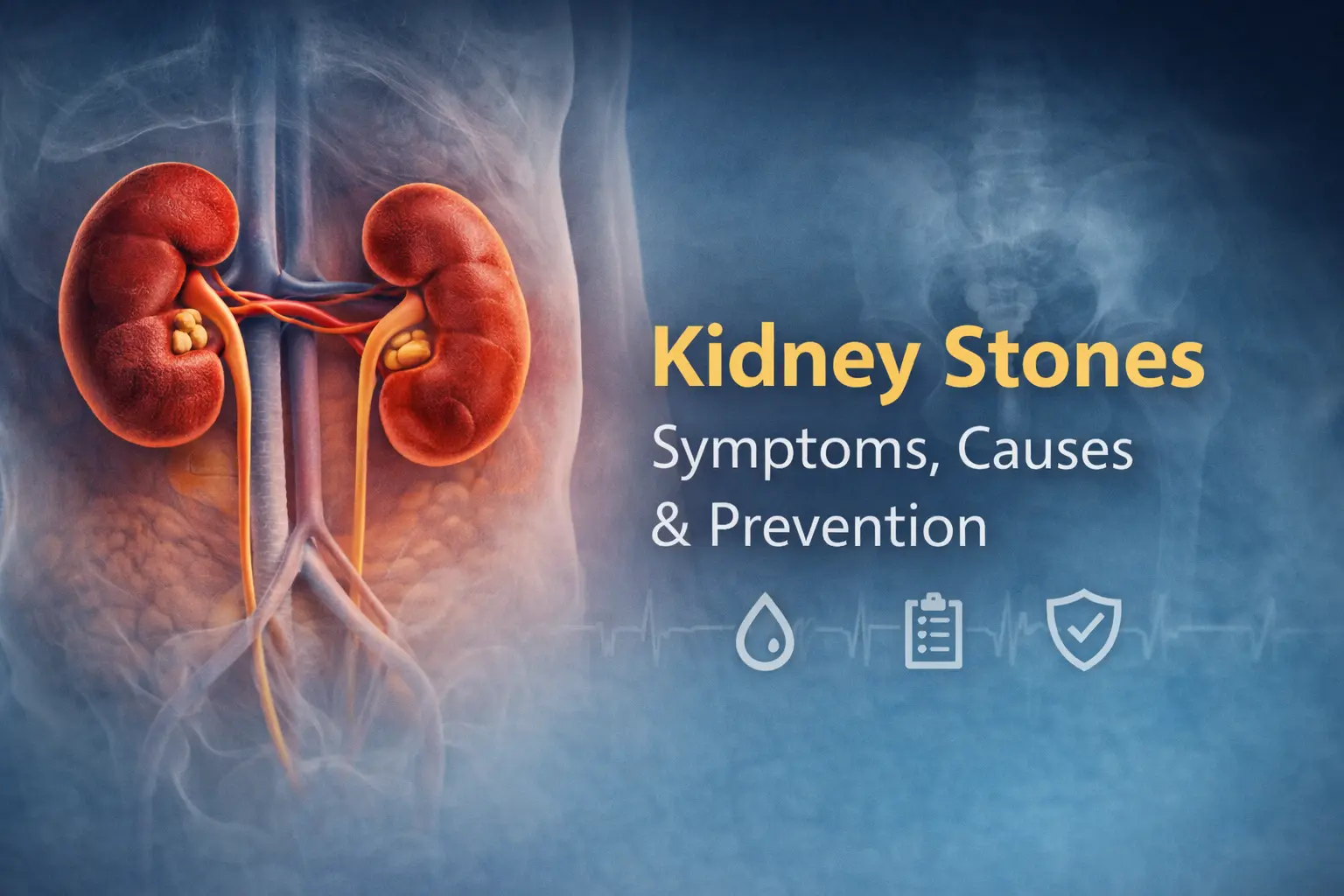
Kidney stones are hard mineral deposits that form inside the kidneys when urine becomes too concentrated. They can be as tiny as grains of sand or large enough to cause severe blockage. Some kidney stones remain silent for years, while others cause sudden, intense pain, often felt in the back, side, or even the stomach. Understanding kidney stone symptoms early, knowing why they form, and learning how to prevent them can help avoid pain, hospital visits, and repeat stone episodes.
What Are Kidney Stones?
Kidney stones form when minerals and salts in urine stick together and harden. This usually happens when the body does not get enough water, or when certain substances build up in excess.
Think of urine like saltwater. If there is enough water, salt dissolves easily. If water reduces, salt settles at the bottom. Kidney stones form in a similar way.
Stones can stay inside the kidney without causing trouble. Problems usually start when a stone moves into the urine passage. That movement triggers pain and other symptoms.
Where Does Kidney Stone Pain Occur?
One confusing thing about kidney stones is where the pain is felt. The pain does not stay in one spot.
Kidney stone pain often starts in the lower back or side, just below the ribs. As the stone moves, the pain can shift.
Many patients describe pain that:
- Moves from the back to the abdomen
- Radiates toward the groin or inner thigh
- Feels like stomach pain or severe cramps
- Comes in waves rather than staying constant
This moving pain pattern is a key clue. Muscle pain usually stays in one place. Kidney stone pain travels.
Common Symptoms of Kidney Stones
Kidney stone symptoms vary based on stone size, location, and whether infection is present.
Common signs include:
- Sudden, severe pain that comes and goes
- Pain so intense that sitting still feels impossible
- Nausea and vomiting
- Burning sensation during urination
- Blood in urine, which may look pink or red
- Frequent urge to urinate
- Fever and chills if infection develops
Some patients also report stone pain in the stomach, which can be mistaken for gastric issues. This happens because pain signals travel along shared nerve pathways.
Types of Kidney Stones
Understanding the stone type helps in preventing future stones.
Calcium Stones
These are the most common. They form when calcium combines with oxalate or phosphate in urine.
Uric Acid Stones
Often linked to dehydration, high protein diets, or gout.
Struvite Stones
Form due to urinary infections. These can grow quickly and become large.
Cystine Stones
Rare and genetic. Seen in people with a condition that causes excess cystine in urine.
Stone analysis after removal provides valuable prevention clues.
Causes of Kidney Stones
Kidney stones rarely have just one cause. Most form due to a combination of factors.
The most common reasons include:
- Low water intake, the biggest risk factor
- High salt consumption
- Excess animal protein
- High oxalate foods like spinach and nuts
- Obesity
- Family history of stones
- Certain medicines
- Recurrent urinary infections
In clinical practice, specialists like Dr. Ashish Kumar Saini often see patients with repeat stones simply because hydration habits were never corrected after the first episode.
Kidney Stone Investigations and Diagnosis
Kidney stone investigation helps confirm stone size, location, and impact on kidney function.
Urine Tests
Urine tests look for blood, infection, and crystals. Even when urine looks normal, microscopic blood may be present.
Blood Tests
These check calcium levels, uric acid, and kidney function. They also help identify metabolic causes.
Imaging Tests
Ultrasound is commonly used and widely available. CT scan is the most accurate test, especially for small or hidden stones. X-rays are used selectively.
Diagnosis guides treatment and future prevention.
Kidney Stone Test Price: What Patients Should Know
Many patients worry about cost before diagnosis.
In general:
- Ultrasound is affordable and easily available
- Blood and urine tests are low cost
- CT scans cost more but provide detailed accuracy
Prices vary depending on city, hospital, and diagnostic centre. Doctors usually start with simpler tests and escalate only if needed.
What Happens If Kidney Stones Are Ignored?
Ignoring kidney stones is like ignoring a jammed pipe. Pressure builds silently until damage occurs.
Possible complications include:
- Persistent pain affecting daily life
- Repeated urinary infections
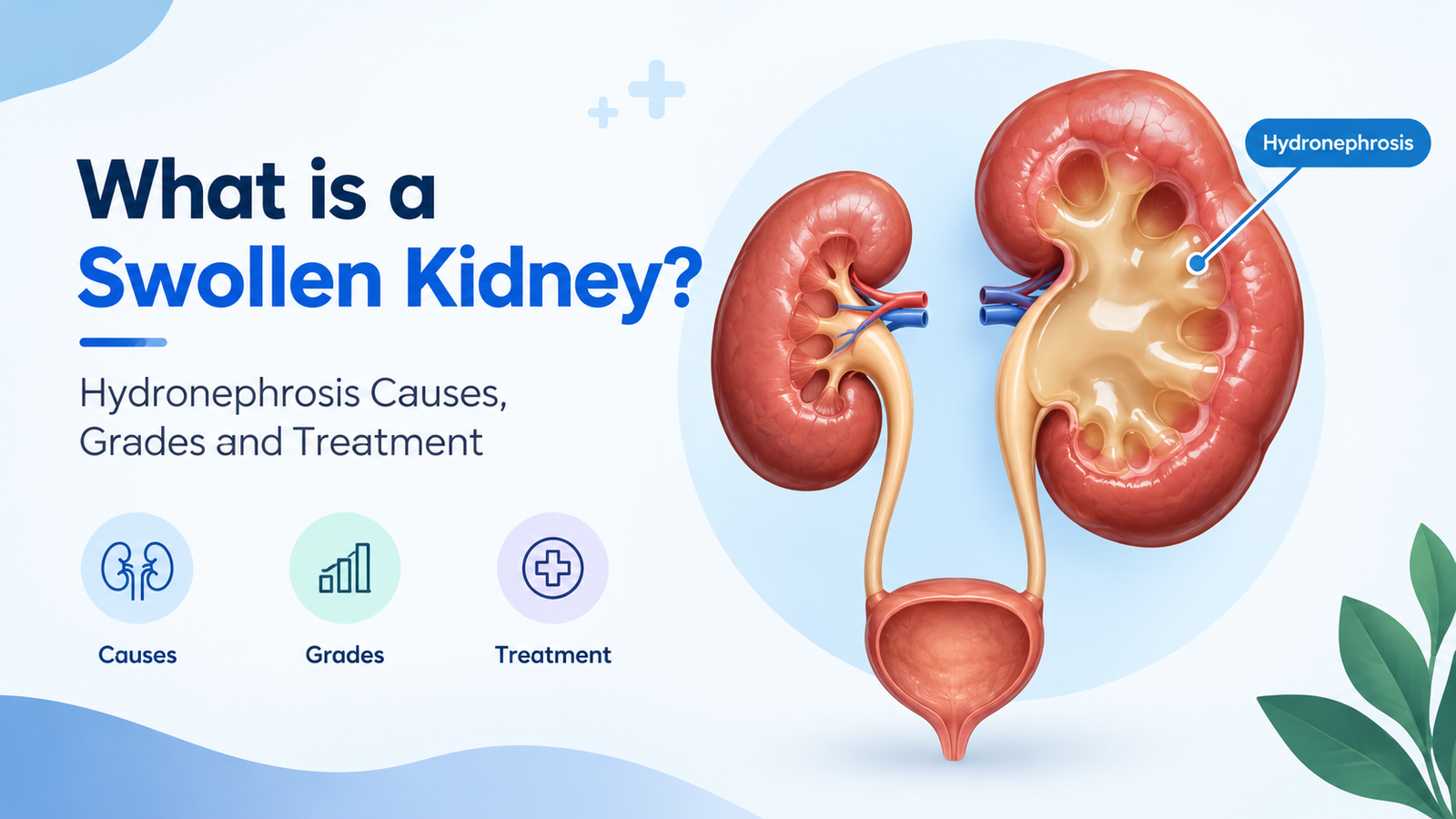
- Urine blockage leading to kidney swelling
- Long-term kidney damage in rare cases
Early evaluation prevents these problems.
Kidney Stone Precautions That Matter Daily
Kidney stone precautions are not temporary rules. They are long-term habits.
Daily care focuses on:
- Drinking enough water so urine stays pale yellow
- Reducing salt in food
- Eating balanced meals instead of extreme diets
These habits work quietly in the background, much like routine maintenance keeps a machine running smoothly.
How to Prevent Kidney Stones Naturally
Prevention is always better than treatment.
The most effective steps include:
- Hydration, the single most important factor
- Maintaining a healthy body weight
- Following a diet suited to stone type
- Treating urinary infections early
- Regular follow-up if stones occurred before
In long-term stone formers, prevention plans are customised based on stone analysis and blood tests.
Can Kidney Stones Come Back?
Yes. Kidney stones can recur.
Once someone has had a stone, the chance of another increases. The good news is that recurrence risk drops sharply when preventive steps are followed consistently.
Stone analysis acts like a roadmap. It tells doctors what went wrong and how to avoid it next time.
When to See a Doctor Immediately
Some symptoms should never be ignored:
- Severe pain not relieved by medicines
- Fever with chills
- Persistent vomiting
- Difficulty passing urine
- Visible blood in urine
Early treatment avoids complications and hospital admissions.
If symptoms persist, a specialist consultation can help clarify the cause and guide treatment.
Book Appointment:
https://www.drashishsaini.com/book-online-consultation
Common Myths About Kidney Stones
- Many myths create confusion and fear.
- Only older people get stones. Not true. Young adults are commonly affected.
- All stones need surgery. Not true. Many pass naturally.
- Drinking less water reduces pain. Not true. Dehydration worsens stones.
- Once removed, stones never return. Not true. Prevention is ongoing.
- Correct information helps patients take control.
Frequently Asked Questions
What causes kidney stones?
Kidney stones form when urine becomes too concentrated and minerals stick together. Low water intake, high salt consumption, excess animal protein, obesity, family history, and certain infections are common causes.
What are 5 symptoms of having kidney stones?
Severe back or side pain, nausea or vomiting, burning during urination, blood in urine, and frequent urge to urinate are common symptoms. Pain often comes in waves and may move as the stone shifts.
Is a kidney stone very serious?
Most kidney stones are not life-threatening if treated on time. However, untreated stones can cause infection, blockage, or kidney damage, which can become serious.
How do kidney stones go away?
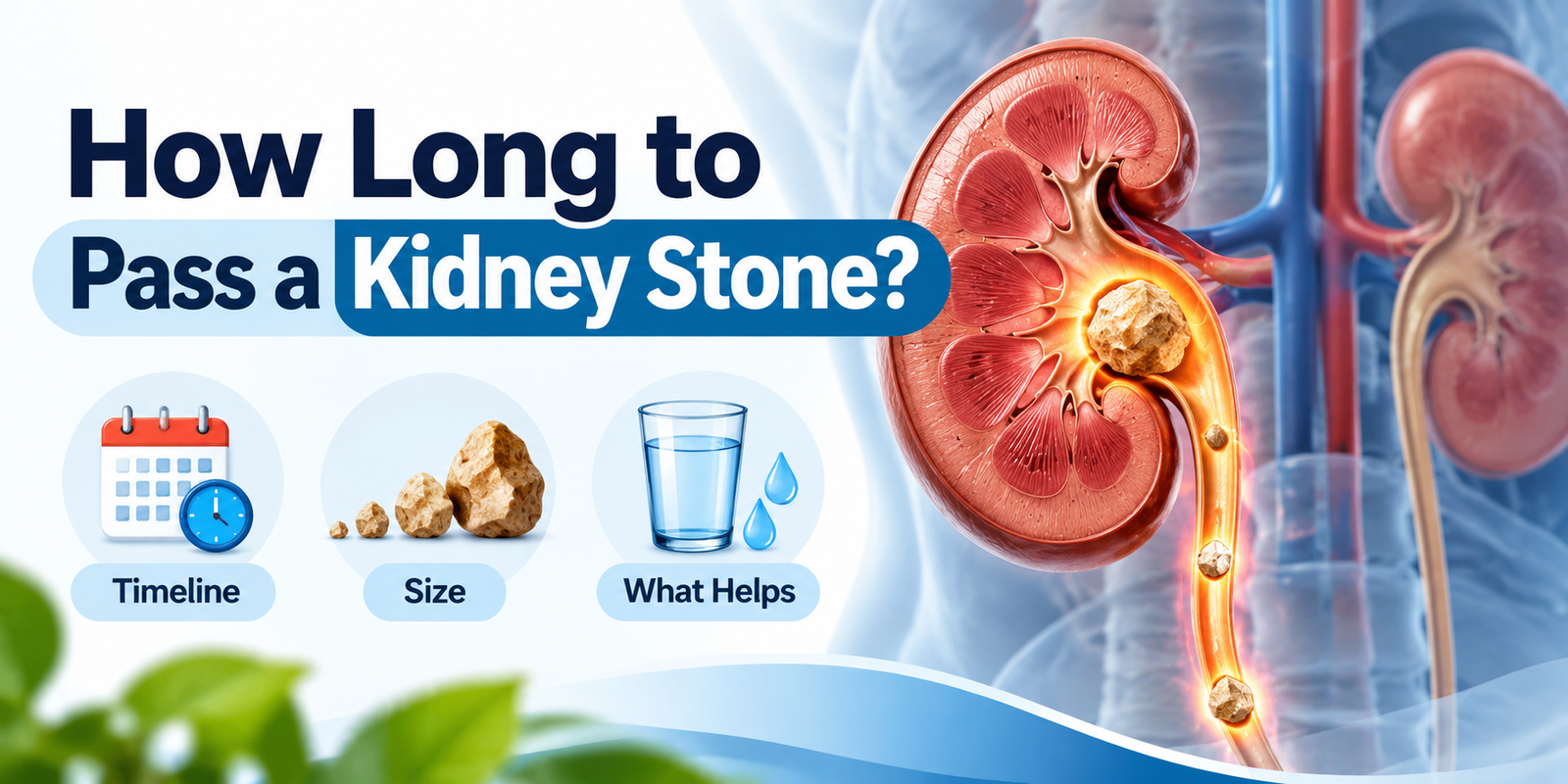
Small stones may pass naturally with plenty of fluids and pain control. Larger or stuck stones may need medical treatment or procedures to remove or break them.
What are the starting symptoms of a kidney stone?
Early symptoms may include dull back discomfort, mild abdominal pain, or burning during urination. Some stones cause no symptoms until they start moving.
How can you check for kidney stones at home?
You cannot confirm kidney stones at home. Symptoms may suggest stones, but imaging tests like ultrasound or CT scan are needed for diagnosis.
What are the three early warning signs of a kidney problem?
Persistent back pain, changes in urine color or amount, and swelling of feet or face can be early warning signs. These symptoms should be checked by a doctor.
How to treat kidney stones when pregnant?
Treatment focuses on pain relief, hydration, and close monitoring. Surgery is avoided unless absolutely necessary, and care is guided jointly by urologists and obstetricians.
How to 100% prevent kidney stones?
There is no guaranteed way to prevent kidney stones completely. However, drinking enough water, reducing salt, and following diet advice greatly lowers the risk.
What foods dissolve kidney stones?
No food can directly dissolve all kidney stones. However, citrus fruits like lemon may help prevent stone growth by increasing citrate levels in urine.
What are 10 foods to avoid kidney stones?
Limit excess salt, red meat, processed foods, sugary drinks, cola, spinach, nuts, chocolates, packaged snacks, and excessive tea or coffee. Avoidance depends on stone type.
What dissolves kidney stones fast?
Most kidney stones do not dissolve quickly on their own. Medical treatment, hydration, and in some cases procedures are the fastest and safest way to manage stones.
Conclusion
Kidney stones are common but highly manageable. Symptoms can vary, and pain location often changes as the stone moves. Early diagnosis prevents complications, and simple lifestyle changes greatly reduce recurrence risk.
With the right precautions, most people can treat kidney stones effectively and prevent them from coming back.
If you have ongoing symptoms, previous stones, or concerns about prevention, a urology consultation can help create a clear plan.
Book Appointment: