
}})
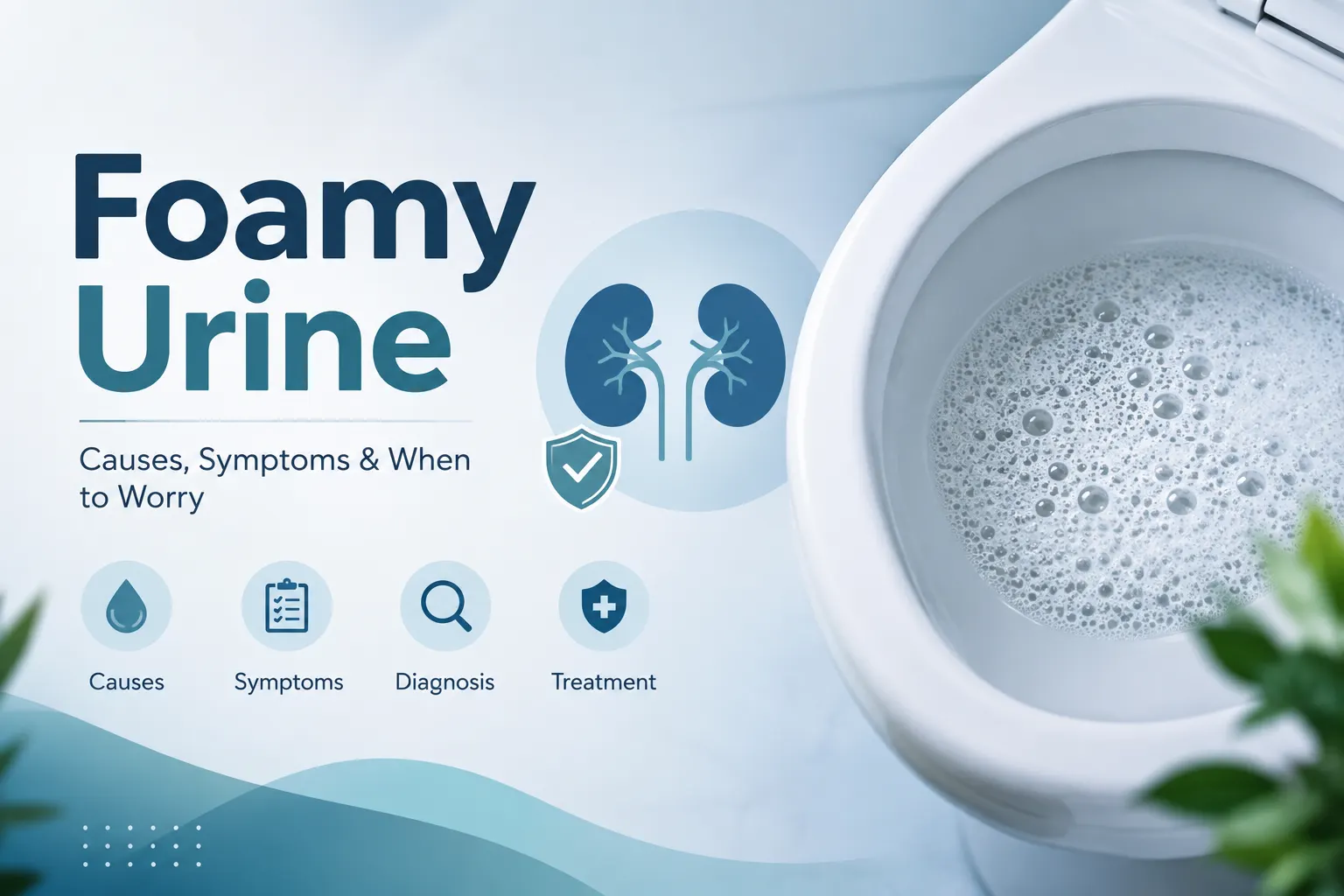
Most foamy urine is harmless. A few bubbles from a fast urine stream, dehydration, or leftover cleaner in the toilet bowl are common and not a problem. Persistent, thick, white foam that appears every time you urinate can signal protein in the urine, which may point to kidney disease, uncontrolled diabetes, or high blood pressure. If foam does not clear within a few days, or if it comes with swollen ankles, fatigue, or blood in your urine, see a doctor.
Noticing foam in the toilet after you urinate can be unsettling. Is it just something you drank, or is it your kidneys? The honest answer is that it depends on how the foam looks and how often it appears. This guide explains exactly when foamy urine is nothing to worry about, when it needs medical attention, and how it is diagnosed and treated. It is written so you can walk into your consultation already knowing what to ask.
Is Foamy Urine Normal?
Some foam in the toilet is completely normal. The natural force of your urine stream hitting the water creates small bubbles that clear within a few seconds. Even a bit of extra foam after a strong stream, first thing in the morning, or when you are slightly dehydrated is nothing to be concerned about.
Foamy urine becomes worth investigating when it is persistent, thick, and appears every time you urinate, especially if it lingers in the toilet after you flush. That pattern is often a signal that your kidneys are leaking protein into the urine, which is a symptom that always deserves proper evaluation.
What Foamy Urine Actually Looks Like

One of the most useful things you can do before worrying is to notice the pattern of the foam. The distinction between harmless bubbles and medically significant foam matters clinically and is the single biggest reason people either panic unnecessarily or delay seeking help.
- A few small bubbles that clear within seconds: normal, no action needed
- A layer of foam that dissipates within a minute: usually harmless, often dehydration or rapid urination
- Thick, white, beer-like foam that persists after you flush: worth investigating, may indicate protein in the urine
- Foam that appears every single time you urinate for several days or more: should always be evaluated by a doctor
The medical term for protein in the urine is proteinuria, and it is the single most important reason a urologist checks for foam.
Common Harmless Causes of Foamy Urine
Most foamy urine has a simple, everyday explanation. Before assuming the worst, run through this list.
Rapid or Forceful Urination
If you have been holding urine for hours, the resulting fast, forceful stream hits the toilet water with enough velocity to whip up bubbles. This is by far the most common cause of foam, and it clears within seconds. Try urinating a little sooner or a little more slowly and see if the foam settles.
Dehydration
When you are not drinking enough water, your urine becomes more concentrated. The higher concentration of natural substances makes it more likely to foam. This is often why foam is more noticeable first thing in the morning, when overnight fluid loss makes urine most concentrated. It usually clears within a day of drinking more water.
Detergent or Cleaner in the Toilet Bowl
A very common false alarm. If your toilet bowl has residue from a cleaning product, or if you use a blue-tablet cleaner, urine hitting that residue can produce impressive foam that has nothing to do with your health. Flush the toilet first, wait a few seconds, then urinate to test whether the foam is really from your urine.
Vigorous Exercise
Intense exercise can temporarily push a small amount of protein into the urine. This is called exercise-induced proteinuria, and it settles within a day or two of rest. It is completely benign and does not damage the kidneys.
Medical Causes of Foamy Urine
When foam is persistent and thick, one of the following medical causes may be responsible. Every one of these is worth taking seriously, and every one is treatable when caught early.
Proteinuria (Protein in the Urine)
Healthy kidneys act like fine filters, holding back protein and letting only waste and water pass into urine. When the filters are damaged, protein leaks through and appears in the urine, where it acts like soap and produces persistent white foam. Proteinuria is the underlying explanation for most medically significant foamy urine, and identifying its cause is the whole point of an evaluation.
Chronic Kidney Disease
The most important cause to rule out. As kidney function declines, more protein leaks through, and foam becomes a daily finding. Chronic kidney disease often develops silently for years before other symptoms appear, so persistent foamy urine may be an early warning sign in someone who otherwise feels fine.

Diabetes and Diabetic Nephropathy
Poorly controlled diabetes gradually damages the kidney filters, a process called diabetic nephropathy. It is one of the leading causes of chronic kidney disease worldwide. Persistent foamy urine in someone with known or suspected diabetes should always trigger a check of blood sugar control and kidney function.
High Blood Pressure
Uncontrolled hypertension damages the small blood vessels in the kidneys over time, leading to protein leakage and foamy urine. Because high blood pressure often has no symptoms of its own, foamy urine can be the first noticeable clue that it is affecting the kidneys.
Urinary Tract Infection
An infection in the urethra or bladder can cause proteins and white blood cells to enter the urine, producing foam along with the classic symptoms of burning urination, urgency, and cloudy urine. If burning urination is one of your symptoms, our guide on burning urination causes beyond a UTI covers the full picture.
Retrograde Ejaculation
A cause specific to men. In retrograde ejaculation, semen travels backwards into the bladder during orgasm instead of exiting the penis. It then appears in the next urination, making the urine cloudy or foamy. It is common after certain prostate surgeries, in men with diabetes, and with some medications. It is usually harmless but can affect fertility.
Preeclampsia in Pregnancy
In pregnant women, sudden foamy urine can be a sign of preeclampsia, a serious pregnancy complication marked by high blood pressure and protein in the urine. It always needs urgent evaluation.
Rare Systemic Conditions
Uncommon conditions such as amyloidosis and multiple myeloma can produce excessive protein in urine and persistent foam. These are rare, but a full evaluation looks for them when simpler causes are ruled out.
Foamy Urine by Type: What Different Patterns Suggest
The pattern of the foam often gives a strong hint about the cause. The table below matches common patterns to their most likely explanations.
| Foam pattern | Likely cause |
|---|---|
| A few bubbles clearing within seconds | Normal, no action needed |
| Foam after a strong or held-in stream | Rapid urination, harmless |
| Foam mainly in the morning | Overnight dehydration, harmless |
| Persistent white foam that lasts after flushing | Proteinuria, needs evaluation |
| Foam with cloudy or reddish urine | UTI or blood in urine |
| Foam after sexual activity in men | Retrograde ejaculation |
| Foam with swollen ankles, face, or fatigue | Kidney disease, needs urgent evaluation |
| Foam only after a bleach or blue-tablet clean | Toilet cleaner residue, harmless |
This is a starting point, not a diagnosis. A simple urine test almost always gives a clear answer.
Related Symptoms to Watch For
Foamy urine becomes far more meaningful when it appears alongside other symptoms. Tell your doctor if you also notice:
- Swelling in the ankles, feet, hands, or around the eyes
- Persistent fatigue or feeling generally unwell
- High blood pressure or headaches
- Reduced urine output or changes in urination pattern
- Blood in the urine or reddish-brown urine
- Burning or pain during urination
- Nausea, loss of appetite, or unexplained weight change
- Foamy urine during pregnancy
These clues often point straight to the cause and shape which tests are needed.
When to See a Doctor
Book a consultation with a urologist if:
- Foam is persistent and thick, and appears every time you urinate for several days
- You have swelling, fatigue, or high blood pressure alongside foamy urine
- You have diabetes or high blood pressure and notice new foam in your urine
- You have a family history of kidney disease
- Foam appears with blood in urine, burning urination, or reduced urination
Seek urgent care if foamy urine appears suddenly during pregnancy, if you have severe swelling with foamy urine, or if you notice dramatic changes in urine output.
How Foamy Urine Is Diagnosed
Finding the cause is straightforward and usually painless. A urologist will typically:
- Take a full history, including your fluid intake, medications, and any medical conditions such as diabetes or high blood pressure
- Order a urine dipstick test, which quickly detects protein in the urine
- Follow up with a urine protein-to-creatinine ratio, which precisely quantifies how much protein you are losing
- Send urine for a full urinalysis and, if needed, a 24-hour urine collection
- Check blood tests for kidney function (creatinine, eGFR), blood sugar, and other markers
- Add an ultrasound of the kidneys and bladder if a structural cause is suspected
Most causes become clear from the urine tests alone. When they do not, more targeted investigations follow.
How Foamy Urine Is Treated
Treatment always targets the underlying cause:
- Harmless causes need only reassurance, better hydration, and slower urination
- Urinary tract infections are treated with the right course of antibiotics
- Diabetes-related proteinuria improves with tighter blood sugar control and specific medications that protect the kidneys
- High blood pressure is treated with lifestyle changes and blood pressure medications that also reduce protein loss
- Chronic kidney disease needs specialist management, dietary adjustments, and medications to slow progression
- Retrograde ejaculation may need no treatment unless fertility is a concern, in which case specific medications or urological options can help
- Preeclampsia always needs urgent obstetric care
Catching a kidney or metabolic problem early makes an enormous difference. Foamy urine, when it truly is a warning sign, is one of the earliest and most easily missed.
How to Prevent Foamy Urine
Everyday habits that keep urine clear:
- Stay well hydrated throughout the day
- Manage blood sugar carefully if you have diabetes
- Keep blood pressure in a healthy range
- Avoid excessive protein supplements unless medically advised
- Have regular check-ups if you have risk factors for kidney disease
Expert Care for Kidney and Urinary Health in Delhi NCR
Persistent foamy urine deserves a proper answer, not months of guessing. Dr. Ashish Saini is a urologist and andrologist at Excel Advanced Urology Center in Greater Kailash 1, New Delhi, whose practice covers the full spectrum of urinary tract, kidney, and male reproductive health.
- MCh Urology from AIIMS, New Delhi
- MBBS and MS from KGMU, Lucknow
- 15+ years of clinical experience in urology and andrology
- 21,000+ surgeries performed across urological procedures
This depth of training means foamy urine is evaluated properly, with the right tests to distinguish a harmless cause from an early kidney or metabolic problem, and a clear plan tailored to what your results actually show.
If you have noticed foamy urine for more than a few days, especially with swelling, fatigue, or a family history of kidney disease, book an online consultation for a thorough evaluation and honest answers.