
}})
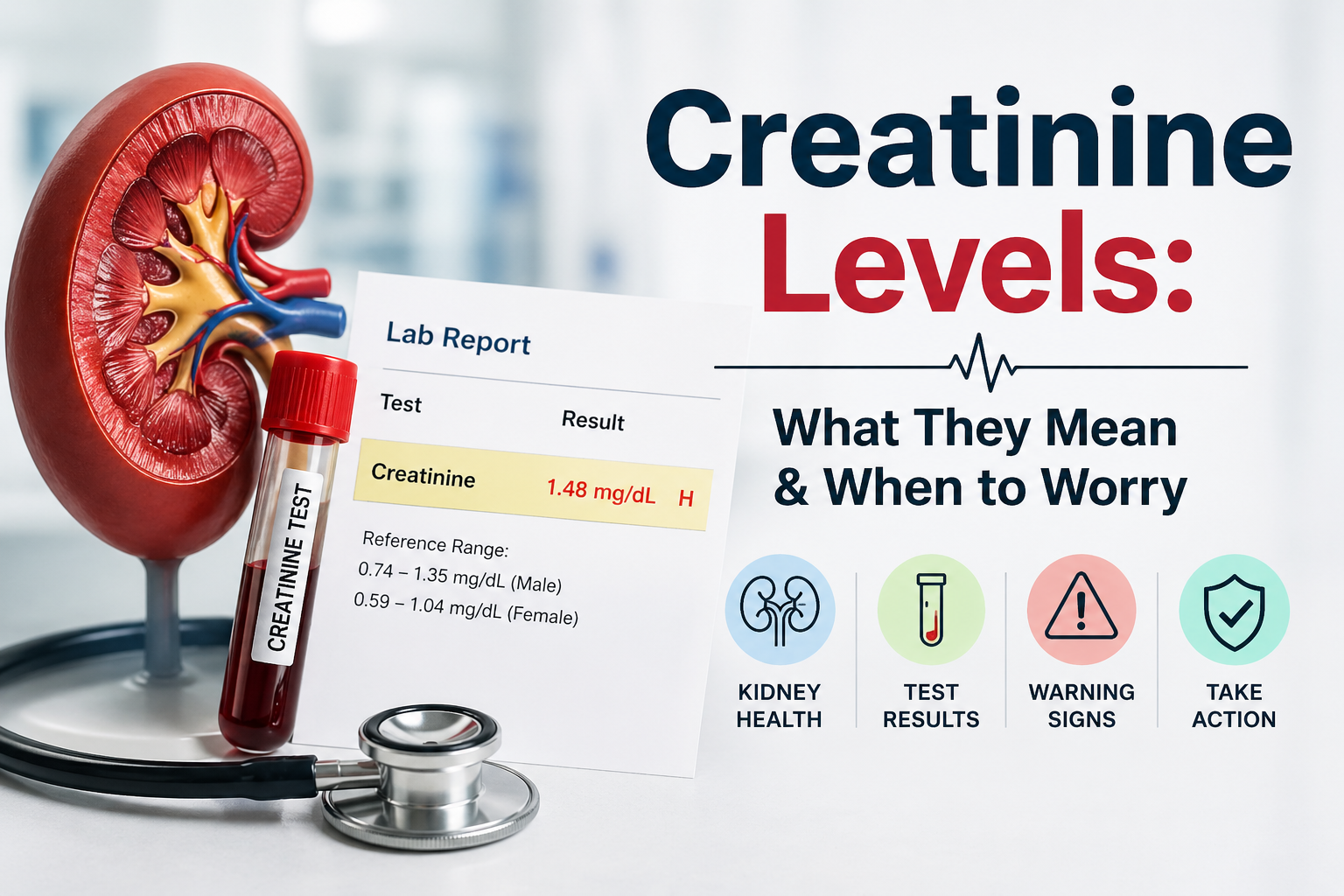
Your doctor hands you a lab report. You scan the numbers and stop at one word: creatinine. It's flagged. It's outside the normal range. And now you're spiraling into a Google rabbit hole at midnight.
You're not alone. Millions of people receive creatinine blood test results every year and have no idea what they mean. This guide breaks it all down - in plain language, with a real creatinine levels chart, and a clear answer to the only question that matters: should you actually worry?
What is Creatinine?

Creatinine is a natural waste product that your muscles produce every single day. When your muscles break down a compound called creatine phosphate (used for energy), they release creatinine as a byproduct into your bloodstream.
Here's the key thing: your kidneys are responsible for filtering creatinine out of your blood and flushing it out through urine. When kidneys are healthy, they do this efficiently and consistently. When they're not, creatinine builds up - and that's when your levels start rising on a lab report.
This is why creatinine is one of the most reliable kidney function tests available. It acts like a performance report card for your kidneys.
How Creatinine Is Produced in the Body
- Muscles continuously break down creatine for energy
- This produces creatinine as a byproduct at a fairly constant rate
- The rate depends on your muscle mass, age, gender, and diet
- People with more muscle mass naturally produce more creatinine
Why the Kidneys Filter Creatinine
The kidneys filter blood roughly 50 times a day. Creatinine passes through the glomeruli (tiny kidney filters) and exits the body through urine. When kidneys are damaged or underperforming, this filtration slows - and serum creatinine levels rise in the bloodstream.
Normal Creatinine Levels - The Complete Chart

Normal creatinine levels vary based on age, sex, and body composition. Here's a quick reference for serum creatinine (from a blood test):
Normal Serum Creatinine Levels by Age and Gender
Note: These are general reference ranges. Your lab report may show slightly different "normal" values depending on the testing method used. Always compare your result to the reference range on your specific report.
Normal Creatinine Levels in Urine
A urine creatinine test measures how much creatinine your kidneys are excreting. This is used to assess kidney efficiency.
- Normal range: 500–2000 mg per day (24-hour urine test)
- Low urine creatinine can indicate poor kidney filtration
- High urine creatinine can mean high muscle activity or high protein intake
What is Creatinine Clearance and GFR?
Two terms you'll often see alongside creatinine are creatinine clearance and GFR (Glomerular Filtration Rate).
- Creatinine clearance measures how well your kidneys are clearing creatinine from the blood. It's calculated using a combination of your blood creatinine, urine creatinine, and urine volume.
- eGFR (estimated GFR) is a formula-based estimate of kidney filtration rate, calculated using serum creatinine, age, sex, and sometimes race.
A low eGFR paired with high creatinine is one of the clearest warning signs of declining kidney function.
What Causes High Creatinine Levels?

High creatinine levels (above the normal range) can come from kidney problems - or from completely unrelated factors.
Kidney-Related Causes
- Chronic kidney disease (CKD) - the most common cause
- Acute kidney injury from infection, dehydration, or medication
- Kidney stones are blocking the urine flow
- Glomerulonephritis (inflammation of kidney filters)
- Diabetic nephropathy (kidney damage from uncontrolled diabetes)
- High blood pressure damages kidney vessels over time
Non-Kidney Causes
Not all high creatinine is a kidney alarm. These factors can temporarily elevate levels:
- High-protein diet - especially red meat consumption before testing
- Intense exercise - heavy workouts spike creatinine temporarily
- Creatine supplements - directly raise creatinine output
- Dehydration - concentrates creatinine in the blood
- Certain medications - including NSAIDs, ACE inhibitors, and some antibiotics
- Pregnancy complications - like preeclampsia
Expert Tip: If your creatinine is only slightly elevated, your doctor may repeat the test after a few days of staying hydrated and avoiding heavy exercise to see if levels normalize.
What Causes Low Creatinine Levels?
Low creatinine is less discussed but equally worth understanding. It typically signals:
- Low muscle mass - common in elderly individuals, those with muscle-wasting conditions, or malnutrition
- Liver disease - the liver is involved in creatine production
- Pregnancy - blood volume increases dilute creatinine concentration
- Severe weight loss or eating disorders
Low creatinine by itself is rarely dangerous, but it may point to underlying nutritional or muscle health issues.

Symptoms You Should Never Ignore
High creatinine doesn't always cause symptoms - which is why the creatinine blood test is so valuable. However, when kidney function is significantly impaired, you may experience:
- Swelling in the legs, ankles, or feet (edema)
- Fatigue and weakness that don't improve with rest
- Frequent urination, especially at night
- Foamy or dark-coloured urine
- Loss of appetite and nausea
- Shortness of breath
- Confusion or difficulty concentrating
- Itchy skin (from waste buildup)
If you have high creatinine and these symptoms together, don't wait for your next scheduled appointment. Contact your doctor promptly.
When Should You Actually Worry?
Here's the practical answer most guides skip:
One high reading alone is rarely cause for panic. Creatinine fluctuates. A single elevated result can be caused by a hard gym session, a steak dinner, or just being dehydrated the morning of your blood draw.
You should take action if:
- Levels are significantly elevated (e.g., above 2.0 mg/dL in men or 1.5 mg/dL in women)
- Two or more tests in a row show elevated creatinine
- Your eGFR is dropping over time
- You have existing conditions like diabetes or hypertension that affect the kidneys
- You're experiencing physical symptoms listed above
You can likely wait and re-test if:
- It's a borderline result (just slightly outside normal)
- You exercised heavily or ate a lot of meat before the test
- You were dehydrated
- You started a new medication recently
How to Lower Creatinine Levels Naturally
If your levels are mildly elevated and your doctor confirms no serious underlying condition, these strategies can help:
- Stay well-hydrated - aim for 8–10 glasses of water daily
- Reduce red meat intake - swap for plant-based proteins like lentils and tofu
- Limit creatine supplements - these directly increase creatinine output
- Avoid NSAIDs (like ibuprofen) when possible - they reduce blood flow to the kidneys
- Control blood sugar and blood pressure - the top two drivers of kidney damage
- Exercise moderately - avoid extreme endurance sessions that spike creatinine
- Eat more fiber - supports kidney health and reduces waste buildup
- Consider a low-protein diet (under medical supervision) if the kidneys are already stressed
Creatinine Blood Test vs. Urine Test - What's the Difference?
Most routine physicals include a serum creatinine test as part of a basic metabolic panel (BMP) or comprehensive metabolic panel (CMP).
Conclusion
Creatinine is one of the most informative numbers on a standard lab panel - but it needs context to be meaningful. A single elevated result doesn't mean your kidneys are failing. But a pattern of rising creatinine, a falling eGFR, and persistent symptoms are signals worth taking seriously.
Key Takeaways:
- Normal creatinine levels differ by age, sex, and muscle mass - use the chart as a reference
- High creatinine can come from kidney disease, diet, dehydration, or exercise
- Pair your creatinine result with your eGFR for a fuller picture of kidney health
- Lifestyle changes like hydration, diet adjustment, and blood pressure control can help normalize mild elevations
- Always retest before concluding one abnormal result
If your creatinine is high and you're unsure why, don't self-diagnose - use this guide to have a more informed conversation with your doctor.