
}})
Imagine waking up at 2 a.m. with a sharp, cramping pain shooting from your lower back into your groin - a pain so intense you cannot find a comfortable position no matter how you move. For millions of people, that is not a nightmare. That is a kidney stone.
About 1 in 10 people will develop a kidney stone at some point in their life. They are one of the most painful urological conditions known, yet they are also largely preventable and, in many cases, treatable at home. In this guide, you will learn exactly what kidney stones are, what causes them, the four main types, what the pain really feels like, and - most importantly - how to pass them naturally and stop them from coming back.
What Are Kidney Stones?

Kidney stones are hard, solid deposits made of minerals and salts that form inside your kidneys. They develop when urine becomes too concentrated, allowing minerals like calcium, oxalate, and uric acid to crystallize and stick together over months or even years.
They can be tiny - the size of a grain of sand - or, in rare cases, as large as a golf ball. Medically, they go by several names: renal calculi, nephrolithiasis, or urolithiasis. The name changes depending on where they are located in your urinary tract.
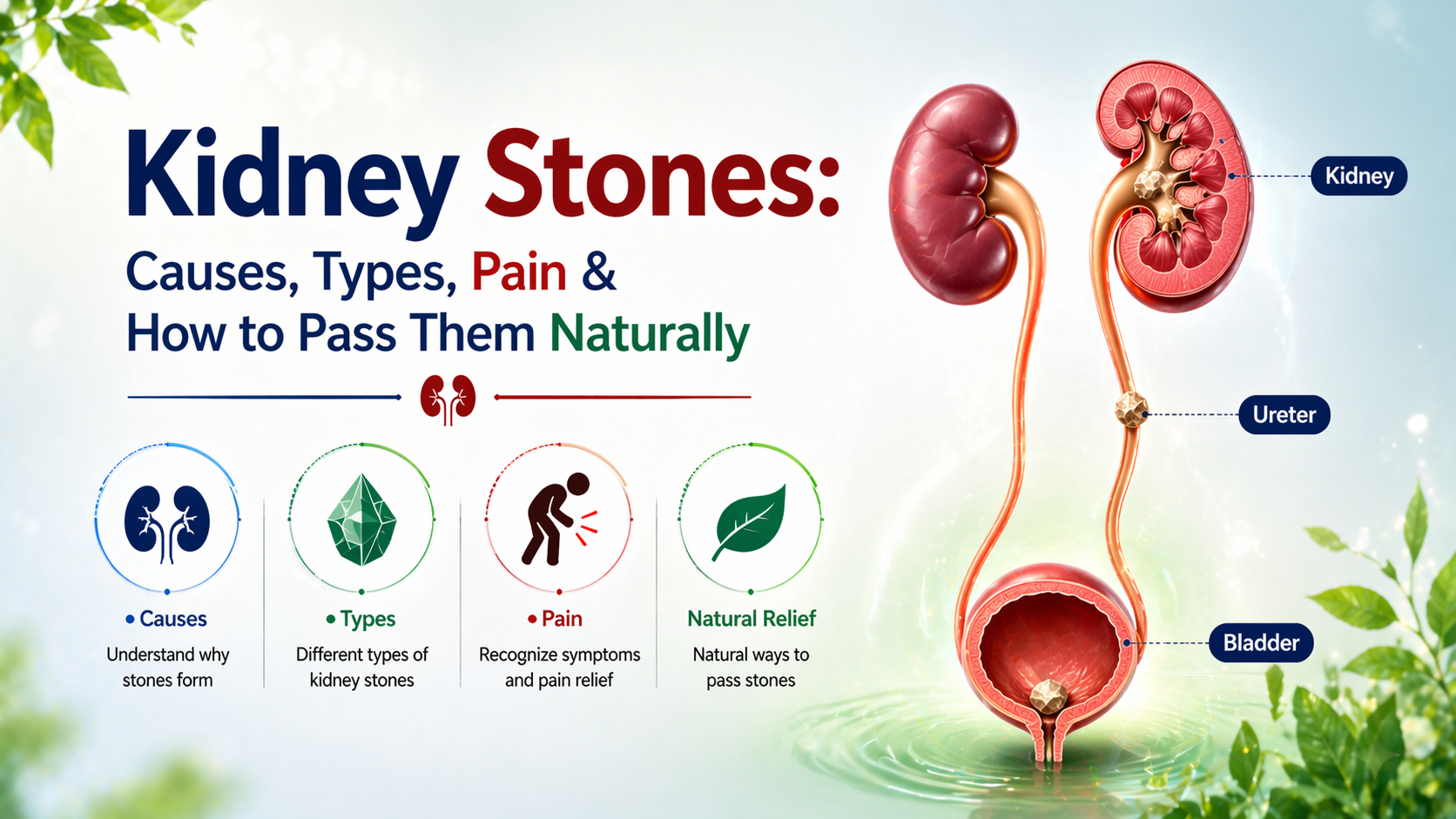
Here is the key thing to understand: a kidney stone sitting still inside your kidney may cause zero symptoms. The pain begins when it starts moving - particularly when it travels from the kidney into the ureter, the narrow tube connecting your kidney to your bladder.
What Causes Kidney Stones?

There is rarely one single cause. Kidney stones are almost always the result of several factors working together.
The root mechanism is straightforward: when your urine contains more crystal-forming substances - calcium, oxalate, uric acid, and phosphate - than the liquid in your urine can dissolve, those substances begin to crystallize. At the same time, if your urine lacks natural compounds that prevent stone formation, crystals bind together and grow into stones.
Common causes and contributing factors include:
- Not drinking enough water (dehydration is the number one trigger)
- Eating a diet high in sodium, protein, sugar, or oxalate-rich foods
- Excess body weight or obesity
- A personal or family history of kidney stones
- Digestive conditions such as inflammatory bowel disease or prior gastric bypass surgery
- Certain medical conditions, including gout, hyperparathyroidism, renal tubular acidosis, and diabetes
- Long-term use of certain medications, such as calcium-based antacids, diuretics, vitamin C supplements in high doses, and some anti-seizure drugs
People who live in hot, dry climates or sweat heavily are also at a higher risk because they lose fluids faster than they can replace them, resulting in concentrated urine.
The 4 Types of Kidney Stones

Understanding which type of kidney stone you have is critical - it determines treatment, dietary changes, and prevention strategy. Your doctor can identify the type by analyzing a passed stone or through blood and urine tests.
1. Calcium Oxalate Stones
These are the most common type, accounting for the majority of all kidney stones. They form when calcium combines with oxalate, a naturally occurring compound found in many foods.
- High-oxalate foods include spinach, rhubarb, beets, chocolate, nuts, and tea
- Paradoxically, a low-calcium diet can actually increase your risk - dietary calcium binds oxalate in the gut and prevents it from reaching the kidneys
- Vitamin D in high doses can also increase calcium absorption and raise the risk
2. Uric Acid Stones
These form when urine is too acidic. They are more common in people who eat large amounts of animal protein - red meat, organ meats, shellfish, and poultry - which raises uric acid levels.
People with gout, diabetes, or metabolic syndrome are particularly prone to uric acid stones. Unlike calcium stones, uric acid stones can sometimes be dissolved with medication (allopurinol or potassium citrate), which makes identifying this type especially valuable.
3. Struvite Stones
Struvite stones are directly linked to urinary tract infections (UTIs). Bacteria that cause UTIs produce chemicals that make urine less acidic, creating the perfect environment for these stones to grow rapidly.
They can become very large in a short time - sometimes forming what is called a staghorn calculus that fills an entire section of the kidney. They often require surgical removal.
4. Cystine Stones
The rarest type, cystine stones, form in people with a genetic condition called cystinuria, where the kidneys excrete too much of the amino acid cystine into the urine. These tend to recur throughout a person's life and often require long-term medical management.
What Does Kidney Stone Pain Really Feel Like?
Kidney stone pain - called renal colic - is frequently described as one of the most severe pains a human being can experience, comparable to childbirth.
Here is what to expect:
- Sharp, stabbing pain in the side and back, just below the ribcage
- Pain that radiates downward into the lower abdomen and groin
- Pain that comes in waves, building and then easing slightly before intensifying again
- A burning or stinging sensation when urinating
- Urine that appears pink, red, or brown (blood in urine)
- Cloudy or foul-smelling urine
- Nausea, vomiting, and cold sweats
- A constant urge to urinate, or urinating in very small amounts
- Fever and chills if a urinary tract infection is also present
The location of the pain shifts as the stone moves through your urinary tract. When the stone reaches the bladder, many people experience significant relief. Once in the bladder, the stone usually passes within a few days.
Seek emergency care immediately if you have:
- Pain so severe that you cannot sit still
- High fever with chills
- Inability to urinate
- Vomiting you cannot control
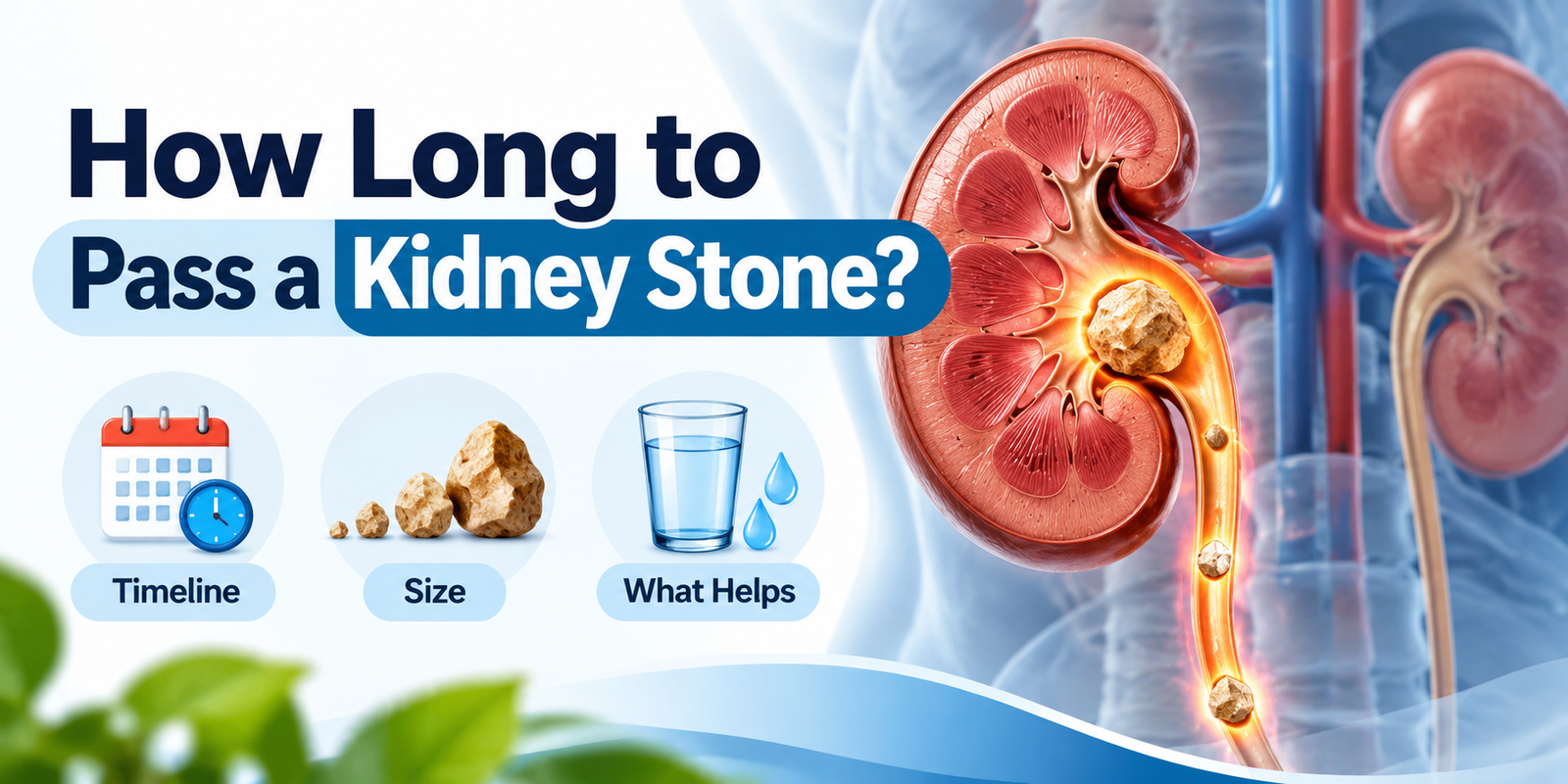
How Long Does It Take to Pass a Kidney Stone?

Time depends almost entirely on size.
- Stones smaller than 4 mm pass on their own approximately 80% of the time, typically within 1–2 weeks
- Stones between 4–6 mm pass about 60% of the time and may take 2–3 weeks
- Stones larger than 6 mm are far less likely to pass without medical help and often require a procedure
Once a stone moves into the bladder, it usually exits the body within a few days. The ureter-to-bladder journey is the most painful phase. Do not skip a follow-up appointment if you have not passed the stone within four to six weeks.
How to Pass a Kidney Stone Naturally

If your stone is small enough and not causing a blockage, your doctor may advise watchful waiting combined with the following approaches. These are not substitutes for medical care - always get evaluated first.
Drink More Water Than You Think You Need
This is the single most important thing you can do. Aim to produce at least 2–2.5 liters of urine per day. Your urine should be light yellow or nearly clear. Dark yellow urine means you are not drinking enough.
Water helps flush the stone down the urinary tract. If you struggle to drink plain water, adding a squeeze of lemon juice is beneficial - lemon contains citrate, which naturally inhibits stone formation.
Use Heat for Pain Relief
Applying a warm heating pad to your side and lower back can ease muscle spasms caused by the stone moving through the ureter. It will not dissolve the stone, but it makes the waiting more bearable.
Stay Active - Gently
Light physical activity, like walking, can help stones shift and pass more quickly. Avoid strenuous exercise during a painful episode, but do not stay completely sedentary.
Take Prescribed Medications
Doctors often prescribe alpha-blockers such as tamsulosin (Flomax) to relax the muscles in the ureter, making it easier and faster for the stone to pass. Pain relievers and anti-nausea medications also help you stay comfortable during the process.
Filter Your Urine
Your doctor may ask you to catch and save any stones you pass by urinating through a strainer or fine mesh. Saving the stone for analysis tells your doctor exactly what type it is, which shapes your entire prevention plan going forward.
Foods and Drinks That Help or Hurt

Foods and drinks to increase:
- Water (primary and most important)
- Lemon water and lemonade (citrate helps prevent stones)
- Low-fat dairy products (dietary calcium actually binds oxalate in the gut)
- Fresh fruits and vegetables in moderate amounts
Foods and drinks to limit or avoid:
- Spinach, rhubarb, nuts, and chocolate (high in oxalate)
- Red meat, organ meats, and shellfish (raise uric acid)
- High-sodium processed foods (sodium increases calcium in urine)
- Sugary drinks, including sodas and fruit juice (fructose raises uric acid and oxalate)
- High-dose vitamin C supplements (converted to oxalate in the body)
Medical Treatments When Natural Passing Is Not Enough
When a stone is too large, causing a blockage or resulting in a kidney infection, medical procedures become necessary.
- Shockwave lithotripsy (SWL): Sound waves from outside the body break the stone into smaller fragments that can be passed in urine. Non-invasive and done as an outpatient procedure.
- Ureteroscopy: A thin scope is passed through the urethra and bladder into the ureter to locate and remove or break apart the stone using a laser.
- Percutaneous nephrolithotomy (PCNL): Used for very large or complex stones. A small incision is made in the back, and a tube is inserted directly into the kidney to extract the stone.
How to Prevent Kidney Stones from Coming Back
If you have had one kidney stone, the chance of getting another is high - around 50% within five to ten years without changes. The good news is that recurrence is largely preventable.
Key prevention strategies:
- Drink enough water daily to produce at least 2 liters of urine - this is non-negotiable
- Reduce sodium in your diet; high sodium increases calcium excretion through the kidneys
- Eat moderate amounts of animal protein rather than large daily servings
- Continue eating calcium-rich foods (do not cut out dairy), but be cautious with calcium supplements
- Limit high-oxalate foods if you form calcium oxalate stones
- Maintain a healthy body weight
- Work with a dietitian who specializes in kidney stone prevention for a personalized eating plan
- If dietary changes alone are not enough, your doctor may prescribe medications tailored to your specific stone type
Conclusion
Kidney stones are painful, common, and - once you have had one - frustratingly likely to return. But they are not inevitable. The causes are well understood, the types are identifiable, and prevention is genuinely achievable through consistent, practical lifestyle changes.
Key takeaways:
- Dehydration is the leading cause; drinking enough water is the most powerful prevention tool
- There are four stone types: calcium oxalate, uric acid, struvite, and cystine - each has a different dietary and treatment approach
- Small stones (under 4 mm) often pass on their own with water, rest, and medication
- Fever, inability to urinate, or unbearable pain require emergency care - do not wait
- Save any stone you pass for analysis; knowing your stone type changes everything about your prevention plan
Start with water. Then talk to your doctor about testing. With the right information, you can take real control over whether kidney stones become a recurring chapter in your life - or a one-time painful lesson.