
}})
Bladder stones are hard mineral deposits that form inside the urinary bladder when urine becomes concentrated and does not empty fully. Small stones may pass on their own, but larger stones usually do not. When left untreated, bladder stones can cause pain, repeated infections, bleeding, and long-term bladder damage. The good news is that modern bladder stone removal procedures are safe, minimally invasive, and highly effective, allowing most patients to return to normal life quickly.
Why Bladder Stone Removal Is Needed
The bladder is meant to store urine only for a short time. When urine stays too long, minerals like calcium and uric acid can settle and harden, much like salt crystals forming at the bottom of a pot of water left to evaporate.
In the early stage, bladder stones may not cause noticeable symptoms. But as they grow, they start acting like a stone in a shoe. Even small movements become uncomfortable. Over time, stones irritate the bladder lining, block urine flow, and increase infection risk.
While very tiny stones may pass naturally, most bladder stones require medical removal, especially if symptoms persist or keep coming back.
What Are Bladder Stones? A Quick Overview
Bladder stones are formed from concentrated urine minerals that crystallize and clump together. They vary in size. Some are as small as sand grains. Others can grow large enough to fill the bladder.
Common causes include
- Incomplete bladder emptying
- Enlarged prostate in men
- Neurogenic bladder (nerve-related bladder problems)
- Long-term catheter use
- Recurrent urinary infections
- Foreign bodies inside the bladder
Bladder stones are more common in men, especially older adults, largely due to prostate-related urinary obstruction.
Symptoms That May Require Bladder Stone Removal
Symptoms depend on stone size, number, and movement inside the bladder. Some stones roll freely, while others get stuck near the bladder outlet.
Common warning signs include:
- Lower abdominal or pelvic pain
- Frequent urge to urinate
- Burning or pain during urination
- Interrupted urine stream that stops and starts
- Blood in urine
- Recurrent urinary tract infections
- Difficulty emptying the bladder fully
Persistent symptoms usually mean the stone will not pass on its own and needs removal. Ignoring these signs often leads to worsening discomfort and complications.
When Is Bladder Stone Surgery Recommended?
Doctors usually recommend bladder stone removal when:
- The stone is large or hard
- Symptoms interfere with daily life
- Recurrent infections occur
- Stones keep forming again and again
- There is an underlying blockage like an enlarged prostate
Think of surgery not as an extreme step, but as removing the root cause, much like taking a nail out of a tire instead of repeatedly refilling air.
Diagnostic Tests Before Bladder Stone Removal
Before deciding how to remove bladder stones, doctors need a clear picture of the stone and bladder health.
Common tests include:
- Ultrasound, which shows stone size and bladder emptying
- X-ray or CT scan, useful for detecting stone number and hardness
- Urine tests, to check for infection or blood
- Cystoscopy, where a small camera is passed into the bladder to see stones directly
These tests help choose the safest and most effective removal method.
How Are Bladder Stones Removed? Procedures Explained
Bladder stone removal has evolved significantly. Open surgery is now rare. Most stones are removed using minimally invasive techniques, meaning less pain and faster recovery.
Cystolitholapaxy (Endoscopic Removal)
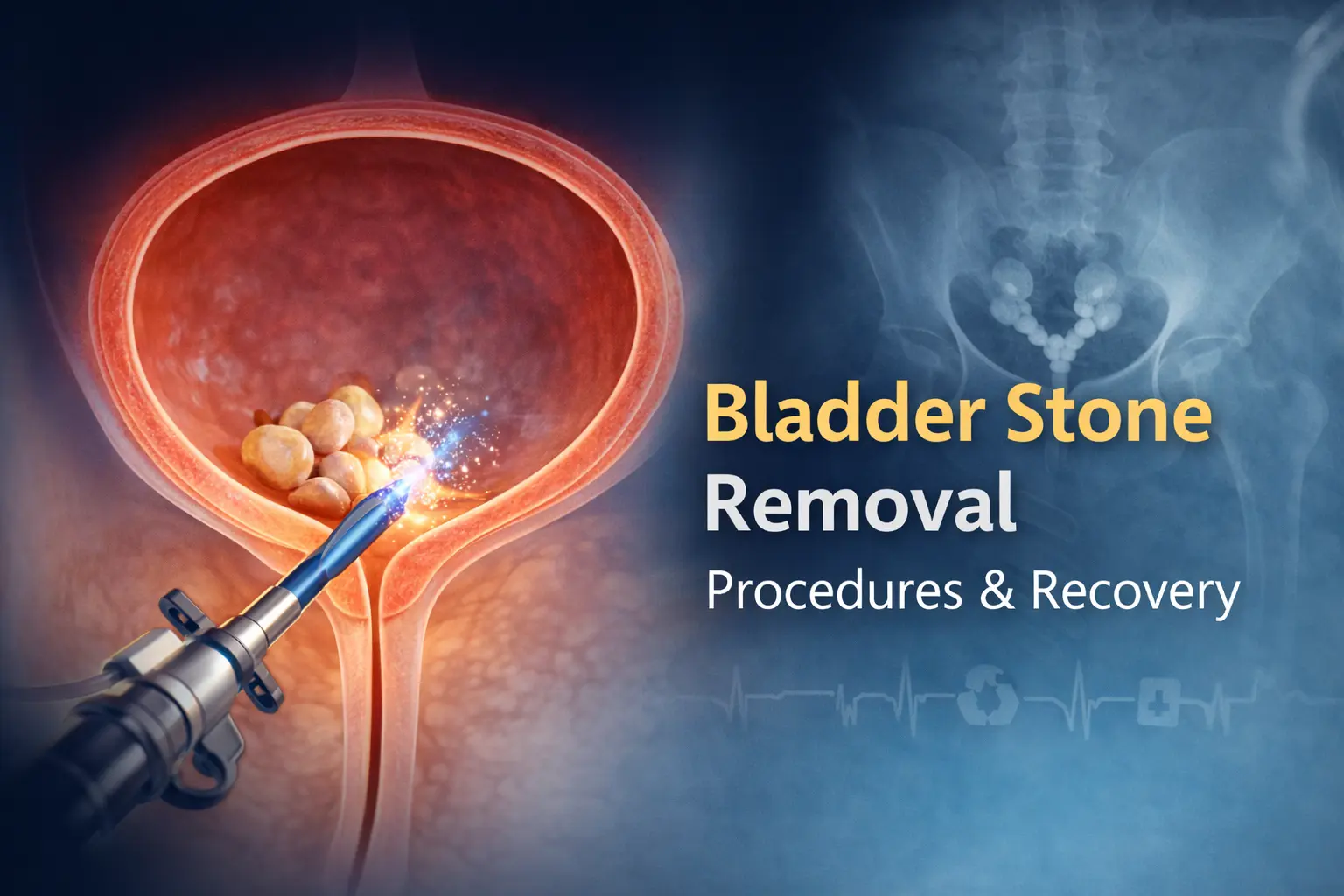
This is the most common bladder stone removal procedure today.
A thin tube with a camera is passed through the urethra into the bladder. The stone is broken into smaller pieces using mechanical tools or energy devices. These fragments are then washed out.
It is similar to breaking a large rock into gravel so it can be easily cleared.
Best suited for: Small to medium stones
Anesthesia: Local or general, depending on the case
Hospital stay: Same day or overnight
Bladder Stone Removal by Laser
Bladder stone removal by laser uses focused laser energy to break stones into very fine dust-like particles.
The laser is highly precise. It targets the stone while causing minimal injury to surrounding bladder tissue.
Best suited for: Hard stones, recurrent stones, and patients needing precise control
Key advantages: Less bleeding, quicker recovery, and high success rate
This method is especially useful in modern urology setups with advanced equipment.
Percutaneous Bladder Stone Removal
In this approach, a small incision is made in the lower abdomen to access the bladder directly.
It is usually chosen when urethral access is difficult or unsafe, such as in children or patients with urethral strictures.
Best suited for: Very large stones or special anatomical situations
Open Bladder Stone Surgery
Open urinary bladder stone surgery involves a direct incision into the bladder.
This method is now rarely used. It is reserved for cases where:
- Stones are extremely large
- Multiple procedures are needed together, such as prostate surgery
While effective, recovery takes longer compared to minimally invasive options.
Which Bladder Stone Removal Procedure Is Right for You?
There is no one-size-fits-all answer.
Doctors consider:
- Stone size and hardness
- Number of stones
- Patient age and anatomy
- Presence of prostate enlargement
- Overall health and medical history
The goal is always the same. Complete stone removal with the least stress on the body.
If you are unsure which option suits you, a consultation helps clarify the safest approach.
Book Appointment:
https://www.drashishsaini.com/book-online-consultation
What to Expect on the Day of the Procedure
On the procedure day, patients are usually asked to fast for a few hours.
Anesthesia type is decided beforehand. The procedure itself typically takes 30 minutes to 1 hour, depending on stone size.
In some cases, a temporary catheter is placed to allow the bladder to heal. This is usually removed within a short period.
Most patients are surprised by how smooth the process feels compared to their expectations.
Recovery After Bladder Stone Removal
Recovery is generally quick, especially with laser or endoscopic methods.
Immediate Recovery (First 24 to 72 Hours)
Mild burning during urination is common. Urine may appear slightly pink. Frequency may increase temporarily as the bladder settles.
Short-Term Recovery (1 to 2 Weeks)
Most people return to normal activities. Drinking plenty of fluids helps flush out remaining fragments and reduce irritation.
Full Recovery
Complete healing usually occurs within days to a few weeks, depending on the procedure used and underlying conditions.
Post-Procedure Care and Precautions
Good aftercare reduces complications and recurrence.
Patients are advised to:
- Drink adequate fluids
- Take prescribed medicines fully
- Avoid heavy lifting briefly
- Follow catheter care instructions if applicable
- Attend follow-up visits
These steps act like guardrails, keeping recovery on track.
Risks and Possible Complications
Modern bladder stone removal is very safe, but no procedure is risk-free.
Possible complications include:
- Urinary tract infection
- Temporary bleeding
- Urethral irritation
- Rare bladder injury
Serious complications are uncommon, especially when procedures are done by experienced urologists using modern techniques.
Preventing Bladder Stones in the Future
Removing stones is only half the solution. Preventing recurrence matters just as much.
Prevention focuses on:
- Treating the underlying cause, such as prostate enlargement
- Ensuring complete bladder emptying
- Staying well hydrated
- Regular follow-up imaging when advised
It is like fixing both the leak and the water damage, not just one.
Bladder Stones vs Kidney Stones
Bladder stones and kidney stones are often confused, but they are different problems.
Kidney stones form in the kidneys and may travel downward. Bladder stones form inside the bladder, usually due to urine retention.
Their causes, symptoms, and removal methods differ, even though some discomfort overlaps.
Frequently Asked Questions
How long does it take to recover from bladder stone surgery?
Recovery from bladder stone surgery is usually quick. Most patients feel much better within a few days, and full recovery typically takes 1 to 2 weeks, depending on the procedure used and overall health.
What are the risks of bladder removal surgery?
Bladder removal surgery carries risks such as infection, bleeding, bowel issues, blood clots, and urinary diversion complications. Long-term lifestyle adjustments are also required, which is why this surgery is done only when absolutely necessary.
Do you stay in hospital after bladder stone removal?
Most minimally invasive bladder stone removal procedures are day-care or require one night of hospital stay. Longer stays are uncommon unless there are complications or other medical conditions.
What should you avoid after bladder surgery?
After bladder surgery, avoid heavy lifting, strenuous exercise, and holding urine for long periods. Alcohol, smoking, and unprescribed medicines should also be avoided during recovery.
Can you live a normal life after bladder removal?
Yes, many patients live active and meaningful lives after bladder removal. With proper urinary diversion care and follow-up, people can work, travel, and maintain daily routines.
How many hours is bladder removal surgery?
Bladder removal surgery usually takes 4 to 6 hours, depending on the surgical method and reconstruction type. Complex cases may take longer.
Is bladder removal a big operation?
Yes, bladder removal is considered a major surgery. It requires careful planning, experienced surgical care, and a structured recovery and follow-up process.
When to Seek Immediate Medical Help After Surgery
Contact your doctor if you notice:
- Fever or chills
- Severe or worsening pain
- Inability to pass urine
- Heavy bleeding or clots
Early action prevents complications.
Conclusion
Bladder stones are a common and treatable urological condition. Modern bladder stone removal procedures, especially laser and endoscopic techniques, have made treatment safer and recovery faster than ever.
Early removal prevents infections, bleeding, and long-term bladder damage. With proper follow-up and prevention, most patients return to normal life quickly and comfortably.
If you are experiencing urinary symptoms or have been diagnosed with bladder stones, a timely consultation helps choose the right treatment and avoid complications.
Book Appointment: